
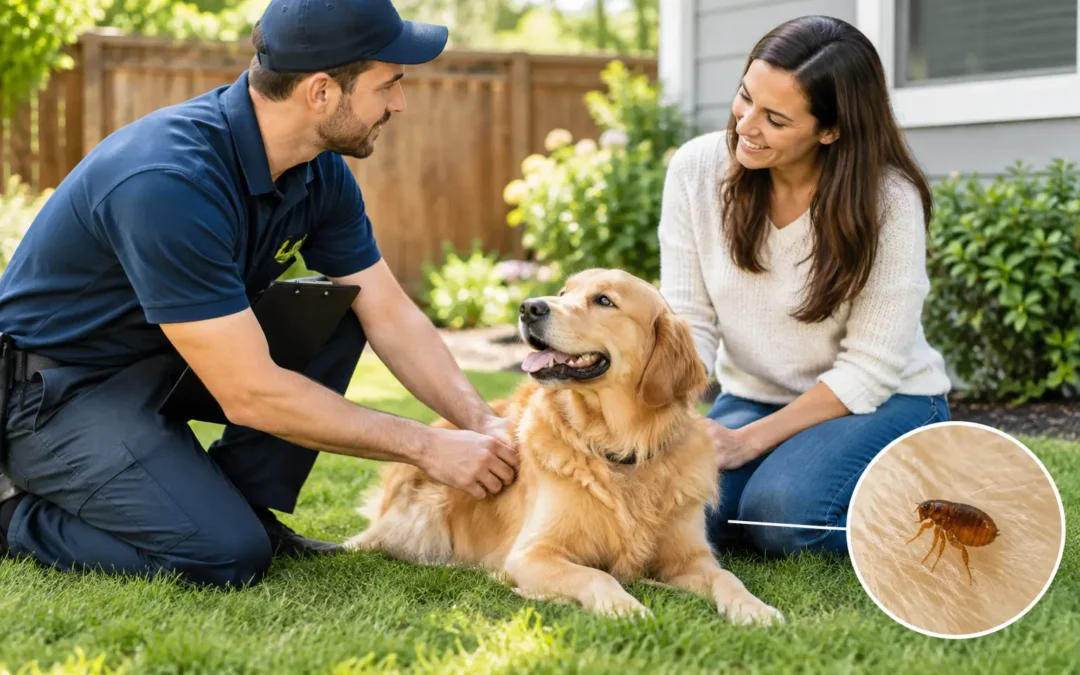
A flea problem often starts outside, not in your living room. Your dog may pick up a few fleas while resting beneath a shaded shrub, or your cat may bring them in after passing through a favorite spot along the fence. To protect pets from yard fleas, you need to care for the pet and interrupt the flea habitat around your home at the same time.
That matters in Temecula, Murrieta, and nearby valley communities, where warm conditions can give fleas a long active season. Fleas do not need a messy yard to become a problem. They need shade, moisture, a host animal, and enough protection to complete their life cycle.
Why Yard Fleas Keep Coming Back
Adult fleas are the ones you see on your pet, but they are only a small part of the issue. Eggs fall from an animal into bedding, carpet, soil, leaf litter, cracks near patios, and shaded landscaping. Those eggs become larvae, then pupae, before emerging as new biting adults when conditions are right.
This is why treating only the pet can bring temporary relief without fixing the source. It is also why a one-time yard application may not solve every infestation immediately. Pupae are protected inside their cocoons and can emerge later, particularly after vibration, foot traffic, watering, or warm weather. A good flea plan accounts for the full life cycle and includes follow-up where needed.
Wildlife and roaming animals can keep the cycle going. Raccoons, opossums, feral cats, rodents, and even stray dogs can leave fleas in the areas they travel or sleep. If an animal regularly gets under a deck, enters a crawl space, or beds down beside a shed, the fleas can remain concentrated in that location even when the rest of the yard looks clean.
Start With Your Pet’s Protection
Your veterinarian is the right source for guidance on flea prevention products for your dog or cat. The best option depends on your pet’s age, weight, health history, lifestyle, and whether there are multiple animals in the household. Never assume that a product labeled for dogs is safe for cats. Some dog flea treatments can be dangerous for cats, especially when used incorrectly.
Use flea prevention consistently, rather than waiting until you see scratching. If you have missed a dose, ask your veterinarian how to restart protection safely. In a household with multiple pets, every pet usually needs an appropriate prevention plan. Treating one pet while another remains unprotected gives fleas another place to feed and reproduce.
Check pets after time outdoors, especially around the neck, belly, groin, tail base, and behind the ears. Flea dirt – tiny dark specks that look like pepper – can be an early clue. Place a few specks on a damp white paper towel. If they leave a reddish-brown smear, that can indicate digested blood from fleas.
Persistent scratching does not always mean fleas, and fleas are not always easy to spot. A pet may have only a few bites yet react strongly, particularly if it has flea allergy dermatitis. Red skin, hair loss, scabbing, frequent licking, or signs of discomfort deserve a call to your veterinarian.
How to Protect Pets From Yard Fleas at Home
Focus your effort where pets spend time, not just on the entire lawn. Fleas prefer protected areas with shade and moisture over sunny, open turf. The cool strip behind a storage shed, dense ground cover along a wall, the soil beneath a patio chair, and a shaded dog run are more likely trouble spots than the middle of a dry lawn.
Mow regularly, trim back overgrown vegetation, and rake up leaves, grass clippings, and other organic debris. This does not eliminate fleas by itself, but it removes the sheltered, humid conditions that flea larvae prefer. It also makes targeted treatment more effective when it is needed.
Wash pet bedding, blankets, crate pads, and washable soft toys on the hottest setting the material can safely handle. Vacuum indoor rugs, upholstered furniture, pet resting areas, floor edges, and gaps near baseboards. Empty the vacuum outdoors right away, then seal and discard the contents. These simple jobs are most helpful when repeated during the first few weeks of an active flea issue.
Outside, pick up pet waste promptly and reduce places where wildlife can linger. Secure trash, do not leave pet food outdoors, and look for access points under sheds, decks, gates, or fences. If rodents or other animals are active around the property, addressing that activity is part of flea prevention, not a separate concern.
You do not need to strip your yard bare. The goal is a maintained outdoor space where fleas and wildlife have fewer protected places to settle. A healthy shade tree or planted border can stay – just keep the ground beneath it clear of heavy debris and avoid letting irrigation create consistently damp pockets.
Be Careful With DIY Yard Treatments
Store-bought flea sprays and granules can seem like a quick fix, but coverage, timing, and pet safety matter. Applying a product across every square foot of the yard can waste material and may not address the places where fleas are actually developing. Applying too little, treating before clearing debris, or skipping follow-up can lead to disappointing results.
Read every label before using a pesticide. Follow directions for mixing, application, protective gear, drying time, and when pets and children can return to the treated area. Do not use more than the label allows, and do not mix products unless the labels specifically permit it. Keep products away from edible gardens, water features, pet bowls, and areas where animals may lick or chew treated surfaces.
Natural or plant-based products also require caution. “Natural” does not automatically mean safe for every pet, especially cats, small dogs, puppies, kittens, senior animals, or pets with respiratory sensitivity. Essential oils can create real health risks when concentrated or misused. When in doubt, ask your veterinarian before bringing a new flea-control product into a pet’s routine.
When Professional Yard Flea Treatment Makes Sense
Professional help is especially useful when fleas continue to return after pet prevention and cleaning, when the infestation is widespread, or when you suspect wildlife is feeding the problem. A licensed technician can inspect the areas where flea activity is most likely, identify conditions that support it, and recommend a targeted treatment plan instead of relying on guesswork.
A responsible service should also explain what you need to do before and after treatment. That may include clearing pet items from the yard, keeping pets off treated areas until they are dry, washing bedding, and maintaining veterinarian-recommended flea prevention. Flea control works best as a coordinated effort, not as a spray-and-forget service.
For businesses, flea concerns can arise around pet-friendly patios, apartment common areas, veterinary-adjacent properties, landscaped entrances, or facilities where employees and customers may encounter stray animals. Fast attention matters because flea complaints can affect comfort and confidence long before anyone sees the source.
Watch for the Conditions That Invite Fleas
A few common patterns are worth checking around your property: pets that rest in the same shaded spot each day, dense landscaping against the home, recurring wildlife activity, wet mulch or overwatered ground, and outdoor cushions or bedding left in protected areas. These conditions do not guarantee fleas, but they tell you where to look first.
If you find flea activity, avoid moving pet bedding or outdoor furniture from the problem area to another part of the home without cleaning it first. That can spread eggs or larvae to new spaces. Keep your response focused and consistent for several weeks, since flea development may continue after the first adults are gone.
A comfortable yard should be a place where pets can stretch out in the sun, not a source of ongoing itching and worry. With steady pet prevention, cleaner resting areas, wildlife awareness, and targeted help when needed, flea control becomes a manageable part of caring for your home.