
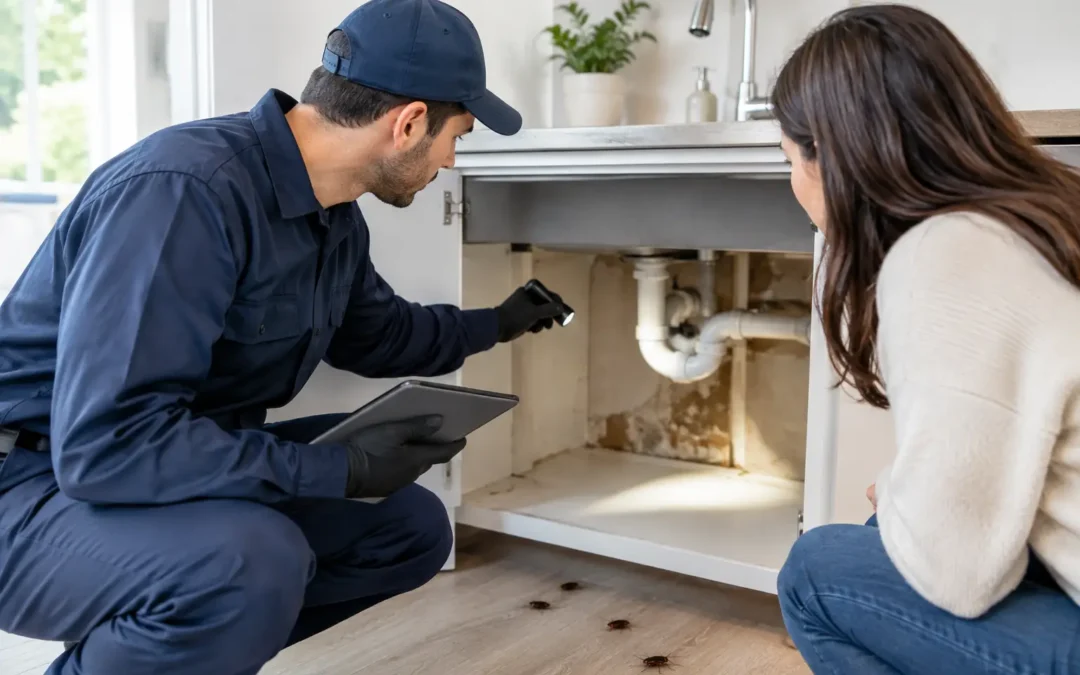
A leak under the kitchen sink can be fixed in an afternoon, but the moisture it leaves behind may keep attracting cockroaches long after the drip stops. To stop cockroaches after water leaks, treat the water damage as both a plumbing issue and a pest prevention issue. Roaches need food, warmth, and shelter, but reliable moisture is often what helps an infestation take hold.
In Temecula, Murrieta, and nearby valley communities, warm weather can keep cockroach activity going for much of the year. A small leak in a cabinet, wall, laundry room, or commercial break area can create a protected hiding place with the humidity roaches need. Acting quickly gives you a much better chance of stopping the problem before it spreads through the building.
Why Water Leaks Attract Cockroaches
Cockroaches can survive for longer without food than most people expect, but they need water much more often. Leaking supply lines, slow drains, condensation around pipes, and wet drywall provide a dependable water source close to dark, undisturbed spaces.
That is especially appealing to German cockroaches, which commonly hide around kitchens, bathrooms, appliances, and plumbing penetrations. Larger outdoor species may also come indoors when they find a water source near a foundation, utility room, or garage. The right treatment depends on the species and where activity is occurring, which is why identifying the source matters.
A repaired leak does not always mean the area is dry. Water can remain in cabinet bases, subflooring, wall voids, insulation, or beneath appliances. If roaches have already found the area, they may continue using it for shelter even after the plumbing repair is complete.
Start With the Leak and the Moisture It Left Behind
The first priority is to stop the water source. Repair or replace leaking pipes, worn supply lines, damaged disposal connections, faulty toilet seals, and slow-draining fixtures. If a property has had a larger leak, make sure damaged materials are properly dried or removed. A surface that feels dry may still have moisture behind it.
After repairs, inspect the spaces roaches are most likely to use. Look under kitchen and bathroom sinks, behind refrigerators and dishwashers, around washing machines, near water heaters, inside utility closets, and along baseboards next to plumbing walls. In commercial settings, check break rooms, mop sinks, floor drains, beverage stations, and storage areas where cardboard or supplies may hold moisture.
Run exhaust fans after showers, address heavy condensation, and avoid leaving wet towels, sponges, or mop heads in enclosed cabinets. If you have a recurring humidity problem, a dehumidifier may help, but it will not replace a plumbing repair or pest treatment when roaches are already present.
How to Stop Cockroaches After Water Leaks
Once the leak is controlled, remove the conditions that let roaches settle in. Start by cleaning up food residue, grease, pet food, and crumbs around the affected area. Empty trash regularly and use containers with secure lids. Cockroaches do not need a messy home to survive, but readily available food makes it easier for a small problem to become a larger one.
Next, reduce hiding places. Clear out damp cardboard, paper bags, and clutter stored under sinks or near appliances. Keep items off the floor in utility rooms and cabinets when possible. Roaches prefer tight spaces, so piles of stored materials near moisture can become an easy harborage.
Seal gaps after the area has dried. Pay close attention to openings around plumbing pipes, gaps at cabinet backs, damaged weatherstripping, cracks along baseboards, and openings where utility lines enter the building. Caulk and appropriate sealing materials can reduce travel routes, but do not seal active roaches inside a wall or cabinet without addressing the infestation first.
It also helps to monitor rather than guess. Sticky monitoring traps placed along walls, under sinks, behind appliances, and near the leak area can show where activity is concentrated. Check them regularly. A few roaches caught near a sink may point to a localized issue. Roaches appearing in multiple rooms, especially during the day, can suggest a more established infestation that needs professional attention.
Do Not Rely on Sprays Alone
A store-bought aerosol can kill a roach you see, but it rarely reaches the colony hiding behind cabinets, inside wall voids, under appliances, or around plumbing. Heavy spraying can also drive roaches deeper into inaccessible areas, making activity harder to track.
Baits, insect growth regulators, crack-and-crevice treatments, and targeted residual products can be more effective when selected and applied correctly. The best approach depends on the cockroach species, the level of activity, the property layout, and whether children, pets, food preparation areas, or sensitive equipment are involved.
For homes, focus on avoiding broad, unnecessary pesticide use in living spaces. For restaurants, offices, rental properties, and other commercial locations, a documented treatment plan and routine monitoring are often the practical choice. One treatment may solve a new, isolated issue, but ongoing prevention is more reliable when a building has repeated moisture problems, high traffic, shared walls, or frequent deliveries.
Watch for Signs the Problem Is Growing
Cockroaches are most active at night, so seeing one in the dark does not automatically mean there is a major infestation. Still, certain signs deserve a quick response. Look for small dark droppings that resemble ground pepper or coffee grounds, shed skins, tan egg cases, a musty odor, or roaches clustered near warm appliances and plumbing.
Daytime sightings are more concerning because they can mean roaches are competing for space and food in their hiding areas. If you notice baby roaches, egg cases, or activity in more than one room, do not wait for the problem to resolve on its own. Roaches reproduce quickly, and moisture from a former leak may have given them a head start.
Apartment residents and commercial tenants should report leaks and roach activity promptly. In multi-unit buildings, treatment may need to include adjacent units, shared plumbing walls, trash areas, or utility spaces. Treating only the room where roaches were seen may not be enough if they are moving through the structure.
Prevent the Next Moisture-Related Infestation
A simple monthly check can prevent many repeat problems. Open sink cabinets and look for drips, staining, swollen wood, or musty smells. Check refrigerator drip pans, dishwasher connections, and laundry hoses. Outside, keep irrigation from soaking the foundation and correct areas where water collects near doors, garages, or utility penetrations.
Regular pest maintenance is also useful for properties with a history of cockroach activity. Monitoring and targeted service can catch early signs before residents or customers start seeing roaches. Vineyard Valley Pest Control provides practical, local support for cockroach issues throughout the Temecula and Murrieta Valley, with service built around clear communication and dependable follow-through.
If you have repaired a leak but are still seeing roaches, do not assume the repair failed. The water may be gone while the roaches remain in nearby hiding places. Dry the area thoroughly, remove food and clutter, monitor activity, and get help early when sightings continue. A fast response now can keep one small plumbing problem from becoming a much bigger pest problem later.