
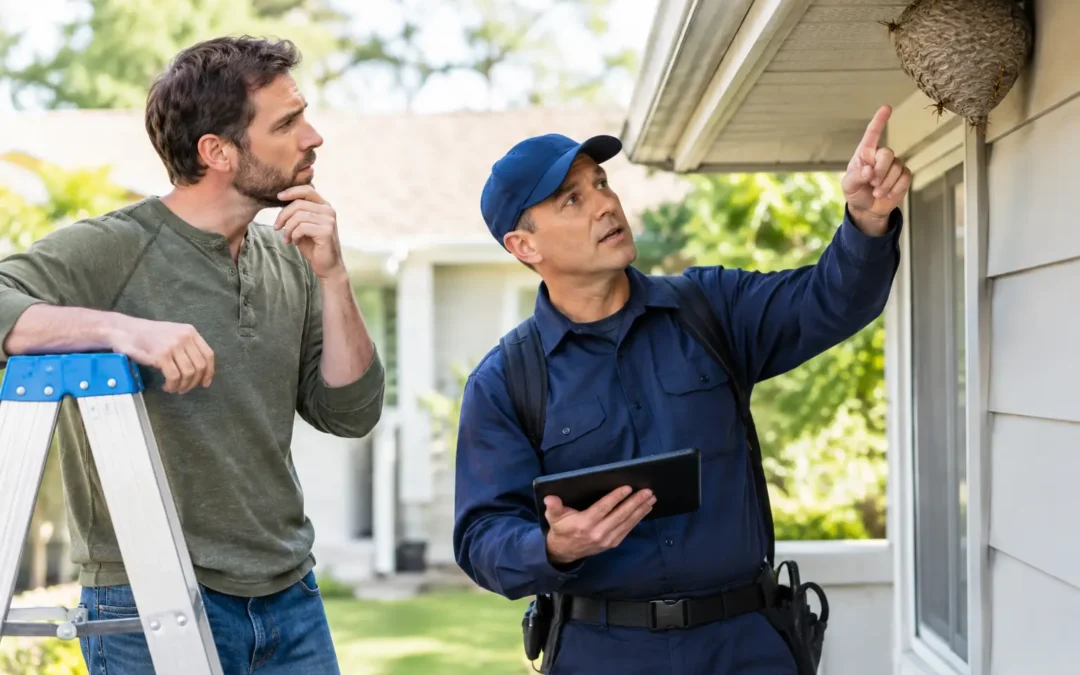
A few wasps around a patio can quickly turn a family barbecue, pool day, or business entryway into a stressful situation. The choice between DIY vs professional wasp removal often comes down to more than cost. Nest location, wasp activity, the people around the property, and the chance of a painful sting all matter.
For some small, visible nests, a cautious homeowner may be able to handle the problem. In other situations, trying to remove a nest without the right equipment or approach can make the issue worse fast. Here is how to make a practical decision for your Temecula or Murrieta property.
When DIY Wasp Removal May Make Sense
DIY removal can be reasonable when the nest is small, easy to reach from the ground, and located well away from doors, walkways, play areas, pets, and people. A newly formed paper wasp nest under a detached shed overhang, for example, may be less complicated than a large nest near a front door.
The key word is may. Even a small nest can become a problem if it is active, if you cannot clearly identify where the wasps are entering, or if the nest is positioned where you would need to climb a ladder. Wasps tend to defend their nesting area when disturbed. One missed step can lead to multiple stings and a very unpleasant afternoon.
If you decide to take the DIY route, start by observing the area from a safe distance. Look for the flight path, the approximate nest size, and whether activity appears limited or constant. Keep children and pets away, and do not block or seal an active nest entrance. Trapped wasps can find another way into wall voids, garages, attics, or living spaces.
Store-bought wasp products can work on limited, exposed nests when used exactly as labeled. They are not a dependable answer for nests hidden in walls, rooflines, dense landscaping, or underground. Repeated spraying also can leave you with more agitated wasps while the nest itself remains active.
DIY vs Professional Wasp Removal: The Main Difference
The biggest difference is not simply who applies a treatment. Professional wasp removal starts with identifying the nesting situation and choosing a method that addresses the colony without creating a bigger risk around the property.
A trained pest control technician can determine whether the activity is coming from paper wasps, yellowjackets, hornets, or another stinging insect. That matters because nesting habits vary. Paper wasps often build exposed, umbrella-shaped nests beneath eaves and patio covers. Yellowjackets may nest in wall voids, landscape areas, ground holes, or other concealed spaces. What looks like a few wasps near a vent may actually indicate a larger hidden colony.
Professionals also have access to commercial-grade materials, protective equipment, and application methods designed for specific locations. Just as important, they know when not to treat an area in a way that could push wasps indoors or toward customers, employees, neighbors, or family members.
For a homeowner, professional service also removes the need to stand close to an active nest, balance on a ladder, or guess whether a nest is truly gone. That peace of mind has real value when the nest is near the places you use every day.
Situations That Call for a Professional Right Away
Some wasp problems should not be a DIY project. If any of the following applies, calling a licensed professional is the safer choice:
- The nest is in a wall, attic, roofline, chimney, utility box, or other enclosed area.
- Wasps are entering through a crack, vent, siding gap, or opening near the home or business.
- The nest is high off the ground or requires a ladder to reach.
- There is heavy activity, multiple nests, or a steady stream of wasps around one location.
- Someone on the property has a known bee or wasp sting allergy.
- The nest is near a pool, patio, school area, restaurant entrance, playground, customer walkway, or pet area.
These situations carry more risk because the colony can be larger than it appears, treatment can drive wasps into occupied spaces, and stings can happen before you have time to get away. For commercial properties, there is another concern: a stinging insect issue at an entrance or outdoor seating area can affect customers, employees, and your day-to-day operations.
Why Nest Location Changes the Decision
Location is often the deciding factor in DIY vs professional wasp removal. A small nest in an open corner of a distant fence is very different from activity behind stucco, under a tile roof, or inside a patio cover.
In Southern California, warm conditions can keep stinging insects active for long stretches of the year. Homes with mature landscaping, outdoor kitchens, covered patios, fruit trees, water features, and pool areas can offer plenty of sheltered spots for nesting. Businesses may see similar issues around dumpster enclosures, loading areas, outdoor dining spaces, and building signage.
Hidden nests are especially difficult because removing visible wasps does not necessarily remove the source. You may see fewer wasps for a day or two, then notice activity returning from the same opening. A professional inspection can identify the likely nest location and recommend a targeted treatment plan instead of relying on repeated surface sprays.
Cost: Looking Beyond the Price of a Can
DIY products cost less upfront than a service call. That is the main advantage, and for a truly small, accessible nest, it can be enough. But the lowest initial price is not always the lowest total cost.
If a treatment fails, you may end up buying multiple products, losing time, and still needing professional help. If wasps enter the home or someone is stung, the situation can become more expensive and stressful quickly. There is also the possibility of property damage when people try to seal, remove, or reach a nest in the wrong place.
Professional service is often a better value when the problem is active, concealed, elevated, or located where people gather. You are paying for a correct assessment, safe treatment, and a clear plan for reducing the chance of continued activity. For property managers and business owners, that can be especially helpful when a quick, documented response is needed.
What a Professional Wasp Service Should Include
A straightforward wasp service should begin with a conversation about where you are seeing activity and whether anyone has been stung. The technician should inspect the affected area, identify likely nesting sites, and explain the treatment approach in plain language.
Treatment should be targeted to the nest and surrounding activity, not a vague spray-and-go visit. You should also receive practical guidance on what to expect afterward. Some activity may continue briefly as returning wasps encounter the treated area, while hidden-nest situations may require follow-up based on the structure and severity of the problem.
A good provider will also point out conditions that can attract wasps, such as open trash, fallen fruit, sugary drink spills, accessible pet food, and gaps around building features. Prevention is not about making your property perfect. It is about reducing the easy food sources and sheltered spots that encourage repeat nesting.
A Safer Way to Handle Wasp Activity
You do not need to panic every time you see a wasp. A single foraging wasp is different from a nest on the property. But repeated traffic to one area, especially around eaves, wall openings, ground holes, or outdoor gathering spaces, is a sign to take action before the colony grows.
For small, exposed nests in low-risk locations, DIY treatment may be a reasonable option when done carefully and according to the product label. When the nest is hidden, high, active, or close to people, professional removal is usually the safer and more dependable choice. Vineyard Valley Pest Control helps local homeowners and businesses get clear answers, targeted service, and relief without making a stressful pest issue more complicated.
If wasps are changing how you use your patio, yard, entryway, or workplace, treating the problem early is often the simplest way to get those spaces back.