
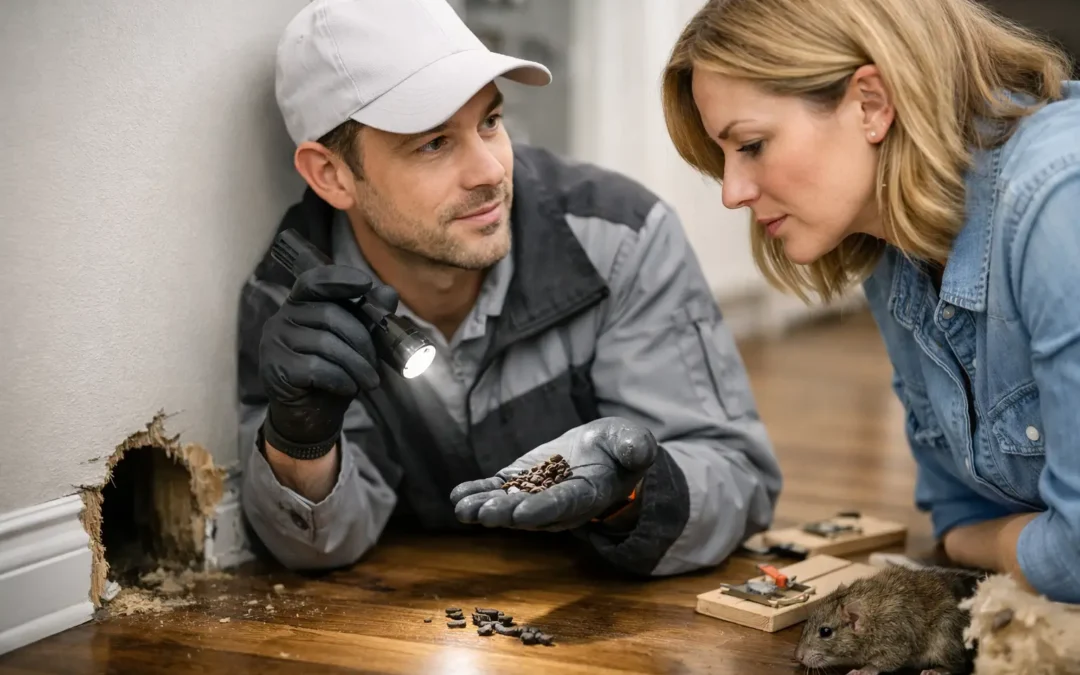
You usually do not get a polite warning when rodents move in. It starts with a scratching sound in the wall at night, a torn bag in the garage, or a smell that seems off but hard to place. If you are trying to spot the best signs of rodent activity early, the goal is simple – catch the problem before it spreads, damages property, or creates a bigger cleanup.
In Temecula, Murrieta, and nearby valley communities, rodents look for the same things people do: shelter, food, and water. Attics, crawl spaces, garages, storage rooms, commercial back areas, and utility spaces all give them places to hide. Once they settle in, they do not stay neatly in one corner. They travel, chew, nest, and leave evidence behind.
The best signs of rodent activity to watch for
Some signs are obvious. Others are easy to miss unless you know what to look for. The strongest clue is usually not just one sign, but a pattern.
Droppings near food, walls, or hidden corners
Rodent droppings are often the first thing people notice. You might find them in a pantry, under a sink, along baseboards, in a garage, or behind stored boxes. Fresh droppings tend to be dark and moist. Older droppings dry out and become crumbly.
Where you find them matters. If droppings are close to food storage, pet food, or trash areas, that usually means rodents are actively foraging nearby. In commercial settings, droppings near break rooms, supply storage, or behind equipment should be taken seriously right away.
A few droppings do not always tell you how large the problem is. Rodents are good at staying hidden, so visible droppings can be just the surface sign of a larger issue.
Gnaw marks on wood, wiring, drywall, and packaging
Rodents chew constantly to keep their teeth from overgrowing. That means damage can show up on framing, cardboard, food packaging, plastic containers, and even electrical wiring. Fresh gnaw marks often look lighter in color, while older marks darken over time.
This is one of the best signs of rodent activity because it points to more than a passing visit. If something is being chewed, rodents are using the area enough to leave repeated damage behind. In homes, this can lead to ruined stored items and safety concerns around wiring. In businesses, it can affect inventory, sanitation, and maintenance costs.
Scratching, scurrying, or movement at night
If the house gets quiet and you start hearing movement in the ceiling or walls, pay attention. Rodents are usually most active at night, especially when they feel safe enough to travel for food.
The sound can vary based on where they are. In an attic, it may sound like light running or scratching overhead. Inside walls, it can be more subtle and intermittent. In a commercial space, it may come from drop ceilings, storage areas, or behind equipment after hours.
Noise alone does not confirm everything. Pipes, HVAC systems, and settling can make strange sounds too. But when nighttime noise shows up along with droppings, odors, or chewed materials, the picture becomes much clearer.
Grease marks and rub marks along travel routes
Rodents tend to follow the same paths along walls and edges. As they move, oils and dirt from their fur can leave dark smudges on baseboards, beams, pipes, or wall openings. These marks are especially common in tight, frequently used routes.
This sign is easy to overlook because it does not always stand out right away. In garages, attics, and utility spaces, it can blend in with normal dust or wear. Still, if you notice repeated dark streaks near a hole, crack, or wall line, that may indicate regular rodent traffic.
Nesting materials in quiet, protected areas
Rodents build nests from soft, shredded materials. That can include insulation, paper, fabric, cardboard, dried plant matter, and even bits of upholstery. Nests are often hidden in attics, wall voids, cabinets, storage piles, and cluttered corners.
Finding nesting material usually means the rodents are not just visiting. They are trying to stay. That is an important difference, because a nesting population is more likely to grow and spread into nearby areas.
For property managers and business owners, this matters in back storage, tenant utility areas, and underused spaces where activity can go unnoticed for too long.
A strong, stale, musky odor
A rodent problem often has a smell to it. It can come from urine, droppings, nesting sites, or a rodent that has died in a wall or hidden void. The odor is typically stale, musky, and persistent, especially in enclosed spaces.
People sometimes notice the smell before they find any physical evidence. That is common in attics, crawl spaces, garages, and wall voids where airflow is limited. In commercial environments, odor complaints may come from employees or customers before the source is obvious.
Odor on its own is not the easiest sign to diagnose because moisture issues, plumbing problems, or other pests can create similar smells. But if the odor is paired with scratching, droppings, or chew damage, rodent activity becomes much more likely.
Tracks and tail marks in dusty areas
In low-traffic spaces, rodents can leave behind footprints or tail drag marks. You might see them in attic dust, garage corners, storage shelves, or around utility lines. These marks can help show where rodents are entering and how often they are traveling.
This is one of those signs that depends on conditions. If the area is regularly cleaned or heavily used, tracks may never appear. But in undisturbed spaces, they can be a very useful clue.
Pet behavior that suddenly changes
Dogs and cats often notice rodent movement before people do. If a pet becomes fixated on a wall, appliance, cabinet, or ceiling area, there may be a reason. Repeated sniffing, pawing, barking, or staring at one spot can indicate movement or scent behind the surface.
This is not proof by itself. Pets react to plenty of things. Still, when unusual pet behavior lines up with noises or droppings, it is worth checking further.
Outdoor burrows, openings, and entry points
Not all rodent evidence starts indoors. Outside the structure, look for burrows near foundations, gaps around utility penetrations, damaged vent screens, openings under doors, and holes near garages or sheds. Rodents can squeeze through surprisingly small spaces, so even a minor gap can matter.
This is especially important in Southern California, where rodents can move between landscaped yards, block walls, outdoor storage, and nearby structures with ease. A property may look clean and well kept and still have access points that allow activity to develop indoors.
Why early signs matter
Rodent problems rarely stay small for long. The longer activity continues, the more likely it is you will see contamination, property damage, foul odors, and repeated sightings. For homeowners, that can mean damaged insulation, pantry contamination, and stress that keeps building every night you hear movement. For businesses, it can mean sanitation concerns, tenant complaints, and interruptions that affect daily operations.
There is also the issue of false reassurance. If the noise stops for a day or two, it does not always mean the problem is gone. Rodents change routes, stay hidden, and remain active in places people do not regularly inspect.
What to do when you notice the best signs of rodent activity
Start by avoiding direct contact with droppings or nesting material. Do not sweep dry droppings into the air, and do not assume a trap or bait from the hardware store will solve the whole issue. Sometimes a minor problem is localized. Other times, what looks small from the kitchen or office is actually tied to attic activity, hidden entry points, or multiple nesting areas.
A proper response usually involves two parts: identifying where the rodents are active and finding how they are getting in. If only the visible signs are treated but entry points stay open, activity often returns. That is why exclusion matters just as much as removal.
For many local homes and businesses, the fastest path is having a trained professional inspect the property, confirm the level of activity, and build a practical plan. At Vineyard Valley Pest Control, that means showing up fast, handling the issue directly, and keeping you informed about what was found and what comes next.
If something feels off in your attic, garage, pantry, storage room, or commercial space, trust that instinct. The earlier you act, the easier it usually is to protect the property and get back to normal.