
A flea outbreak in the carpet, ants moving across the kitchen counter, or a wasp nest near the patio can make fast pest control feel non-negotiable. But can pest treatments affect pets? They can if a pet is exposed to a product before it has dried, gets into bait or equipment, or receives the wrong treatment for its species or size. With the right product, placement, timing, and instructions, professional pest control can address the problem while keeping your dog, cat, bird, or other pet protected.
For Temecula and Murrieta households, the practical answer is not to avoid treatment when pests show up. It is to use a licensed professional, share complete information about your animals, and follow the re-entry instructions given for your specific service.
Can Pest Treatments Affect Pets? It Depends on Exposure
Pest control products are designed to affect pests, but they are still products that need to be handled correctly around people and animals. Risk is not one-size-fits-all. It depends on the active ingredient, how and where it is applied, the amount used, and whether a pet can contact or ingest it.
A targeted treatment applied into a crack where ants travel is very different from a broad application in an open area. A secured rodent bait station is different from loose bait. A treatment around an exterior foundation is different from a flea service that includes indoor flooring and pet resting areas.
Pets are most likely to be exposed when they walk through a wet application, lick treated surfaces, chew on bait stations, eat a poisoned rodent, or disturb equipment. Smaller animals may be more sensitive because of their body weight. Cats deserve special attention, since they groom frequently and can be sensitive to certain products that may be used differently around dogs.
Birds, reptiles, fish, and small mammals such as rabbits or guinea pigs also need tailored precautions. An aquarium may need to be covered and its air pump managed during certain indoor services. Caged pets should be moved from treatment areas. Never assume instructions intended for a dog also apply to every pet in the home.
What a Pet-Conscious Pest Treatment Looks Like
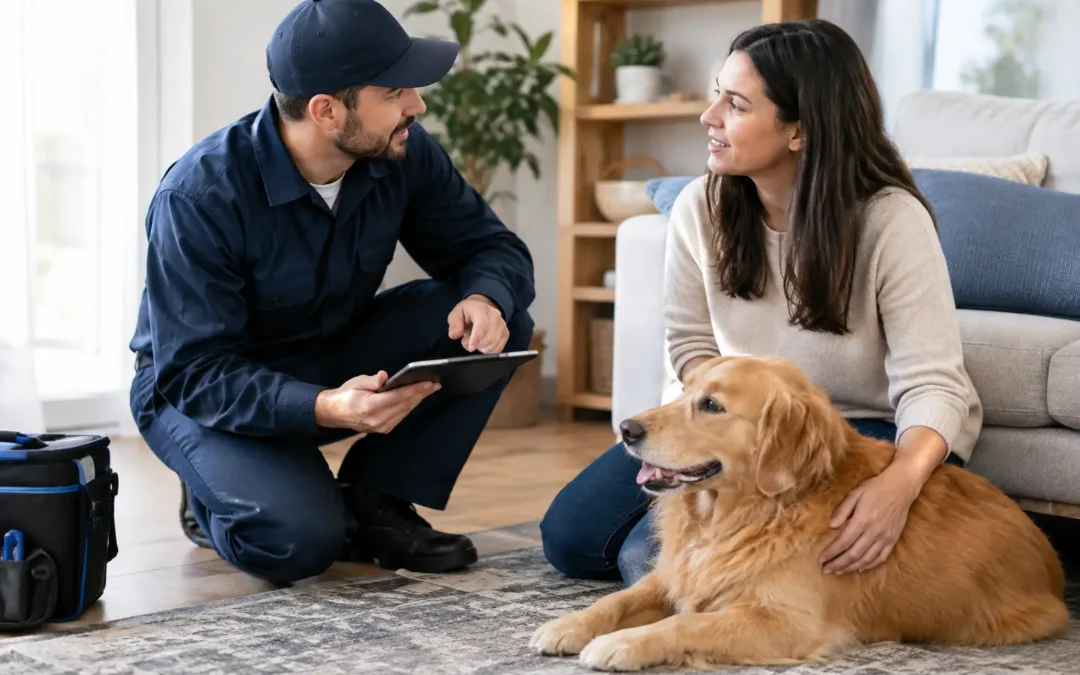
A dependable pest service begins before any product is applied. Tell the technician about every animal on the property, including pets that spend time in the garage, backyard, or side yard. Mention animals with health conditions, pets that eat anything they find, and areas where they sleep, eat, or use a litter box.
The technician should identify the pest, inspect the activity, and choose the least disruptive approach that can solve the problem. In many cases, that means using exclusion, sanitation guidance, traps, monitoring, and precise placements alongside treatment. For rodents, sealing entry points can reduce the need for ongoing baiting. For ants, locating travel paths and entry points allows treatment to stay focused rather than sprayed across every surface.
At Vineyard Valley Pest Control, that local, targeted approach matters because pest pressure changes by property and season. A home dealing with brown widows around outdoor furniture needs a different plan than a business managing flies near dumpsters or a family addressing fleas indoors.
Professional products are not automatically risk-free, and store-bought products are not automatically gentler. The difference often comes down to diagnosis, application, and access. Applying too much product, combining products without direction, or treating the wrong area can create unnecessary exposure without improving results.
Before Service: Set Your Pets Up for Success
Your technician should provide preparation and re-entry directions for the treatment being performed. Follow those directions over general advice you may see online, because the right steps vary by product and service type.
Before an indoor treatment, remove pet food, water bowls, toys, bedding, and medications from the service area. Put away chewable items and clean up pet waste. If flea treatment is planned, ask whether bedding needs to be washed and vacuuming needs to continue afterward. Flea control often works best when the home treatment and veterinarian-recommended pet treatment happen on a coordinated schedule.
For exterior work, bring pets inside before the technician arrives and keep gates closed. Pick up outdoor bowls and toys. If your dog uses a particular patch of grass, point it out. This helps the technician explain whether that area will be treated and how long to wait before letting your pet return.
Do not leave a nervous dog loose around service equipment or an open gate. A safe visit also means preventing escapes and bites. If your pet is anxious, crating them in a separate room or taking them off-site can make the appointment easier for everyone.
During and After Treatment: Re-Entry Is the Key Step
The most common instruction after a liquid application is to keep pets out of the treated area until the product has completely dried. Drying time varies with the application, weather, ventilation, and surface. A shaded patio on a cool morning may take longer than a sunny, breezy walkway.
Do not rush this step because your dog needs to go outside or your cat is waiting at a door. Use an untreated area, take a brief leash walk, or arrange a temporary indoor setup. Once the application is dry and the technician has cleared the area for re-entry, normal activity can usually resume as directed.
Keep pets away from bait stations, traps, and monitoring devices at all times. Stations should be placed where animals cannot reach them, but curious pets can be persistent. Let your technician know if a station is moved, damaged, chewed, or missing. Do not relocate bait stations yourself unless you have been given clear instructions.
After service, avoid washing treated edges, baseboards, or exterior foundations right away unless the technician tells you to do so. At the same time, clean up any visible spill, damaged station, or exposed product immediately according to the service instructions. If you are unsure what you are seeing, keep pets away and call the pest control company for guidance.
Signs Your Pet May Need Help
Most professionally treated homes do not experience pet problems when instructions are followed. Still, contact with a product or bait can happen. Watch for unusual drooling, vomiting, diarrhea, coughing, tremors, weakness, trouble walking, agitation, repeated pawing at the mouth, or sudden lethargy.
These signs can have many causes, so do not try to diagnose the issue at home. If you think your pet has contacted or eaten a pest control product, remove them from the area and call your veterinarian or an animal poison control resource right away. For severe symptoms, difficulty breathing, seizures, collapse, or suspected ingestion of rodent bait, seek emergency veterinary care immediately.
Have the product information available if possible. The product name, active ingredient, EPA registration number, time of exposure, and an estimate of how much was involved can help the veterinary team respond. Do not induce vomiting or give your pet milk, food, or home remedies unless a veterinary professional tells you to do so.
Questions Worth Asking Before You Schedule
Good pest control should never leave you guessing. Ask what pest is being treated, where products will be placed, whether your pets need to leave the property, and when they may return. If you have a cat, bird, aquarium, reptile, puppy, senior dog, or pet with a medical condition, say so before the service date.
You can also ask whether non-chemical steps will help prevent the problem from returning. Repairing screens, sealing rodent entry gaps, managing standing water, trimming vegetation away from the structure, and storing food properly can reduce pest activity around Southern California homes and businesses.
For recurring service, keep the conversation going. Tell your technician if you add a new pet, build a dog run, move an aquarium, or notice your pet interacting with a treated area. The best plan is one that changes with your property.
Pests should not force you to choose between a comfortable home and a safe pet. Clear communication, precise treatment, and a little patience during re-entry give you a practical path to both.