
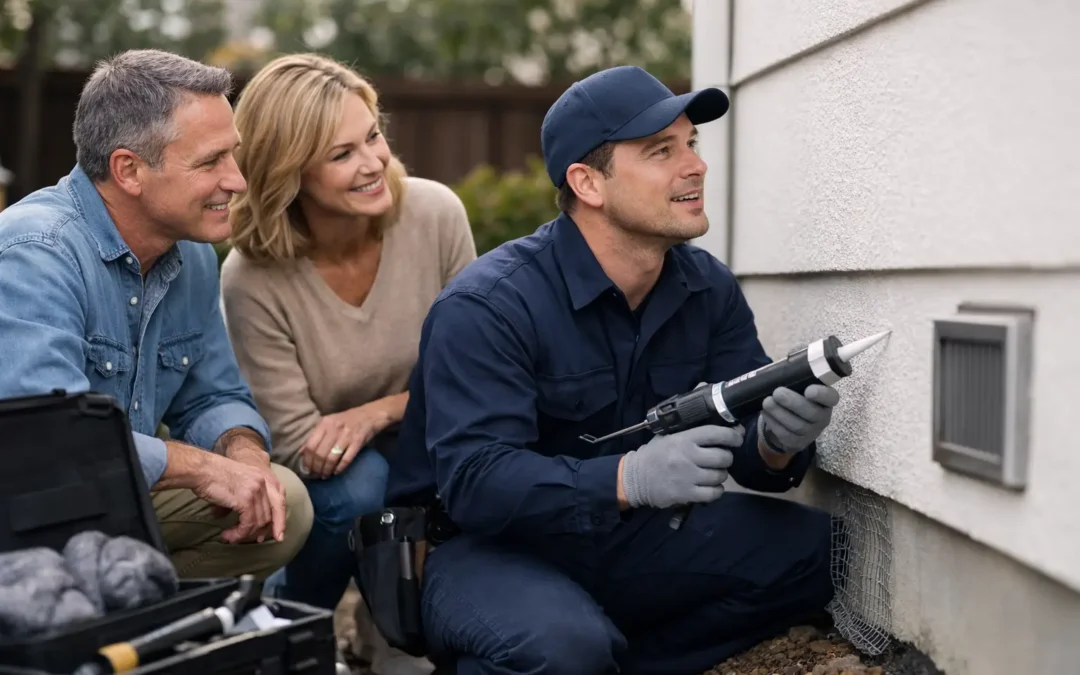
A mouse can fit through an opening about the size of a dime, which is why a few traps alone rarely solve a recurring rodent problem. Rodent sealing reviews are useful because they show whether a company addressed the entry points behind the activity or simply removed the rodents that were already inside.
For homeowners and property managers in Temecula, Murrieta, and nearby valley communities, that distinction matters. Rodents often move through rooflines, garage gaps, utility penetrations, attic vents, and openings around plumbing. A good exclusion job reduces the chance that the same problem returns when weather changes, food sources shift, or activity increases around the property.
What Rodent Sealing Reviews Should Tell You
The most helpful reviews do more than say a technician was friendly or arrived on time. Those things matter, but rodent exclusion is a hands-on service. Look for comments that describe what was inspected, what was sealed, and how the customer was kept informed.
Specific details are usually more valuable than a star rating alone. A review that says a technician found gaps near the garage door, sealed openings around utility lines, and explained where rodent activity was occurring tells you far more than a short comment that simply says, “Great service.” It suggests the company followed a process rather than applying a one-size-fits-all treatment.
You should also pay attention to whether customers mention follow-up. Sealing is a major part of rodent control, but it may take time to confirm that activity has stopped, especially if rodents were already nesting in an attic, wall void, shed, or commercial storage area. Companies that communicate clearly about what happens after the initial visit tend to create fewer surprises.
Look for Inspection Details, Not Just Promises
A professional rodent sealing service starts with a property inspection. Reviews may mention roof eaves, foundation vents, attic access doors, gaps around pipes, damaged screens, patio covers, crawl spaces, or garage corners. These are signs that the technician looked beyond the most obvious area.
Every property is different. A newer home may have small construction gaps around utility lines, while an older property may have worn weather stripping, shifted vents, or openings created by previous repairs. Commercial properties can add loading areas, trash enclosures, storage rooms, and exterior doors that stay open during business hours.
Be cautious if reviews repeatedly describe quick visits but provide no indication that the property was inspected thoroughly. Speed can be a benefit when rodents are active, but a fast response should still include enough time to locate likely access points and explain the recommended work.
Watch for Clear Expectations About Materials and Limits
Rodent exclusion is not just filling holes with whatever material is nearby. The right approach depends on the opening, its location, and the surface around it. A professional may use metal mesh, screening, flashing, sealants, door sweeps, or repairs designed for the specific area.
Good reviews often mention that the technician explained what could be sealed immediately and what may require a separate repair. For example, a pest control professional can identify an opening caused by damaged siding or a failing roof component, but a larger structural repair may need to be handled by a qualified contractor.
That is not a reason to dismiss the service. It is a sign of honest communication. A company should be clear about the scope of rodent exclusion, the condition of the property, and any areas that need attention from another trade.
How to Read Rodent Sealing Reviews With Context
No service company will have a perfect review history, and a single negative review does not tell the whole story. What matters is the pattern. Read recent reviews first, then look for recurring comments about responsiveness, workmanship, communication, and whether the rodent problem stayed under control.
For local properties, seasonal conditions can affect expectations. Rodent activity may become more noticeable when outdoor temperatures change, landscaping is disturbed, nearby construction begins, or food and water become harder to find outside. A customer may see a rodent after exclusion work if one was already inside or if a separate opening was missed. What matters is how the company handles that situation.
Look for indications that the provider returned, reassessed the property, or adjusted the plan when needed. Rodent control is most dependable when the company treats it as a process: inspect, remove or control active rodents, seal access points, monitor results, and address conditions that could attract future activity.
Pay Attention to Communication
The best reviews often mention simple, practical communication. Did the technician explain what was found? Did the customer receive a clear recommendation? Was the price discussed before work began? Did the company respond when the customer had questions?
This is especially important for businesses and property managers. A rodent issue can affect employee comfort, tenant satisfaction, inventory, sanitation, and a business’s reputation. Decision-makers need a provider that documents concerns clearly and communicates without creating unnecessary disruption.
A dependable local company should not make you guess what was done or what comes next. You should understand the areas of concern, the proposed sealing work, and whether ongoing monitoring is recommended.
Questions to Ask Before Scheduling Rodent Sealing
Reviews can narrow your options, but a short conversation with the company can help you make the final decision. Ask whether the service includes a full exterior inspection, attic or crawl-space evaluation when accessible, recommendations for active rodent control, and follow-up options.
It is also reasonable to ask how the company handles hard-to-reach openings. Roofline gaps and elevated vents may require special equipment or may fall outside the scope of a standard visit. Knowing this upfront helps you compare estimates fairly.
Ask what happens if activity continues after service. There is no honest way to guarantee that wildlife and rodents will never approach a building again. However, a company should stand behind its work, explain its return-visit policy, and be willing to investigate continued activity.
Price matters, but it should not be the only deciding factor. A low quote may cover a limited number of openings, while another estimate may include a more complete inspection and stronger materials. Compare the scope of work, not just the total at the bottom of the estimate.
Signs You May Need More Than Sealing
Exclusion is essential, but it works best alongside sanitation and active rodent control. If rodents have access to pet food, open trash, birdseed, fallen fruit, cluttered storage, or standing water, they may continue trying to stay near the property even after entry points are sealed.
Inside, droppings, gnaw marks, scratching sounds, chewed insulation, and nesting material can indicate that rodents have already established activity. In these cases, sealing without a plan for removal and monitoring may leave you with rodents trapped inside or continued signs from existing nesting areas.
For recurring problems, consider whether nearby conditions are contributing. Dense vegetation against the structure, overgrown trees near rooflines, gaps under gates, and poorly maintained exterior doors can all make a property easier for rodents to approach and explore.
Vineyard Valley Pest Control takes a practical approach: identify the activity, locate likely entry points, recommend clear next steps, and keep customers informed throughout the process. That kind of straightforward service is what meaningful reviews should reflect.
When you read reviews, look past the star count and focus on evidence of careful inspection, solid workmanship, and responsive follow-through. The right rodent sealing service should leave you with more than fewer noises in the walls. It should give you a clearer understanding of how your property is protected and who to call if activity shows up again.