
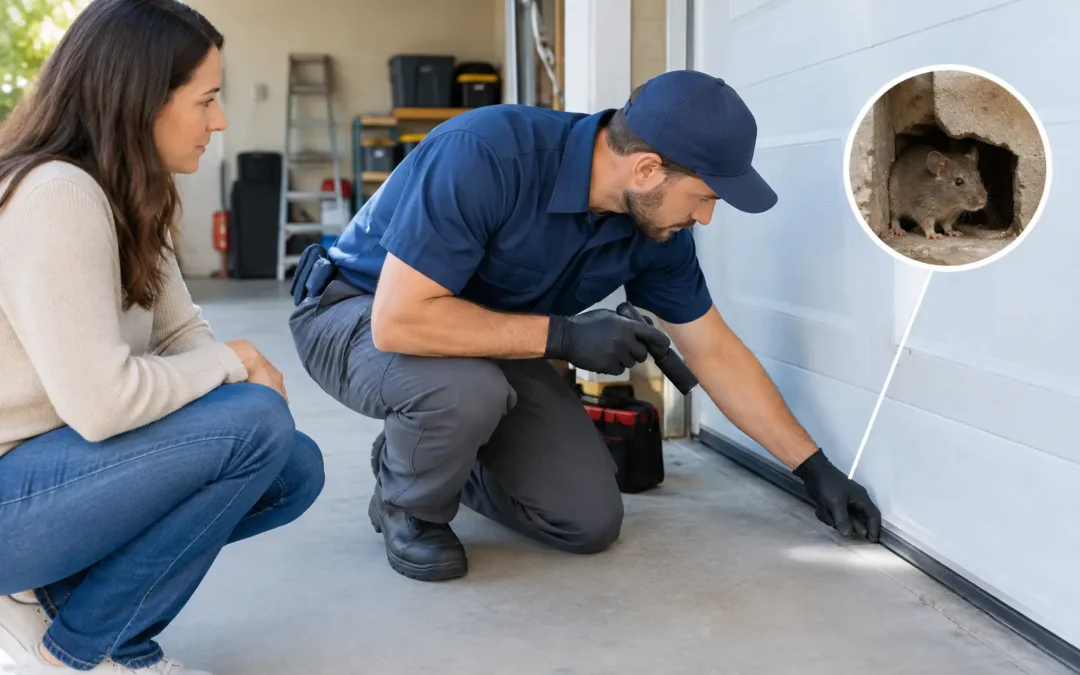
A garage can look clean and still be an easy target for rodents. A bag of birdseed in the corner, a gap beneath the side door, or clutter behind stored boxes can give a mouse or rat exactly what it needs. This guide to garage rodent prevention focuses on the practical steps that make your garage less inviting and help stop a small issue from becoming activity inside the home.
In Temecula, Murrieta, and nearby valley communities, rodent pressure often changes with the weather. Hot, dry conditions push rodents toward shade and water. Cooler nights and seasonal rain can send them searching for protected nesting areas. Your garage sits right between the outdoors and your living space, which makes early prevention worth the effort.
Start With the Gaps Rodents Use
Rodents do not need a wide-open door to get inside. Mice can squeeze through openings about the size of a dime, while rats can use gaps around utility lines, vents, door frames, and damaged siding. A garage door that does not sit evenly against the concrete can also leave enough room for unwanted visitors.
Walk around the outside of the garage during daylight. Look closely where the foundation meets the wall, around pipes and electrical conduits, beneath doors, and at roofline openings. Inside, check the corners, wall penetrations, and the area behind water heaters, laundry equipment, or storage cabinets if those are located in the garage.
Seal small openings with durable materials rodents cannot chew through easily, such as metal mesh, sheet metal, or appropriate exterior-grade sealant used with backing material. Avoid relying on foam alone for larger gaps. Foam can help with air sealing, but rodents may chew through it if it is not protected.
Pay attention to garage doors and side doors
The bottom seal on a garage door is one of the most common weak points. If daylight is visible below the door, or if the rubber is cracked, flattened, or missing in spots, replace the weatherstripping. Make sure the side door closes tightly and has a functional door sweep.
If a door is warped or the concrete is uneven, a new seal may not solve the full problem. In that case, the door may need adjustment or a more tailored threshold solution. The goal is a tight fit without interfering with normal operation.
Remove the Food Sources You May Not Notice
Rodents are resourceful. They do not need an open bag of pet food to settle in. They may feed on grass seed, fallen fruit, barbecue grease, trash, pantry overflow, or even crumbs inside a vehicle parked in the garage.
Store pet food, birdseed, livestock feed, and bulk pantry items in hard-sided containers with tight-fitting lids. Plastic bags and cardboard boxes are not reliable storage for food. If you keep recycling in the garage, rinse containers first and use a bin that closes securely.
A garage refrigerator or freezer deserves a quick check too. Food spills under or behind an appliance can create a hidden feeding spot. Wipe up spills, inspect drip trays when accessible, and do not leave pet bowls or water dishes in the garage overnight.
Outdoor conditions matter as well. Keep trash containers closed, pick up fallen fruit from trees near the garage, and avoid stacking firewood directly against the structure. These changes reduce the reasons rodents linger near the building in the first place.
Make the Garage Harder to Nest In
A quiet, cluttered garage gives rodents cover from people, pets, and predators. Cardboard, fabric, paper, insulation scraps, and piled belongings can become nesting material. Once rodents have a protected place to nest, they are more likely to chew wiring, contaminate stored items, and explore adjoining walls.
You do not need an empty garage to prevent rodents. You do need clear sight lines and fewer hiding places. Store boxes on shelving rather than directly on the floor, and leave a little space between stored items and the walls. Plastic storage totes are a better choice than cardboard for long-term storage, especially for holiday decorations, fabric, and keepsakes.
Keep the floor reasonably clear around water heaters, utility areas, and the garage perimeter. This makes it easier to spot droppings, gnaw marks, or a new entry point before the problem grows. It also gives a pest professional better access if service is needed.
Watch for Early Signs of Rodent Activity
Most homeowners do not see the rodent first. They notice the evidence it leaves behind. Fresh droppings, shredded paper, chewed packaging, greasy rub marks along walls, and scratching sounds after dark all deserve attention.
Small, dark droppings may indicate mice, while larger capsule-shaped droppings can point to rats. Droppings near stored food, walls, appliances, or garage corners suggest an active route rather than a one-time visitor. A musty odor can also develop when activity is established in a closed space.
Use caution around droppings and nesting material. Do not sweep or vacuum dry droppings, which can stir particles into the air. Wear gloves, ventilate the area, lightly dampen the material with an appropriate disinfectant, and wipe it up with disposable towels. Wash your hands afterward.
If you find chewed electrical wiring, avoid handling it until the power concern has been assessed. Rodent damage to wiring is more than an inconvenience. It can create a safety issue that needs prompt attention.
A Guide to Garage Rodent Prevention Requires Outdoor Work Too
The garage is only one part of the picture. Landscaping and exterior storage can either support your prevention efforts or work against them. Trim shrubs and tree branches away from the roofline and exterior walls so rodents have fewer protected travel paths. Keep dense vegetation from growing directly against the garage.
Move lumber, old pots, stored equipment, and firewood away from the foundation when possible. These materials can shelter rodents close to the building, making it easier for them to find a gap. Keep irrigation from creating persistent wet areas near the garage, since rodents need water as well as food and shelter.
There is a trade-off with exterior storage. Some properties simply need to keep equipment, supplies, or seasonal items outside. When that is the case, use elevated storage, keep materials organized, and inspect beneath them regularly instead of allowing undisturbed piles to build up.
When DIY Prevention Is Not Enough
Sealing gaps and improving storage are the foundation of prevention, but they may not solve an active infestation on their own. If you are finding fresh droppings repeatedly, hearing movement in walls or ceilings, seeing rodents during the day, or discovering damage to wiring or insulation, it is time for a more complete inspection.
A professional rodent service should identify likely entry points, evaluate the level of activity, and recommend a plan based on the property. Effective work is not just about placing traps. It includes exclusion, targeted control, follow-up, and practical recommendations that fit how you use the garage.
For homes and businesses in the Temecula and Murrieta Valley, Vineyard Valley Pest Control can help locate the source of rodent activity and provide straightforward exclusion and treatment options. The right approach depends on the building, the surrounding landscape, and whether rodents have already moved beyond the garage.
Keep Prevention on a Simple Schedule
Rodent prevention works best when it becomes part of regular property care rather than a reaction to a surprise. Check garage door seals and exterior gaps every few months, especially after heavy weather or home repairs. Inspect stored food and clutter at the start of each season, and look for evidence around the garage perimeter whenever you take out trash or work in the yard.
A clean, well-sealed garage is not just easier to use. It removes one of the most convenient stopping points rodents can find between your yard and your home. A few focused checks now can save you from discovering a much larger problem later.