
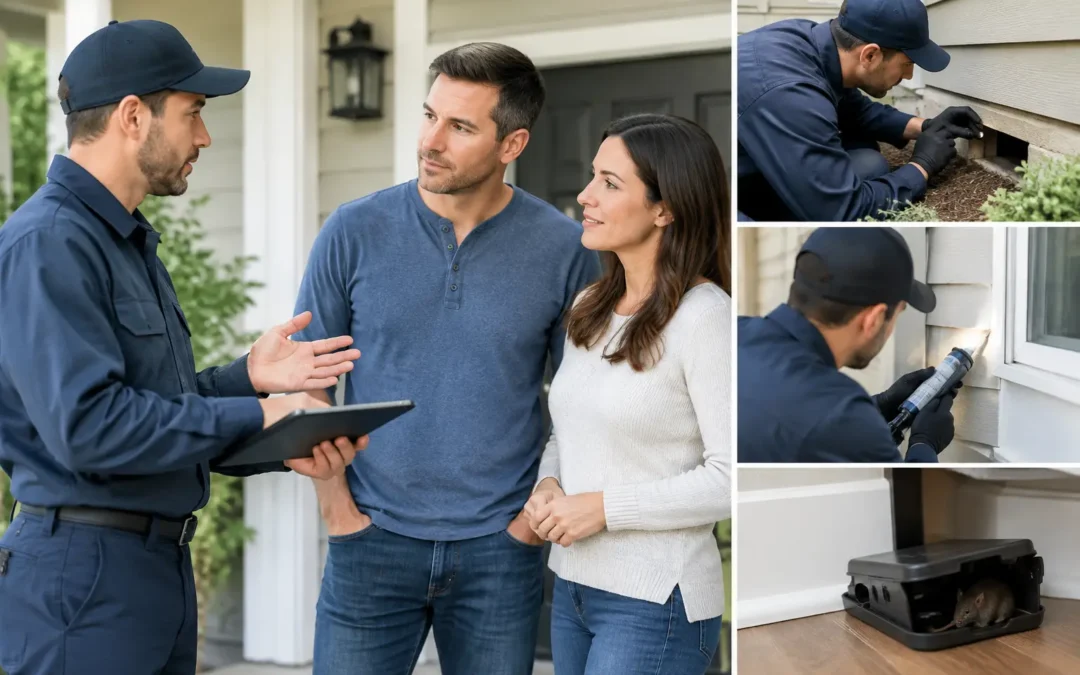
A scratching sound above the ceiling at 2 a.m. can make one trap from the hardware store feel like an urgent solution. Sometimes it catches a mouse. Often, it only addresses the rodent that happened to find it first. Rodent inspection versus trapping is not really a choice between two competing services. Inspection explains the problem. Trapping helps bring active rodent activity under control. The lasting result usually comes from using both, along with exclusion work that keeps new rodents from getting in.
For homeowners, business owners, and property managers in Temecula, Murrieta, and the surrounding valley, that distinction can save time, prevent repeat activity, and protect the building itself.
Rodent Inspection Versus Trapping: The Core Difference
A rodent inspection is the investigative part of the job. A trained technician looks for signs of activity, identifies likely entry points, considers the species involved, and determines where rodents may be nesting, feeding, or traveling. The goal is to understand why the problem started and how extensive it may be.
Trapping is the active removal portion. Properly selected and placed traps can reduce the rodent population currently inside or around a structure. This is especially useful when there are fresh droppings, gnaw marks, noises in walls or attics, damaged food packaging, or confirmed sightings.
Neither approach should be treated as a complete answer on its own. An inspection without a treatment plan leaves active rodents in place. Trapping without inspection can become an expensive cycle if the property still has an opening under an eave, a gap around utility lines, a damaged vent screen, or a door that does not seal correctly.
What a Professional Rodent Inspection Looks For
Rodents are good at staying out of sight. By the time someone sees one in a kitchen, garage, warehouse, or break room, there may already be an established travel route nearby. Inspection is about finding evidence that is easy to miss during a quick walk-through.
Signs of current activity
Fresh droppings, grease marks along walls, gnawing on wood or wiring, shredded nesting material, and tracks in dusty areas can help confirm where rodents are moving. A technician also pays attention to the location and condition of the evidence. Old droppings and fresh droppings tell different stories.
Noises matter, but they are not always enough to identify the issue. Movement in an attic could involve rodents, birds, or another animal. A careful inspection helps avoid treating the wrong pest.
Entry points and conditions that invite rodents
Mice can fit through openings much smaller than most people expect, and rats can exploit loose construction, damaged screens, gaps around pipes, and openings along rooflines. In Southern California, dry conditions can push rodents closer to homes and businesses looking for water, shelter, and food. Landscaping, stored materials, pet food, open trash, fruit-bearing trees, and cluttered garages can all make a property more attractive.
An inspection should look beyond the room where activity was noticed. Exterior walls, garages, attics, crawl spaces, utility penetrations, vents, roof edges, and storage areas all deserve attention. For commercial properties, loading doors, dumpsters, inventory storage, shared walls, and employee break areas are common pressure points.
The likely rodent and its habits
House mice, roof rats, and Norway rats do not behave exactly the same way. Roof rats are often associated with elevated travel routes, trees, rooflines, and attic spaces. Norway rats are more likely to burrow and stay lower to the ground. Mice can establish themselves in tight interior voids and breed quickly.
Knowing the likely species affects trap placement, exclusion recommendations, and the level of monitoring needed. This is one reason a professional assessment is more useful than simply placing a few traps where a rodent was last seen.
When Trapping Is the Right Immediate Step
If rodents are actively inside a structure, trapping is often the fastest direct response. It reduces activity while the larger plan is put into place. The right trap type, placement, and number of traps depend on the property and the evidence found during inspection.
Traps should be positioned along established travel paths, near signs of activity, and in locations that are protected from children, pets, and non-target animals. Placement matters more than simply putting out more traps. Rodents often travel close to walls and avoid open, unfamiliar areas.
For a homeowner, trapping may be appropriate after discovering droppings in a pantry, garage, or attic. For a restaurant, office, warehouse, or retail property, it can be part of a more structured monitoring program. Commercial settings often need documented service, regular checks, and clear communication so managers can protect food, inventory, employees, and customers.
Trapping has limits. It does not repair damaged vents, remove tree branches that provide roof access, or close gaps around plumbing. It also does not eliminate the conditions that caused rodents to choose the property in the first place.
Why Exclusion Is What Stops the Repeat Problem
Exclusion means physically reducing rodent access to a building. Depending on the inspection findings, this can involve sealing gaps, repairing screens, improving door sweeps, closing utility openings, or addressing vulnerable areas around the roofline and foundation.
This work is often the difference between a one-time rodent issue and a recurring frustration. If a rat is trapped but the same gap remains open, another rodent may use that exact route later. In many cases, the building is not dealing with a trapping problem at all. It is dealing with an access problem.
That said, exclusion needs to be timed properly. Sealing a known entry point while rodents are still inside can create new issues, especially if they move deeper into wall voids or find another way out. A professional plan considers active removal and exclusion together rather than treating them as unrelated tasks.
The Best Approach Depends on the Situation
A single mouse sighting does not always mean a large infestation, but it should not be ignored. A focused inspection may show that a door sweep has failed or that a garage door leaves a gap at one corner. In that case, limited trapping and a simple repair may be enough.
Repeated attic noises, recurring droppings, chewed wiring, or activity across several areas point to a larger issue. Those situations usually call for a full inspection, strategic trapping, follow-up service, and exclusion recommendations. Properties with mature landscaping, adjacent open space, nearby construction, or seasonal changes may need added attention because rodent pressure can shift throughout the year.
Commercial properties add another layer. A business may need to respond quickly to a single report, but the service plan must also account for sanitation practices, receiving areas, waste handling, storage layouts, and tenant or employee activity. The goal is not just to remove rodents. It is to keep operations running without ongoing disruption.
What You Can Do Before Service Begins
You do not need to diagnose the species or find every entry point yourself. A few practical steps can make the inspection more productive and reduce immediate attractants. Secure food in sealed containers, clean up fallen fruit, avoid leaving pet food out overnight, keep trash lids closed, and move stored items away from exterior walls when possible.
If you find droppings, avoid sweeping or vacuuming them dry. Use appropriate protective measures and damp-clean the area according to safe cleanup guidance. Also, take note of where and when you have heard noises or seen activity. Details such as “scratching near the laundry room after dark” or “droppings under the warehouse shelving” can help narrow the inspection.
A Clear Plan Brings Faster Relief
The most dependable rodent control plan starts with evidence, not guesswork. Inspection identifies the routes and conditions behind the activity. Trapping addresses the rodents currently using the property. Exclusion helps prevent the next group from taking their place.
At Vineyard Valley Pest Control, the goal is to make that process straightforward: assess the situation, explain what is happening, handle the active problem, and help you protect the property moving forward. If rodent signs keep appearing, treat them as a reason to look closer, not just to set another trap.