
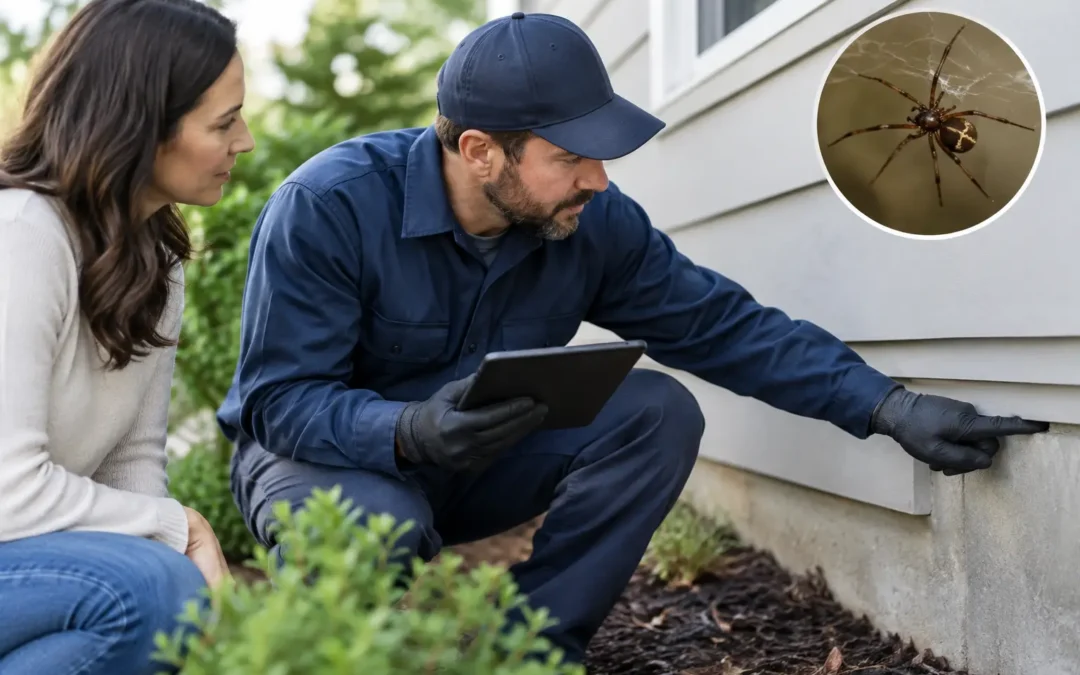
A brown spider hanging beneath a patio chair, planter, or children’s play equipment can make anyone stop in their tracks. Are brown widows dangerous? They can be. Their venom is medically significant, and a bite can be painful, but brown widows are generally shy spiders that bite only when they feel trapped or threatened. The practical goal is not panic. It is reducing the chances of an accidental encounter around your Temecula or Murrieta property.
Are Brown Widows Dangerous to People and Pets?
Brown widows belong to the widow spider family, along with black widows. Like black widows, they have venom that affects the nervous system. A bite may cause localized pain, redness, swelling, muscle cramps, sweating, nausea, headache, or restlessness. Symptoms vary widely from person to person.
For many healthy adults, a brown widow bite is unlikely to become life-threatening. Still, it should be taken seriously. Young children, older adults, pregnant people, and anyone with a medical condition may be more vulnerable to complications. Pets can also be at risk, particularly curious dogs or cats that investigate a spider at close range.
The bigger concern is often where brown widows choose to live. They commonly build webs in places people use without looking closely: under outdoor furniture, inside grill compartments, along fence lines, around pool equipment, beneath eaves, and in cluttered garages or storage areas. A hand reaching into one of these spaces can accidentally press a spider against skin, which is when bites are most likely.
What to do after a suspected bite
Wash the area gently with soap and water, apply a cool compress, and keep the person calm. Seek prompt medical guidance, especially if pain increases or symptoms spread beyond the bite area. Call emergency services immediately for trouble breathing, fainting, severe weakness, chest pain, or other serious symptoms.
If it can be done safely, a clear photo of the spider may help with identification. Do not try to capture it by hand, and do not delay care while searching for it. For pets, contact a veterinarian right away if a bite is suspected or if the animal shows signs such as weakness, agitation, drooling, vomiting, or muscle tremors.
How to Identify a Brown Widow
Brown widows are often mistaken for black widows, harmless house spiders, or young widow spiders. Color alone is not reliable. They may be tan, grayish brown, dark brown, or nearly black, and their bodies can show pale stripes or mottled patterns on the legs and abdomen.
The most recognizable marking is usually an orange or yellow-orange hourglass shape on the underside of the abdomen. It may look less distinct than the bright red hourglass commonly associated with black widows. Brown widows also make irregular, tangled webs rather than the neat circular webs people tend to picture.
Their egg sacs offer another useful clue. Brown widow egg sacs are round and covered with sharp, spiky projections, giving them a textured, almost burr-like appearance. Black widow egg sacs are generally smoother. If you see a small web with these spiky egg sacs around a patio, shed, garage, or outdoor seating area, it is a good reason to avoid disturbing it and arrange for professional inspection.
Why Brown Widows Show Up Around Southern California Homes
Brown widows do well in the warm, dry conditions common throughout the Temecula and Murrieta Valley. They need protected spaces, access to small insects, and enough undisturbed time to establish webs and reproduce. Homes and commercial properties often provide all three.
Outdoor areas with stored items, dense landscaping, stacked firewood, unused pots, and equipment create natural hiding spots. Brown widows may also settle in utility boxes, mailboxes, outdoor storage bins, and gaps around door frames. They are not a sign that a property is unclean. Even well-kept homes can have the sheltered nooks and insect activity these spiders need.
Lighting can contribute to the problem. Exterior lights attract flying insects, which can attract spiders looking for food. That does not mean you need to turn off every porch light, but it does mean regular web removal and insect control around entryways can make a difference.
Where to Check Before You Reach
Brown widow prevention works best when it becomes part of normal outdoor upkeep. Before moving furniture or reaching into a storage area, take a moment to look underneath, behind, and along corners. Gloves are helpful for gardening, garage cleaning, and handling stored materials, but they are not a substitute for checking first.
Pay particular attention to these common spots:
- Patio furniture, cushions, umbrellas, grills, and outdoor toys
- Planters, retaining walls, decorative rocks, and dense ground cover
- Sheds, garages, storage bins, and boxes that have not been moved recently
- Pool equipment, hose reels, irrigation controls, and electrical boxes
- Fence corners, gates, window frames, eaves, and outdoor light fixtures
Regularly removing webs can discourage spiders from settling in, but it needs to be done carefully. Use a long-handled tool or vacuum attachment rather than putting hands near a web. Wear gloves and closed-toe shoes when cleaning hidden areas. If you see multiple egg sacs, frequent webs, or spiders near places children and pets use, it is usually better to leave treatment to a licensed pest control professional.
Practical Ways to Reduce Brown Widow Activity
A few simple property changes can make a yard less inviting to brown widows. Start by reducing clutter near the home. Keep storage bins sealed, move unused items off the ground when possible, and avoid letting cardboard boxes sit undisturbed in garages or covered patios for long periods.
Trim plants away from walls and walkways so spiders have fewer protected bridges to the house. Clear leaf litter and debris from around foundations, and keep firewood elevated and stored away from doors. Repair torn screens and seal obvious gaps around utility penetrations, windows, and doors to reduce both spider access and the insects that draw them in.
There is a trade-off with do-it-yourself products. Store-bought sprays may kill a spider you can see, but they often miss hidden spiders, egg sacs, and the sheltered areas where new webs form. Applying products broadly without a plan can also create unnecessary exposure for kids, pets, and beneficial insects. A targeted approach is more effective and more responsible.
When Professional Brown Widow Treatment Makes Sense
One occasional spider outdoors may only call for careful removal and ongoing observation. Repeated sightings are different. Treatment is worth considering when brown widows appear near doors, patios, play areas, pet spaces, outdoor dining areas, or inside garages and storage rooms. It is also a smart step if you keep finding egg sacs, which can signal an active breeding population.
A professional service should begin with an inspection of the areas where brown widows hide and build webs. The technician can identify conducive conditions, remove visible webs and egg sacs where appropriate, and apply targeted treatments to likely harborage zones. Recurring maintenance can be especially useful for properties with dense landscaping, frequent outdoor use, or continuing spider pressure through warm months.
For local homeowners and businesses, Vineyard Valley Pest Control focuses on practical, targeted service rather than making the issue more complicated than it needs to be. The right plan depends on the level of activity, the layout of the property, and whether people or pets regularly use the affected area.
Brown widows are not a pest to ignore, but they are manageable with calm precautions and consistent attention. Check before reaching into sheltered outdoor spaces, clear the conditions that support webs, and get help promptly when spider activity starts affecting how comfortably you use your home or business.