
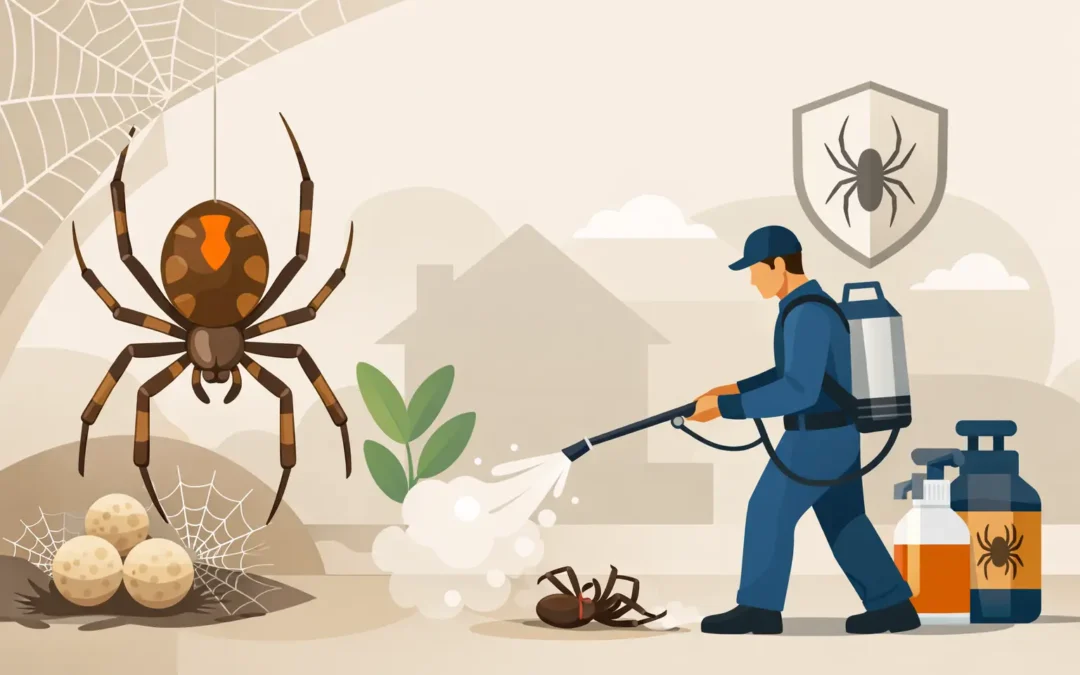
You usually find brown widows where your hand is about to go – under patio furniture, inside utility boxes, along fence lines, behind planters, or tucked into storage areas around the garage. That is why brown widow spider treatment needs to be handled quickly and carefully. Around Temecula, Murrieta, and nearby valley communities, these spiders are a common concern because they like dry, sheltered spaces around homes and commercial buildings.
Brown widows are not the same as the classic glossy black widow many people picture. They are typically lighter brown or mottled tan with banded legs, and they still carry the familiar hourglass marking underneath, often in orange or yellow-orange rather than bright red. Their egg sacs are one of the easiest ways to spot them – they look spiky or tufted, unlike the smoother sacs of black widows. That detail matters because proper identification shapes the right treatment plan.
What effective brown widow spider treatment really involves
A good treatment plan is not just spraying wherever webs are visible. Brown widows are reclusive spiders. They stay hidden in protected harborage areas, and if those spaces are missed, the problem often comes back. Effective brown widow spider treatment combines direct removal, focused application in active zones, and changes around the property that make it harder for spiders to settle in again.
The first step is confirming what you are dealing with. Not every brown spider near a patio is a brown widow, and over-treating the wrong pest wastes time and money. Once brown widows are identified, the next move is to target the places they actually use – eaves, exterior furniture, irrigation boxes, block wall gaps, sheds, play equipment, and cluttered corners where insect activity gives them a steady food source.
This is also where experience matters. Treating only the obvious web leaves behind egg sacs and hidden adults. On the other hand, treating too broadly without a plan can expose people and pets to unnecessary product use while still missing the core problem. The best approach is specific, measured, and built around how brown widows behave on that property.
Why brown widows show up around Southern California properties
Brown widows do well in our climate because they prefer warm, dry conditions and sheltered exterior hiding spots. Newer neighborhoods, hardscape-heavy yards, backyard structures, and decorative outdoor furniture all create good harborage. If there is also a steady supply of insects, the property becomes even more attractive.
For homeowners, the biggest risk areas are patios, garages, mailbox enclosures, children’s play sets, outdoor storage, and the undersides of chairs or tables that do not get moved often. For businesses and property managers, brown widows are often found around loading areas, dumpster enclosures, stair rails, utility rooms, signage, and low-traffic perimeter zones.
It also depends on how the property is maintained. A clean yard can still have brown widows, but heavy clutter, stacked materials, dense ground-level storage, and neglected corners give them a big advantage. If the site has recurring insect pressure from flies, ants, or other small prey, spiders have one more reason to stay.
What professional treatment looks like
Professional service starts with inspection, because the treatment only works as well as the technician’s ability to find active nesting points. The goal is to locate live spiders, webs, egg sacs, and the protected voids where activity is concentrated. From there, treatment is focused on those high-probability areas rather than applied blindly across the whole property.
In many cases, the process includes physical web and egg sac removal first. That matters more than many people realize. If egg sacs are left in place, new spiders can emerge after a surface treatment has already broken down. Removing visible activity reduces the immediate population and helps the product work more effectively in the remaining harborage.
Targeted product application is then used in cracks, crevices, and protected exterior zones where brown widows rest and rebuild. Depending on the property, dusts or residual materials may be used in voids and sheltered spaces, while liquid treatments may be applied to active exterior points. The exact mix depends on access, activity level, and whether the issue is isolated or spread across the structure.
A good service call should also include straightforward communication. You should know where activity was found, what was treated, what to avoid touching right away, and what changes will help lower future spider pressure. That kind of clarity is especially valuable for families, business operators, and property managers who need the problem handled without guesswork.
Can you treat brown widows yourself?
Sometimes, yes – but only for very small, very visible activity, and only if you can do it safely. If you spot a single web under a chair and can remove it while wearing gloves and using caution, that may solve an isolated issue. But brown widows become a different problem when there are multiple egg sacs, repeated sightings, or webs appearing in several parts of the property.
The main challenge with do-it-yourself treatment is access. These spiders hide in tight, protected spots that are easy to miss. Another issue is identification. People often confuse harmless spiders with widows, or they focus on the adult spiders while ignoring egg sacs that are the real source of recurring activity.
Safety is the other factor. Reaching into storage bins, lifting patio cushions, or handling webbing around utility areas can put you too close to the spider. If there is any chance of direct contact, it is better to stop and bring in a licensed professional. That is especially true in homes with children, pets, or anyone who regularly uses the infested area.
How to keep brown widows from coming back
Long-term control comes from reducing both shelter and food. If spiders keep finding protected corners and plenty of insects to eat, they tend to return even after a successful initial treatment. Prevention is not complicated, but it does require consistency.
Start by cutting down clutter in garages, patios, side yards, and storage spaces. Move items off the ground where possible and avoid leaving cardboard, unused pots, tarps, and stacked materials undisturbed for long periods. Brown widows like quiet, protected spaces, so frequent inspection and movement alone can make a difference.
Next, pay attention to lighting and insects. Bright exterior lights can attract flying insects, and that creates a food source for spiders. In some cases, changing bulb type or reducing unnecessary lighting around entry points helps lower insect traffic. Sealing small gaps, keeping trash areas clean, and staying on top of general pest activity also supports spider control.
Regular web removal helps too, especially in problem zones like patio furniture, fences, eaves, irrigation boxes, and playground equipment. If you have had widow activity before, recurring pest service is often the most practical way to stay ahead of it. A one-time treatment can solve the immediate issue, but ongoing maintenance is what keeps new activity from building back up.
When to call for brown widow spider treatment
If you are seeing multiple spiders, finding spiky egg sacs, or noticing webs in areas people use every day, it is time to act. The same goes for rental properties, HOA-managed communities, storefronts, and commercial sites where recurring spider activity can create safety concerns and complaints.
Fast service matters here because widow problems rarely improve on their own. One web can turn into several, and outdoor populations can spread from one protected area to another. For local properties in the valley, the most effective response is a service plan that fits the layout of the building, the level of activity, and the need for follow-up.
That is the value of working with a local company that understands the pest patterns in this area. Vineyard Valley Pest Control sees how brown widows behave around Southern California homes and businesses and can address the issue directly without turning it into a drawn-out process.
If you suspect brown widows around your property, trust what you are seeing and deal with it early. A careful inspection, targeted treatment, and a few smart prevention steps can turn a stressful discovery into a manageable fix.