
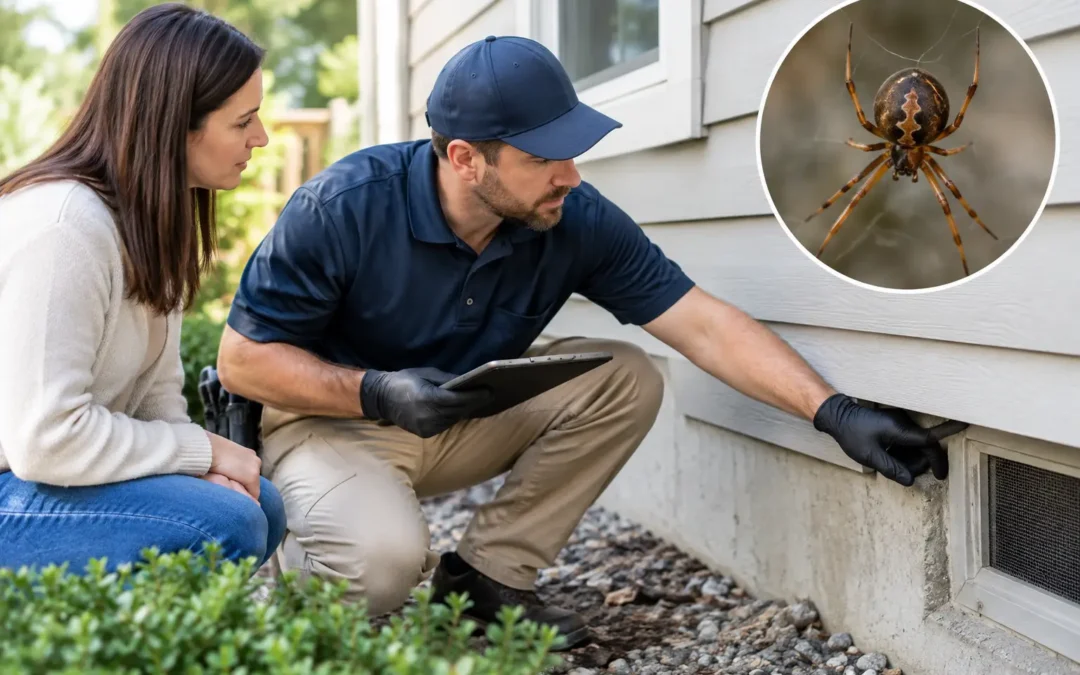
A spider hanging beneath a patio chair or tucked into a grill cover can make anyone stop short. In Temecula and Murrieta, brown widows are a common reason for that reaction. This brown widow identification guide helps you recognize the signs that matter, avoid risky guesswork, and decide when professional spider control is the practical next step.
Brown widows are venomous spiders, but they are generally shy and prefer to retreat when disturbed. The bigger concern is accidental contact – reaching into a storage bin, moving outdoor furniture, or grabbing a child’s toy that has been sitting outside. Knowing where they live and what their egg sacs look like can help you prevent that kind of encounter.
What Does a Brown Widow Look Like?
The brown widow, Latrodectus geometricus, is related to the black widow. Adult females are the spiders homeowners are most likely to notice because they are larger and build the recognizable messy, irregular webs associated with widow spiders.
Color can vary more than the name suggests. A brown widow may be tan, gray-brown, dark brown, or nearly charcoal. Many have a patterned upper body with lighter geometric markings, which is where the scientific name comes from. Their legs often show darker bands, and the abdomen may have lighter lines or patches along the sides and back.
The most useful marking is on the underside of the abdomen. Brown widows often have an hourglass-shaped mark that can be orange, yellow-orange, or red-orange. Unlike the clean bright-red hourglass people associate with black widows, this marking may look less vivid or slightly broken. You should not turn over or handle a spider to check it. Consider the web location, egg sacs, and overall appearance together instead.
Adult female brown widows are usually about one-quarter to one-half inch long in body length, not including the legs. Males are much smaller, lighter in color, and are rarely the spider people identify around a property.
The Spiky Egg Sac Is the Best Clue
If you remember one detail from this brown widow identification guide, make it the egg sac. Brown widow egg sacs are round, pale tan to off-white, and covered in small pointed spikes. They can look like tiny burrs, sea mines, or fuzzy balls with stiff projections.
Black widow egg sacs, by comparison, are generally smooth and papery. That difference is useful because a brown widow may stay hidden in a crack or behind an object while its egg sacs remain visible in the web.
A single female can produce multiple egg sacs over time, so finding several sacs around patio furniture, a shed, or a fence line may indicate an active population rather than one wandering spider. Removing the visible sacs helps reduce future spider activity, but it does not address the adult spiders or the sheltered conditions that attracted them.
Brown Widow vs. Black Widow vs. Common Look-Alikes
Not every brown spider with a web is a brown widow. Accurate identification matters because it helps you respond calmly and appropriately.
Brown widow
A brown widow usually has a mottled or patterned abdomen, banded legs, and an orange-to-red hourglass underneath. It commonly builds an irregular web in protected outdoor areas. Its spiky egg sacs are the strongest identifying feature.
Black widow
An adult female black widow is usually glossy black with a more distinct red hourglass on the underside of its round abdomen. Juvenile black widows can have lighter markings and may not look fully black, which is why color alone can be misleading. Black widows also favor protected locations, including garages, block walls, sheds, woodpiles, and outdoor storage areas.
False widow
False widows are often brown, dark purple-brown, or black with cream-colored markings. They can resemble widows at a glance, but they do not have the characteristic hourglass marking or spiky brown widow egg sacs. Their bodies may look more oval than round.
Orb weavers and house spiders
Many harmless spiders build webs near homes, especially around exterior lights and landscaping. Orb weavers create the familiar circular, wheel-like web. House spiders may create tangled webs, but they usually lack the widow’s rounded abdomen, distinctive underside marking, and burr-like egg sacs.
When you cannot identify a spider safely from a reasonable distance, treat it as a possible widow and avoid contact. A clear photo taken without getting close can help a pest professional evaluate what you are seeing.
Where Brown Widows Hide Around Local Properties
Brown widows do best in dry, sheltered places with plenty of protected corners. In the Temecula and Murrieta Valley, they are frequently found around outdoor living spaces and stored items. Patio furniture is a common hotspot, especially underneath chair seats, along table frames, inside cushions, and around umbrellas.
Check the undersides of barbecue grills, planter rims, hose reels, pool equipment, mailboxes, exterior light fixtures, fence caps, play structures, and trash enclosures. Garages and sheds can also provide ideal hiding spots when boxes, tools, and seasonal items remain undisturbed for long periods.
They tend to build close to surfaces rather than out in the open. Look for an uneven, three-dimensional web extending into a corner, gap, or recess. The web may seem untidy, but it is strong and sticky. Do not reach into it to investigate.
Commercial properties can have similar pressure points. Dumpster areas, loading zones, equipment storage, outdoor break spaces, irrigation controls, and unused displays create protected harborage. Regular inspections are especially helpful where employees or customers may put their hands near structures without noticing a web.
What to Do When You Find a Suspected Brown Widow
First, keep children and pets away from the area. Do not touch the spider, web, or egg sacs with bare hands, and do not rely on a quick spray from several feet away. A disturbed spider can retreat deeper into a crack, and a missed egg sac can lead to more activity later.
For an isolated web in a low-risk area, some homeowners choose to carefully remove the web and egg sacs with a vacuum extension or a long-handled tool while wearing gloves, closed-toe shoes, and long sleeves. Dispose of vacuum contents in a sealed bag outdoors right away. This approach is best reserved for a clearly visible web where you do not need to reach into a tight or hidden space.
Avoid moving stored furniture, boxes, or equipment with bare hands. Shake out gloves, shoes, towels, and outdoor cushions before using them if they have been left in a garage, shed, or patio area. Reducing clutter, sealing gaps around storage areas, and keeping furniture slightly away from walls can make future inspections easier.
A professional inspection is the safer choice when spiders are inside the home, multiple egg sacs are present, web activity is widespread, or the infestation is near children’s play areas, pet spaces, or frequently used patio seating. Targeted treatment should focus on active harborages and entry points, not just visible spiders. Ongoing exterior maintenance can also be worthwhile for properties that see repeated widow activity through the warmer months.
When a Bite Needs Medical Attention
Brown widows are not aggressive, and bites are uncommon. Most happen when the spider is pressed against skin inside clothing, gloves, shoes, or objects that have been stored outside. Symptoms can range from local pain, redness, and swelling to muscle cramping, sweating, nausea, or more widespread discomfort.
Wash the area gently with soap and water, apply a cool compress, and seek medical advice promptly, particularly for children, older adults, or anyone with severe or worsening symptoms. Call emergency services for trouble breathing, severe muscle pain, fainting, or signs of a serious allergic reaction. If it can be done safely, a photo of the spider can be useful, but do not try to capture it.
Brown widow activity does not mean a property is unclean. It usually means the spiders have found quiet cover, reliable web sites, and access to small insects. A careful inspection and a direct response can make those spaces far less inviting – and let you use your patio, garage, or business property with more confidence.