
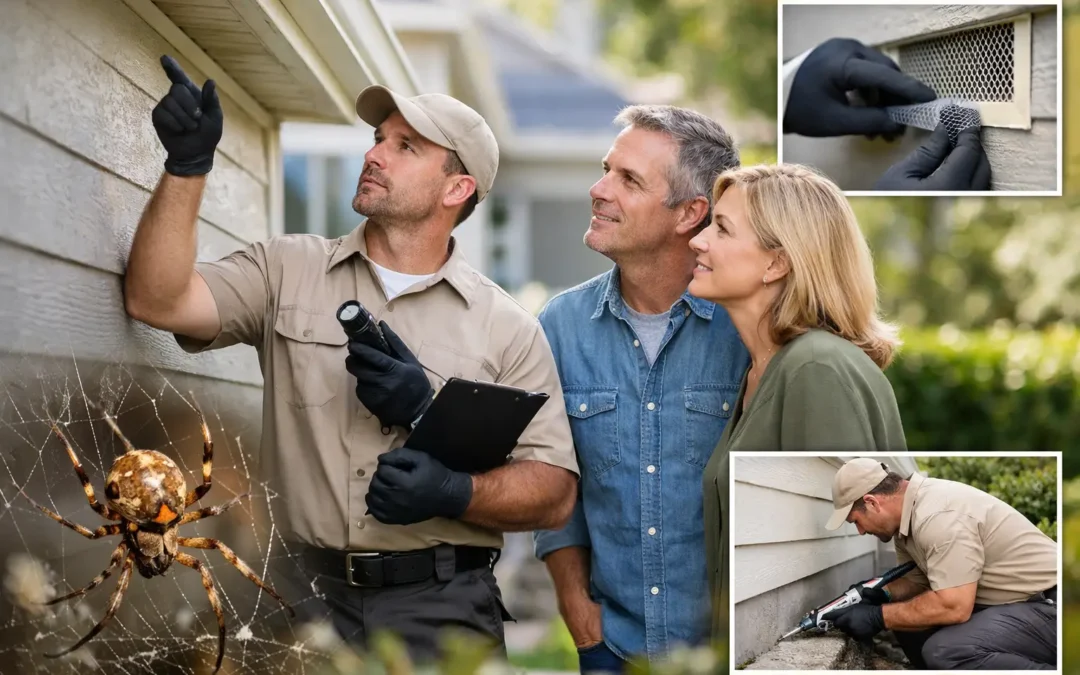
Brown widow spiders rarely announce themselves in the middle of a yard. More often, they show up where people reach without looking: beneath patio chairs, inside irrigation boxes, around barbecue carts, under planters, and along block walls. Preventing brown widow spiders outside is largely about making those protected, low-traffic spaces less inviting before webs and egg sacs begin to build up.
In Temecula and Murrieta, warm weather can keep outdoor spider activity going well beyond the months when many homeowners expect it. A few simple routines can reduce the places brown widows use to settle in, while professional help can address recurring activity around the areas your family, guests, tenants, or customers use most.
Why Brown Widows Settle Near Homes
Brown widows prefer quiet, sheltered spots that protect their webs from wind, rain, and frequent disturbance. They are often found close to people because homes provide exactly that: covered patios, storage items, outdoor furniture, fencing, utility equipment, and landscaping features with plenty of narrow gaps.
They also benefit when small insects are available nearby. Porch lights that attract flying insects, overflowing trash, pet food left outside, and dense landscaping can all add to the food supply. That does not mean every spider problem is caused by one issue. In most cases, it is a combination of hiding places, prey, and a lack of regular web removal.
Brown widows are typically tan to dark brown with markings that can vary. Their egg sacs are often easier to recognize than the spider itself because they have a distinctive spiky appearance. Still, homeowners should avoid handling any suspected widow spider or egg sac with bare hands. When in doubt, treat the area carefully and have it identified by a pest professional.
7 Steps for Preventing Brown Widow Spiders Outside
1. Clear the sheltered clutter first
Start with the items that sit undisturbed against the house, fence, or patio for weeks at a time. Stacked pots, unused buckets, boxes, tarps, wood piles, spare materials, and children’s outdoor toys can create ideal web sites.
You do not need an empty yard. The goal is to keep stored items organized, elevated when practical, and away from exterior walls. If an item must stay outdoors, move it occasionally and inspect underneath before picking it up.
2. Check furniture before people use it
Outdoor chairs, tables, cushions, umbrellas, grills, and patio storage benches are common brown widow hiding spots. Their webs are irregular and messy rather than the neat circular webs people often picture.
Make a quick inspection part of your patio routine, especially before a gathering or after furniture has been unused. Look under seats, around legs, behind cushions, and beneath the rim of tables. Wear gloves, use a tool rather than your hands, and keep children from reaching into hidden spaces.
3. Remove webs and egg sacs carefully
Regular web removal interrupts a spider’s ability to stay established in one place. A long-handled web duster, broom, or vacuum tool can work well for reachable outdoor areas. Dispose of collected material in a sealed bag rather than leaving it in an open yard waste pile.
This is useful maintenance, but it may not solve an active infestation by itself. If you keep seeing fresh webs in the same protected corners, the area may need a more targeted treatment and a closer inspection for nearby harborages.
4. Reduce insect activity around doors and patios
Spiders stay where food is easy to find. Reducing the insects around your home can make web sites less productive over time. Keep trash containers closed, clean up outdoor spills, avoid leaving pet food out overnight, and address standing water that can support mosquitoes and other insects.
Lighting is another practical consideration. Bright lights near entries can draw insects after dark, which may attract spiders to the same area. It depends on the layout of your property, but moving a light farther from a door or using a lower-attraction option can help keep insect activity away from main entrances.
5. Maintain a clear zone along the foundation
Dense plants, ground cover, ivy, and decorative materials placed tightly against the home give spiders protected routes and hiding places. Trim vegetation so it does not press against walls, windows, or patio covers. Keep mulch, stored materials, and planters from creating a continuous sheltered edge around the foundation.
This does not mean landscaping needs to look bare. A well-kept landscape can still be full and attractive. What matters is access for inspection and enough open space to spot web activity before it spreads into patios, garages, or entryways.
6. Inspect utility and storage areas on a schedule
Irrigation valve boxes, electrical enclosures, sheds, garage corners, pool equipment areas, and outdoor cabinets deserve regular attention. These locations are shaded, rarely disturbed, and full of small crevices, making them especially attractive to brown widows.
A monthly inspection is a good starting point for most properties. Check more often during warm stretches or if you have found widows there before. Use gloves and a flashlight, and do not reach into a box or cabinet until you can see where your hand is going.
7. Address recurring activity with targeted pest control
When brown widows keep returning, a professional approach is usually more effective than repeatedly knocking down webs. A licensed technician can identify the main harborage areas, treat appropriate exterior cracks and protected zones, and help reduce the insect activity that supports spider populations.
Targeted service matters because spraying every surface is not the answer. The best plan focuses on where spiders are actually nesting and on the conditions allowing them to come back. For homes with regular outdoor activity, recurring pest maintenance can also provide early detection before a few webs become a larger concern.
Areas That Need Extra Attention
Some parts of a property create more risk simply because people use them often while spiders can remain hidden nearby. Play structures, patio seating, mailboxes, gate hardware, barbecue islands, and pool furniture should be checked routinely. Commercial properties should also inspect dumpster enclosures, outdoor break areas, loading zones, storage sheds, and landscaping along customer walkways.
Property managers may need a slightly different approach than homeowners. One overlooked storage corner at a multifamily property can affect several residents, while a web near a customer entrance can create concern for a business. Regular inspections and clear reporting help keep small issues from becoming repeat complaints.
What to Do if You Find a Brown Widow
Stay calm and keep people and pets away from the immediate area. Do not crush or handle the spider with bare hands. If it is in a low-risk area away from regular activity, you can arrange removal using protective clothing and a long-handled tool. If it is near a door, play area, patio, or frequently used workspace, professional treatment is the safer choice.
If someone believes they have been bitten, wash the area with soap and water, apply a cool compress, and seek medical guidance promptly, particularly if pain, muscle cramps, nausea, sweating, or other concerning symptoms develop. Brown widows are not typically aggressive, but any suspected widow bite deserves care.
For persistent outdoor spider activity in the Temecula and Murrieta Valley, Vineyard Valley Pest Control can inspect the problem areas, explain what is drawing spiders in, and provide straightforward treatment options. A safer patio often starts with one careful inspection and a plan that fits how you use your property.