
A fresh dirt mound can appear almost overnight, right where a healthy lawn, young shrub, or irrigation line was doing fine the day before. That is why recognizing the top signs of gopher damage early matters. In Temecula, Murrieta, and nearby valley communities, gophers can quietly tunnel beneath lawns and landscaped areas long before the visible damage becomes hard to ignore.
Gophers are active underground, so homeowners rarely see the animal itself. What they do see are the results: displaced soil, stressed plants, uneven turf, and sometimes costly irrigation issues. Knowing what to look for helps you respond before one active tunnel system turns into a larger landscaping problem.
Fan-Shaped Mounds of Fresh Soil
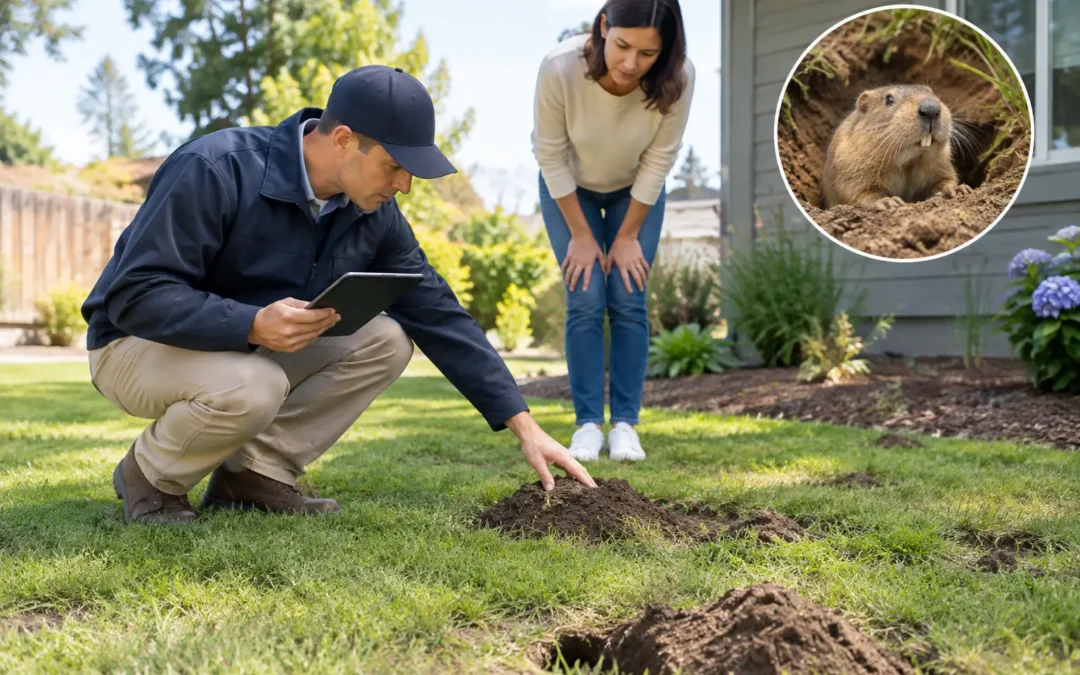
The most recognizable sign of a gopher is a mound of loose, freshly pushed soil. Unlike a simple pile of dirt, a gopher mound is often fan-shaped or crescent-shaped, with soil spreading outward from a plugged tunnel opening. The actual opening is usually covered, which helps distinguish gopher activity from other burrowing animals.
Mounds may show up along fence lines, beside patios, in garden beds, or across open lawn areas. A single mound does not always mean extensive damage, but new mounds appearing every few days are a clear sign that the gopher is actively expanding its tunnel system.
In dry Southern California soil, fresh mounds can stand out sharply because the exposed dirt is darker and looser than the surrounding ground. After wind, watering, or rain, older mounds may flatten out. That is why checking for newly disturbed soil is more useful than counting every mound you can see.
Plant Damage That Starts at the Roots
A shrub or small tree that suddenly wilts may look like it needs water. Sometimes it does. But if the soil is moist and the plant continues to decline, a gopher may have chewed through its roots beneath the surface.
Gophers feed on roots, bulbs, tubers, and tender plant material. They can pull smaller plants down into their tunnels or leave them leaning loosely in the soil. Vegetable gardens, flower beds, native plantings, and newly installed landscaping are especially vulnerable because the roots are often easier to reach and more appealing.
Watch for plants that yellow, wilt, or die in isolated patches rather than across the entire yard. If a healthy plant can be pulled up with little resistance, inspect the root area. Missing or chewed roots, along with nearby soil mounds, point more strongly to underground rodent activity than to a routine watering problem.
Young Trees Need Extra Attention
Young trees can be expensive to replace, and root damage may not be obvious right away. A gopher tunneling close to the root zone can weaken a tree’s ability to take up water, particularly during hot stretches in the valley. You may notice sparse foliage, slow growth, or a tree that looks stressed despite regular irrigation.
Established mature trees are usually more resilient, but their roots can still be affected. If several plants in one area are declining, it is worth checking the ground for tunnel activity instead of assuming every plant has the same irrigation issue.
Soft Ground, Sunken Areas, and Tunnel Movement
Gopher tunnels are usually several inches below the surface, though depths vary with soil conditions, moisture, and available food. As tunnels expand or collapse, you may notice soft spots, shallow ridges, or small sunken areas in the lawn.
These changes can create more than a cosmetic problem. Uneven ground can become a tripping hazard around walkways, play areas, and commercial landscaping. In turf, a foot may sink slightly where soil has been hollowed out below. In garden beds, the ground may feel loose even where there is no new mound on top.
Do not rely on surface appearance alone. Gophers may reuse portions of a tunnel system while plugging old openings, so a yard can have active underground movement with only a few visible mounds. Repeated activity in the same area is often a reason to act sooner rather than wait for obvious damage to spread.
Irrigation Problems With No Clear Above-Ground Cause
Irrigation lines and gopher tunnels often occupy the same parts of a yard. Both follow planting beds, lawn edges, and areas where the soil is easier to work. A gopher can damage drip tubing, expose lines, or create conditions that cause water to collect or flow unevenly.
Signs may include a wet spot in an otherwise dry area, a sprinkler zone with weak pressure, or plants that receive less water than they should. You may also find drip emitters pulled underground or tubing that has shifted out of place.
Not every leak is caused by a gopher, and not every gopher tunnel will affect irrigation. Still, when new soil mounds appear near a line that suddenly needs repair, the connection is worth investigating. Fixing the line without addressing active tunneling can lead to another repair later.
Damage Along Edges, Beds, and Open Areas
Gophers do not limit themselves to large grassy yards. They often work along property edges, under low-growing ground cover, around raised beds, and near areas with softer soil. Open slopes and landscaped common areas can also provide favorable conditions, especially where vegetation offers a steady food source.
For commercial properties, gopher activity can affect curb appeal and routine maintenance. Fresh mounds in entry landscaping, around parking-lot islands, or beside sidewalks can make an otherwise well-kept property look neglected. On residential properties, the concern is often a lawn or garden that has taken time and money to establish.
If your property borders open space, a vacant lot, vineyard area, or undeveloped land, ongoing monitoring is especially helpful. Gophers can move from one favorable area to another, and a previously quiet yard can become active after landscaping changes, irrigation adjustments, or seasonal shifts.
How to Tell Gophers From Moles and Ground Squirrels
Correct identification makes a difference because not all burrowing animals leave the same evidence or require the same approach. Gophers typically leave plugged, fan-shaped mounds and create underground tunnels while feeding on roots and plants.
Moles often make raised surface ridges and more volcano-shaped soil piles. Their diet is mainly insects and grubs rather than plant roots, though their tunneling can still disrupt turf. Ground squirrels are more likely to leave open burrow entrances, often several inches wide, and you may see them above ground near their holes.
If you are uncertain, take note of the mound shape, whether the hole is open or plugged, and where the activity is happening. Those details can help a pest professional determine what is affecting the property and recommend the right next step.
When Gopher Damage Calls for Professional Help
A new mound is a good reason to monitor the area. Multiple fresh mounds, recurring plant loss, irrigation damage, or activity near structures are good reasons to call for help. Gopher problems are easier to manage when the activity is current and localized, rather than after tunnels have spread through several landscaped zones.
Avoid filling in mounds and assuming the problem is gone. Leveling the surface may improve appearance, but it does not remove the animal or stop active tunnels. Likewise, home remedies can be inconsistent, particularly in larger yards or properties with established landscaping.
A targeted professional approach begins with identifying active areas, evaluating the property layout, and selecting a treatment method suited to the location. This is particularly valuable around children’s play spaces, pets, garden areas, irrigation equipment, and shared commercial landscapes. Vineyard Valley Pest Control can help local homeowners and property managers address active gopher activity with straightforward recommendations and dependable follow-up.
Protect the Yard You Have Worked Hard to Build
Once active gopher activity has been addressed, keep an eye on the areas that first showed damage. Walk the property after mowing, watering, or rain, when fresh soil and new tunneling are easier to spot. Check around vulnerable plants and irrigation lines before small signs become larger repairs.
A gopher may be out of sight, but the evidence does not have to be. Quick attention to fresh mounds, stressed plants, and unexplained ground changes can help protect the lawn, landscape, and irrigation system you rely on every day.