
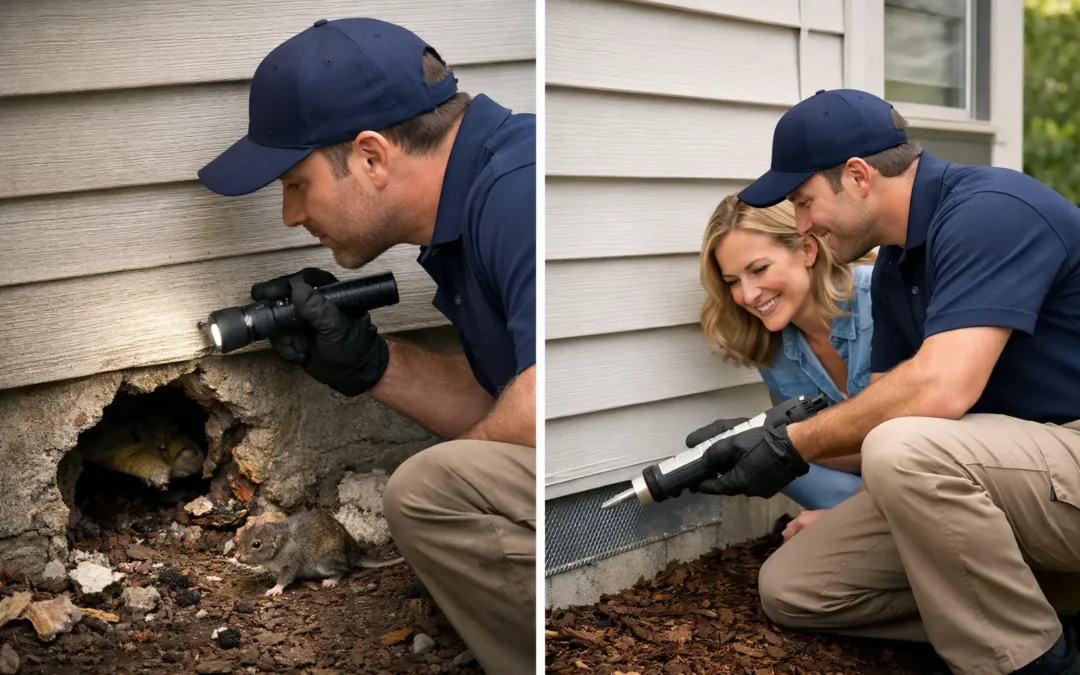
A few droppings in the garage or scratching above the ceiling can feel like a small problem at first. Then the concern grows: Is something nesting in the attic? Can it get into the kitchen? What else is it damaging? Rodent exclusion before and after is less about a cosmetic change and more about restoring control of your home or business by stopping rodents from getting inside in the first place.
For properties in Temecula, Murrieta, and the surrounding valley, the difference can be significant. Mice and rats look for shade, water, food, and protected nesting areas, especially when outdoor temperatures rise or seasonal conditions push them closer to buildings. A proper exclusion service addresses the openings they use, not just the rodents you happen to see.
What Rodent Exclusion Means
Rodent exclusion is the process of finding and sealing the gaps, cracks, vents, utility penetrations, and other access points rodents use to enter a structure. Mice can fit through surprisingly small openings, while rats can exploit larger gaps around pipes, rooflines, garages, and foundation areas.
This work is different from simply placing traps or bait. Trapping can reduce the rodents currently active inside, but it does not correct the reason they got in. If entry points remain open, new rodents may follow the same scent trails and move right back in.
A dependable plan usually combines inspection, targeted removal or control when activity is present, sealing accessible entry points, and practical recommendations for reducing the conditions that attract rodents. The right approach depends on the building, the severity of the activity, and whether rodents are currently inside the structure.
Before Rodent Exclusion: What Homeowners Often Notice
Before exclusion work begins, the signs are not always dramatic. Many homeowners first notice droppings along garage walls, under sinks, behind stored boxes, or near pet food. Others hear movement at night in the attic, wall voids, or ceiling. Chewed cardboard, damaged insulation, grease marks along baseboards, and a stale odor in enclosed areas can also point to rodent activity.
On commercial properties, warning signs may appear in storage rooms, break areas, trash enclosures, utility closets, or near loading doors. Even a small amount of rodent activity can create a larger concern for food service businesses, offices, warehouses, rental properties, and other facilities that need to protect their building and reputation.
The exterior often tells the bigger story. Common access points include gaps under garage doors, unsealed openings around plumbing and air-conditioning lines, damaged vent screens, openings at roof intersections, and spaces where siding or stucco meets utility equipment. Landscaping and stored materials can make access easier when branches touch the roof or boxes, firewood, and clutter sit close to the building.
Not every opening needs the same repair. A gap around a pipe requires a different solution than a damaged crawlspace vent or a separation near a roofline. That is why an inspection matters. Effective rodent work is not about applying the same material everywhere. It is about identifying the routes rodents are actually using and selecting repairs that hold up in the right location.
The Work That Creates the After
The best after-results start with a thorough look at the property. A technician should inspect likely entry areas from the ground level up, including the foundation, garage, exterior doors, vents, eaves, roofline transitions, utility lines, and accessible attic or crawlspace areas when appropriate.
Once the likely access points are identified, exclusion materials are selected based on the size and location of each opening. Depending on the situation, this may involve metal mesh, durable screening, door sweeps, vent protection, sealant, or other materials designed to resist gnawing and weather exposure. The goal is to close access without interfering with necessary ventilation, drainage, or normal operation of the building.
If rodents are active indoors, the timing of sealing matters. Closing an opening while animals are still inside can create new problems, including rodents searching for another way out through walls or living spaces. A professional may use trapping, monitoring, or a staged plan before finalizing certain entry points. This is one reason rodent exclusion is not always a one-visit fix.
Vineyard Valley Pest Control approaches the process with the practical goal homeowners and business owners care about most: identify the activity, address the access, and keep you informed about what comes next.
Rodent Exclusion Before and After: The Real Changes
After a well-planned exclusion service, the most meaningful change is that the building is harder for rodents to enter. You may see secured vents, sealed utility gaps, reinforced weak spots, and improved protection around doors or other vulnerable areas. Those visible repairs matter, but the less visible change is just as valuable: rodents lose their easy route to food, shelter, and nesting space.
Inside, signs of fresh activity should decline over time. That can mean fewer or no new droppings, less scratching at night, no additional chewing damage, and less concern about rodents moving through storage or living areas. Existing odors, staining, nesting debris, and damaged insulation may still need cleanup or repair. Exclusion prevents future access; it does not automatically erase what happened before.
The timeline depends on the situation. A small mouse issue caught early may settle quickly once access is removed and interior activity is addressed. A long-term attic infestation, a large property, or a building with several vulnerable areas may need more monitoring and follow-up. Rodents can also be persistent when food and shelter remain easily available nearby.
That is why realistic expectations matter. No one can promise that wildlife will never approach a property again. The practical goal is to make entry much more difficult and to respond quickly if new evidence appears.
What Exclusion Cannot Solve on Its Own
Sealing entry points is one of the strongest long-term defenses against rodents, but it works best alongside good sanitation and property upkeep. An open source of food or water can continue to draw rodents close to the building, even when they cannot get inside.
Keep pet food in sealed containers, clean up fallen fruit when possible, and avoid leaving birdseed or food debris near the home. Secure trash lids, reduce heavy clutter near walls, and store firewood away from the structure. Trim vegetation that creates a bridge to the roof or blocks a clear view of the foundation.
For businesses, regular cleaning around dumpsters, loading areas, kitchens, and employee break spaces is especially important. A door left open during deliveries or a damaged sweep at a service entrance can undo otherwise solid exclusion work.
When to Schedule an Inspection
Call for an inspection when you find fresh droppings, hear repeated scratching, notice chewing, or spot a rodent indoors. It is also wise to schedule help if you have had rodent issues before, are moving into a previously vacant property, or notice visible gaps around the exterior.
Early action usually means fewer repairs, less contamination, and a simpler solution. Waiting until activity becomes obvious can allow rodents more time to damage wiring, insulation, stored belongings, and other parts of the property.
A secure home should not depend on hoping the noise in the attic goes away. A careful inspection and properly targeted exclusion can turn an ongoing worry into a manageable maintenance issue, so you can get back to using your space with confidence.