
Brown widow webs tend to show up where you least want to reach: beneath patio furniture, inside stored kids’ toys, around barbecue grills, and under the rim of a trash bin. Knowing how to remove brown widows safely starts with one rule: do not put bare hands into a sheltered outdoor space until you can see what is there.
Brown widows are common around Temecula, Murrieta, and neighboring Southern California communities because they do well in warm, dry landscapes with plenty of protected hiding places. They are not aggressive spiders, but they will bite if trapped against skin or disturbed in a web. A careful cleanup and prevention plan can make your yard, garage, or business exterior much less inviting.
Confirm You Are Dealing With Brown Widows
Adult brown widows can vary more in color than most people expect. Some are tan with dark markings, while others look almost charcoal gray. Many have an orange or yellowish hourglass-shaped marking on the underside of the abdomen, but color alone is not the best way to identify them.
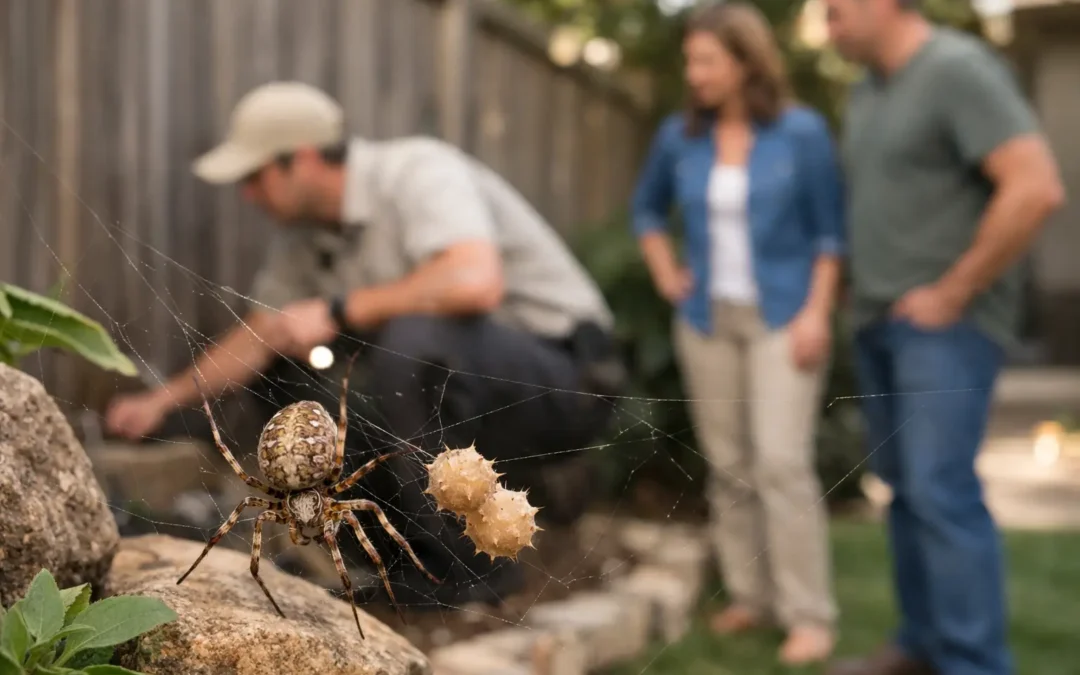
Their egg sacs are usually the biggest clue. Brown widow egg sacs are round and covered in tiny pointed projections, giving them a spiky or burr-like appearance. Black widow egg sacs are generally smooth. Brown widows also build irregular, tangled webs close to the ground in protected corners and underneath objects.
Treat every suspected widow spider with care. If you cannot clearly identify it, avoid handling it and use the same precautions you would for a potentially venomous spider. This is especially sensible around areas used by children, pets, customers, or employees.
Prepare Before Removing Brown Widow Webs
The right protective gear makes a simple job safer. Wear closed-toe shoes, long pants, gloves that fit closely at the wrist, and a long-sleeved shirt. A flashlight helps you inspect dark gaps around fencing, planters, outdoor storage, and garage shelves. Keep children and pets away from the area while you work.
Do not rely on a quick spray alone. Sprays may kill a spider you can see, but they do not remove egg sacs, webs, or the clutter that gives new spiders a protected place to settle. Physical removal and habitat cleanup are what make the biggest difference over time.
Before you begin, look carefully under and behind anything that has been sitting outdoors for a while. Common brown widow locations include patio chairs, pool equipment, garden pots, stacked firewood, storage boxes, decorative wall features, utility meters, and the undersides of outdoor trash containers.
How to Remove Brown Widows Safely
If there is one visible web and you can reach it without placing your hands near the spider, removal can be straightforward. Use a long-handled duster, broom, or web-removal tool to knock down the web and egg sacs from a safe distance. Avoid crushing egg sacs with unprotected hands. Once removed, collect the webbing and sacs in a sealed bag and place the bag in an outdoor trash container.
For a spider that is in an exposed spot, a vacuum with a hose attachment can be useful. Keep the hose at a distance, vacuum the spider, web, and nearby egg sacs, then immediately empty the vacuum contents into a sealed bag outside. Do not leave the vacuum indoors with a live spider inside it.
Use a labeled residual spider treatment only where it is appropriate and only according to the product directions. Focus on cracks, crevices, and protected exterior harborages rather than broadly spraying every surface. Never apply products to food-preparation surfaces, children’s play equipment, or areas where pets may contact wet treatment.
For larger infestations, repeated web activity, or difficult locations, it is safer to bring in a licensed pest professional. This is particularly true when webs are found around electrical equipment, high exterior areas, dense landscaping, or commercial properties where employees and customers may be exposed.
A practical removal process looks like this:
- Inspect the area with a flashlight and identify webs, spiders, egg sacs, and sheltered gaps.
- Remove webs and egg sacs using a long-handled tool or vacuum attachment, keeping your hands away from the web.
- Seal and discard collected material outdoors.
- Clean up nearby clutter and inspect the same locations again over the next several weeks.
Remove the Places Brown Widows Prefer
Brown widows are less likely to stay where there are few protected hiding places and less available prey. Their webs often appear in quiet, undisturbed spaces, so regular outdoor maintenance matters more than most homeowners realize.
Start by moving stored items off the ground where possible. Plastic bins with tight-fitting lids are better than open boxes, loose bags, or stacked containers that create dark gaps. Keep patio furniture, grills, and outdoor toys pulled away from walls when they are not in use, and inspect them before moving them.
Trim plants so they do not press tightly against the home, garage, or business exterior. Clear leaf litter, old pots, unused garden materials, and debris from around fences and landscaping edges. If firewood is needed, keep it stacked neatly and away from the structure.
Outdoor lighting can also influence spider activity because lights attract insects, and insects attract spiders. Consider using motion-activated lighting where practical or switching unnecessary exterior lights off when they are not needed. This will not eliminate brown widows by itself, but it can reduce the insect activity that supports them.
Keep Brown Widows From Coming Back
A one-time cleanup can remove the problem you see today. Prevention requires checking the places spiders use before their webs become established. In warm Southern California weather, that may mean inspecting outdoor spaces more often than you would in colder regions.
Check patio furniture, storage areas, garage corners, fence lines, and trash bins every week or two during active seasons. Webs are easiest to manage when they are new and small. Make it part of the routine after yard work, before hosting guests outside, or when moving seasonal decorations and equipment.
Pay attention to insect activity as well. If exterior lights, leaking irrigation, overflowing trash, or outdoor food residue are attracting insects, spiders have more reason to remain nearby. Addressing these conditions supports better long-term control than spider treatment alone.
For homes with recurring spider activity, regular pest maintenance can help keep exterior harborage areas under control. At Vineyard Valley Pest Control, targeted brown widow service is built around inspection, web removal, appropriate treatment, and practical recommendations for the specific conditions around your property.
When Professional Brown Widow Control Makes Sense
You may be able to remove an occasional web yourself. The trade-off is that widow spiders are often tucked into places that are awkward to inspect safely, and egg sacs can lead to a new wave of spider activity if they are missed.
Professional service is a smart choice when you find multiple egg sacs, see webs appearing repeatedly, or notice spiders in high-contact areas such as play spaces, entryways, patio seating, garage storage, or employee work areas. Property managers and business owners may also need a more consistent inspection schedule to protect tenants, staff, and visitors.
A licensed technician can identify likely harborage sites, treat appropriate exterior cracks and voids, remove active webs, and help set up a plan that fits the property. For some locations, a one-time targeted treatment is enough. For others, especially properties with ongoing exterior insect pressure or heavy landscaping, recurring service is more dependable.
If Someone Is Bitten
Most brown widow bites happen when a spider is pressed against skin while someone is moving stored items, putting on shoes, or reaching beneath furniture. Wash the area gently with soap and water, apply a cool compress, and monitor symptoms. Seek medical advice promptly if there is severe pain, spreading symptoms, muscle cramping, difficulty breathing, vomiting, or concern involving a child, older adult, or someone with a serious health condition.
You do not need to live with webs around the spaces your family, customers, and employees use. A careful inspection today and a consistent outdoor cleanup routine can keep brown widows from turning a quiet corner of the yard into their next hiding place.