
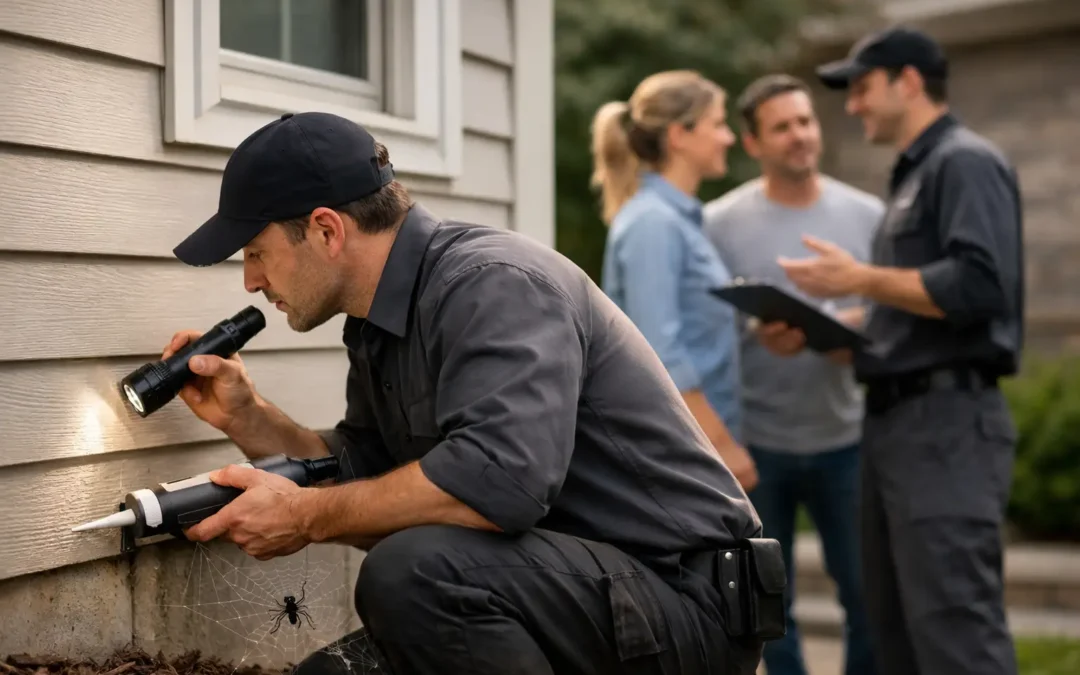
A few webs in a quiet corner do not always mean you have a serious infestation. But when spiders keep appearing around patio furniture, garage shelving, window frames, or inside the house, it is time for a practical plan. This homeowner guide to spider control explains how to make your Temecula or Murrieta property less inviting to spiders, when to be cautious, and when professional help is the sensible next step.
Why Spiders Keep Showing Up
Spiders settle where they can find two things: protected places to hide and a steady supply of insects to eat. That is why spider activity often increases around exterior lights, landscaped areas, stored belongings, garages, sheds, and patios. The web is the visible part of the problem, but the conditions supporting it are usually nearby.
Southern California homes can provide those conditions year-round. Warm weather, irrigation, outdoor entertaining spaces, and landscaped yards all create places for insects to gather. If moths, flies, ants, or other small insects are active around the home, spiders have a reason to stay.
Most spiders homeowners see are more of a nuisance than a danger. Still, brown widow spiders are common in many valley neighborhoods and deserve extra care. They often build irregular webs in sheltered outdoor locations such as patio furniture, fence lines, utility boxes, planters, barbecue areas, play equipment, and garage corners. Black widows may also be found in protected, undisturbed areas. It is best not to handle any suspected widow spider or reach blindly into a webbed area.
Start With Web Removal, Then Address the Cause
Removing webs is a good first move because it immediately improves the appearance of the property and disrupts established spider activity. Use a long-handled duster or vacuum attachment for eaves, window frames, patio covers, corners of the garage, and outdoor furniture. Wear gloves and use care around dark, sheltered spaces.
Web removal alone is temporary if the area continues to offer food and cover. After cleaning, look at what is drawing insects to the space. A bright porch light that stays on all night, a leaky hose bib, an overflowing trash bin, or a thick planting bed pressed against the wall can all contribute to the cycle.
For outdoor lighting, consider switching off unnecessary lights when practical or using bulbs that are less attractive to insects. This will not eliminate spiders by itself, but it can reduce the insect activity that supports them near entryways and patios.
A Homeowner Guide to Spider Control Around the Yard
The goal outside is not to make a yard bare or unpleasant. It is to reduce the protected, low-disturbance spots where spiders can build webs without interruption. Focus on the areas closest to the house first, especially doors, windows, patios, garages, and exterior utility areas.
Keep shrubs, vines, and tree branches trimmed away from exterior walls and rooflines. Plants touching the home can create a bridge for many pests, while dense foliage near windows and eaves provides protected web-building space. The right amount of trimming depends on the landscaping, but creating a visible gap between plants and the structure is generally helpful.
Move stacked firewood, lumber, cardboard, unused pots, and stored outdoor items away from the foundation when possible. If materials need to stay outside, keep them orderly and elevated rather than scattered against the home. Spiders favor locations that stay shaded and undisturbed for long periods.
Patio furniture needs occasional attention, especially pieces with deep cushions, hollow frames, or covers. Before sitting down or asking children to play nearby, check beneath armrests, underneath tables, and around the legs. A quick inspection is particularly worthwhile after furniture has not been used for a while.
Make the Garage and Interior Less Hospitable
Garages are one of the most common spider trouble spots because they combine clutter, darkness, and limited disturbance. Cardboard boxes, rarely used sports equipment, seasonal decorations, and wall-to-wall storage give spiders plenty of hiding places.
Replace cardboard with sealed plastic bins where it makes sense, and keep stored items off the floor and a few inches away from walls. You do not need a perfectly empty garage. You do need clear enough access to inspect corners, sweep webs, and notice activity before it spreads.
Inside the home, regular vacuuming around baseboards, closets, behind furniture, and window tracks helps remove stray spiders, webs, and insect prey. Check weatherstripping on doors, repair damaged window screens, and seal obvious gaps around utility lines or exterior penetrations. Exclusion will not stop every spider, but it can reduce the easy paths into the home.
If you find spiders in bedrooms, kitchens, or frequently used living areas, do not assume the problem is limited to that room. Look for nearby insect activity, moisture issues, gaps around doors and windows, or cluttered storage spaces. A spider seen indoors may have wandered in, but repeated sightings can point to a larger issue around the structure.
When Store-Bought Products Help – and When They Do Not
Sticky traps can be useful for monitoring spider movement in garages, closets, and other low-traffic areas. Place them along walls or behind stored items, not where children or pets can reach them. They can help show whether spiders are regularly moving through a space, though they do not solve an outdoor population on their own.
A targeted product may provide short-term control when used according to its label, but spraying every surface is rarely the best answer. Spider control works better when treatment is paired with web removal, insect reduction, and cleanup. Broad, repeated indoor spraying can also create unnecessary exposure without addressing why the spiders are there.
Be especially careful with products around vegetable gardens, pet areas, children’s play spaces, and ponds. If you are unsure whether a product is appropriate for a particular location, it is better to pause than to guess. The right treatment depends on the spider species, where activity is occurring, and the layout of the property.
When to Call a Professional
Professional spider control is a good fit when webs return quickly after cleanup, widow spiders are appearing near areas people use, or the activity covers several parts of the property. It is also useful when you are seeing a lot of spiders indoors or when you would rather not inspect dark garage corners, crawl spaces, or exterior utility areas yourself.
A trained technician can identify the likely pressure points, remove accessible webs, treat appropriate harborage areas, and help address the insect activity that feeds spider populations. For ongoing concerns, recurring maintenance can be more effective than waiting for activity to become heavy again. The best approach depends on whether the issue is seasonal, isolated to one area, or part of a broader pest pattern.
For homeowners in Temecula, Murrieta, and nearby communities, Vineyard Valley Pest Control takes a straightforward approach: inspect the activity, treat the areas that need attention, and explain what will help keep spiders from returning. There is no need to live with persistent webs or worry about what may be hiding beneath the patio furniture.
Use Caution Around Suspected Widow Spiders
If you see a spider with a dark body and a distinctive orange or red marking, keep people and pets away from the area. Do not try to pick it up, crush it with your hand, or use a bare hand to remove the web. Take note of its location and arrange for safe removal if needed.
If someone may have been bitten and develops severe pain, muscle cramping, nausea, sweating, or difficulty breathing, seek medical guidance promptly. Bites are uncommon, but a calm, careful response is always better than taking chances.
A clean perimeter, a less cluttered garage, and regular web checks can make a noticeable difference over time. When spider activity keeps interrupting the comfort of your home, getting a local professional involved can turn an uneasy guess into a clear plan.