
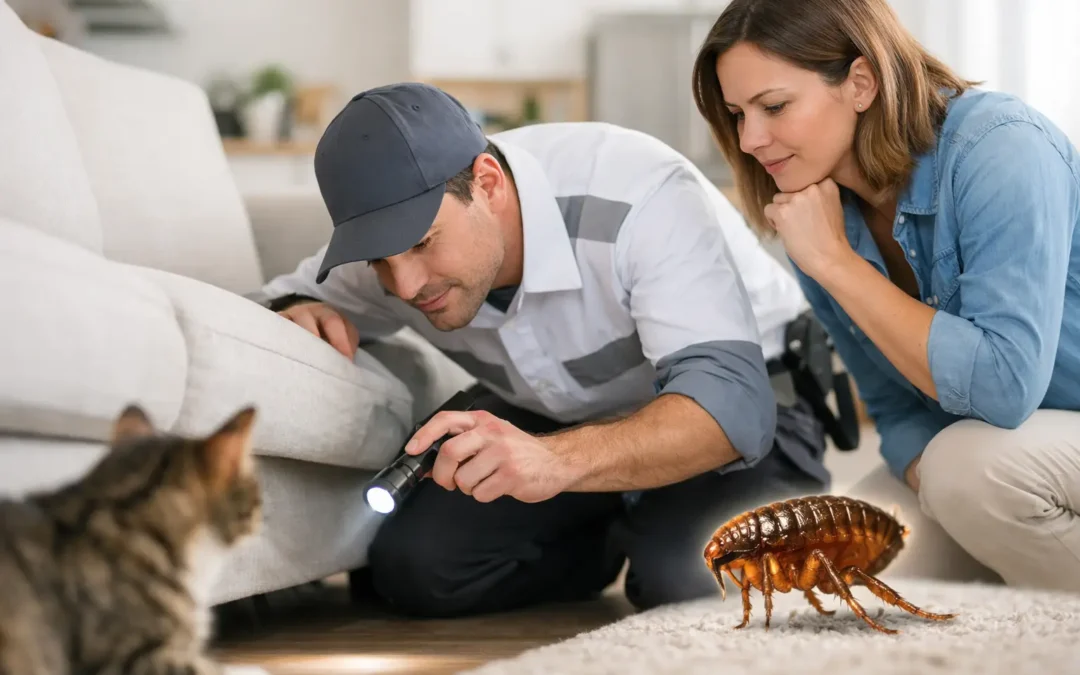
A few flea bites can turn a comfortable home into a stressful place fast. If you are asking, can pest control remove fleas, the answer is yes – but lasting relief usually takes more than one spray. Fleas develop in stages, hide in places people do not expect, and often ride indoors on pets or wildlife. A professional plan treats the active problem while helping break the cycle that keeps new fleas appearing.
For homeowners and businesses in Temecula, Murrieta, and the surrounding valley, quick action matters. Fleas reproduce quickly in warm conditions, and waiting can give an early issue time to spread through carpets, pet bedding, upholstered furniture, and shaded outdoor areas.
Can Pest Control Remove Fleas Completely?
Professional pest control can remove a flea infestation when treatment is paired with the right preparation and follow-up. The key is understanding that adult fleas are only one part of the problem. The fleas you see jumping on a pet, sock, or carpet are often a small portion of the total population.
A flea infestation can include eggs, larvae, pupae, and adults. Eggs may fall from a pet onto carpeting, rugs, furniture, cracks along baseboards, or pet bedding. Larvae settle into protected areas where they feed on organic debris. Pupae develop inside cocoons that can be difficult for products to penetrate. Those cocoons may remain dormant until they sense movement, warmth, vibration, or carbon dioxide from people and pets nearby.
That life cycle is why a homeowner may see fleas after an initial treatment and assume it failed. In many cases, the treatment has controlled the active adults, while new adults are emerging from previously protected cocoons. A qualified technician will explain what to expect, schedule follow-up service when needed, and help you avoid mistaking normal emergence for an ongoing untreated infestation.
What Professional Flea Treatment Targets
A professional flea service is not simply a general indoor spray. The technician starts by identifying where flea activity is most likely concentrated and how fleas may be getting inside. Pets are a common source, but fleas can also be brought in by rodents, stray cats, raccoons, or other wildlife around a property.
Indoor treatment typically focuses on flea harborage areas, such as carpeting, rugs, pet resting areas, upholstery, baseboards, and cracks near flooring. Depending on the situation, the treatment may include a product that controls adult fleas and an insect growth regulator. Growth regulators interfere with immature flea development, helping prevent the next generation from becoming biting adults.
Outdoor treatment can be equally important. Fleas do not usually thrive in sunny, dry, open lawns, but they can do well in shaded, protected areas with moisture and animal activity. Common trouble spots include covered patios, dog runs, beneath decks, around dense shrubs, under outdoor furniture, and along fences where wildlife may travel.
The right treatment depends on the property. A family home with two indoor dogs needs a different approach than a vacant rental, pet boarding area, office suite, or commercial property with a break-room infestation. A local technician should assess the activity rather than treat every situation the same way.
Why Pet Treatment and Pest Control Must Work Together
If pets are not treated at the same time as the home, fleas can return quickly. A flea treatment for the house does not protect an untreated dog or cat that goes outside, picks up fleas, and brings them back indoors.
Talk with your veterinarian about an appropriate flea-control product for each pet in the household. Use only products labeled for that animal and its weight. Never apply a dog flea product to a cat, and do not assume a product that worked in the past is still the best choice for your pet.
Pet bedding should be washed in hot water and dried on high heat when fabric care instructions allow. Vacuum carpets, rugs, upholstered furniture, and floor edges thoroughly before treatment and regularly afterward. Vacuuming removes debris, eggs, larvae, and emerging fleas while stimulating pupae to hatch, which makes the newly emerged adults more likely to contact treated surfaces.
Empty the vacuum canister or dispose of the bag outside after each use. This small step helps keep captured fleas and flea debris from remaining in the home.
What to Do Before a Flea Service
Preparation gives professional flea treatment a better chance of working efficiently. Your pest control provider will give you specific instructions for your property, but homeowners are commonly asked to clear floor areas, pick up pet toys, and move lightweight items away from baseboards where possible.
Vacuuming before service is often recommended, especially in rooms where pets spend time. Wash pet bedding, blankets, and removable fabric covers. If a pet bed is heavily infested or difficult to clean thoroughly, replacing it may be the more practical choice.
Plan for people and pets to be out of treated areas for the time directed on the product label and by your technician. Once the area is cleared for reentry, avoid deep-cleaning treated surfaces immediately unless your technician instructs otherwise. Cleaning too soon can reduce the residual control needed for emerging fleas.
For businesses and property managers, clear communication helps prevent disruption. A technician can help identify the affected rooms, coordinate access, explain reentry requirements, and focus treatment where it is needed. In commercial settings, a prompt response also helps protect employee comfort and customer confidence.
How Long Does It Take to Get Rid of Fleas?
Most properties experience a major reduction in adult flea activity soon after treatment, but complete control can take several weeks. The timeline depends on the size of the infestation, whether pets are protected, how much flea activity is present outdoors, and how many pupae are already waiting to emerge.
It is common to notice some new fleas during the first couple of weeks after service. Those may be adults emerging from cocoons that were already present before treatment. As they move through treated areas, they should be controlled. Continued vacuuming and following the service instructions are part of the process, not an optional extra.
A second treatment is sometimes necessary, particularly when an infestation has been established for a while. This is not a sign that the service was ineffective. It is a practical response to the flea life cycle and the protected pupal stage.
When Fleas Keep Coming Back
Recurring flea activity usually means there is an untreated source or a missed harborage area. The most common causes are pets that are not on effective flea prevention, wildlife around the property, rodents in a crawlspace or attic, or flea activity in shaded outdoor areas.
If fleas return after treatment, do not keep applying store-bought foggers or random products throughout the house. Foggers may not reach the cracks, carpet fibers, and protected areas where immature fleas develop. Overusing products can also create unnecessary exposure without solving the source of the problem.
Instead, look at the full picture: pets, indoor resting spots, outdoor shade, wildlife traffic, and possible rodent activity. This is where professional inspection matters. An experienced technician can help determine whether the issue is a true reinfestation, emerging fleas from the original cycle, or another biting pest being mistaken for fleas.
A Practical Way to Protect Your Home
Flea control works best as a coordinated effort. Keep pets on veterinarian-recommended prevention, vacuum regularly during an active issue, wash pet bedding, reduce wildlife access where possible, and address rodent activity promptly. If your yard has shaded areas where pets rest, keep those spaces clean and free of leaf litter or unnecessary clutter.
For a recurring concern, ongoing pest maintenance can also provide reassurance. It gives you a familiar local team to call when activity changes and makes it easier to address related pest pressures before they become a larger problem.
Flea bites are frustrating, but they do not have to take over your home or business. Vineyard Valley Pest Control can inspect the situation, explain the treatment plan clearly, and help you take the right next step toward a more comfortable, flea-free property.