
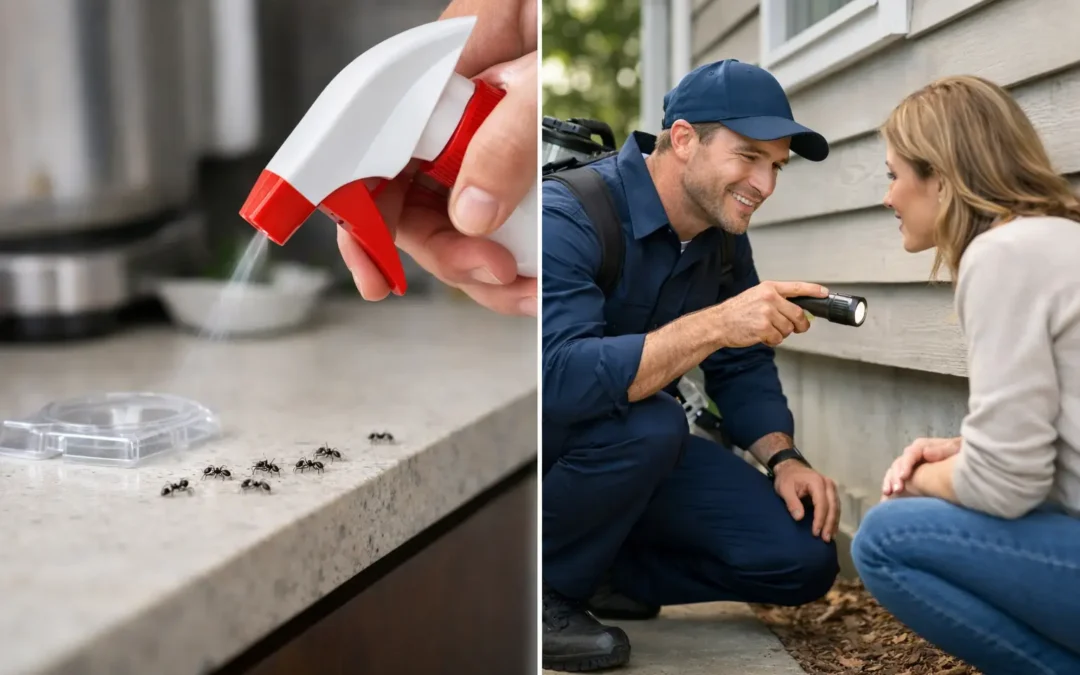
A line of ants running across the kitchen counter can make any homeowner want the fastest possible fix. That is where the choice between ant spray vs professional treatment matters. A store-bought spray may quickly clear the ants you can see, while a targeted professional service is designed to address why they keep showing up in the first place.
In Temecula, Murrieta, and nearby valley communities, ant activity often rises with warm weather, dry conditions, irrigation changes, and seasonal rain. Ants do not need much to settle in: a small water source, crumbs near an appliance, pet food, a leaky exterior faucet, or a gap around a pipe can be enough. The best option depends on whether you are dealing with a few occasional scouts or a recurring colony that has found a dependable route into your property.
What Ant Spray Does Well
Ant sprays have a place. When a few ants are visible around a window, sink, or doorway, a ready-to-use spray can provide immediate relief. It kills insects on contact and may help you reclaim a countertop or prep area before guests arrive.
For a minor, isolated issue, that may be all you need. Sprays can also be useful for treating an individual ant trail outdoors when you have identified a small, temporary source. The key is to view that result realistically: eliminating the ants in front of you is not always the same as eliminating the colony.
Most sprays work only where the product lands. Ant workers can be part of a much larger network hidden in wall voids, under landscaping, beneath concrete, or in cracks near the foundation. If the queen and the larger colony remain active, more workers may follow the same scent trail within hours or days.
Why Sprayed Ants Often Come Back
Ants communicate through pheromone trails. When workers locate food or moisture, they leave a chemical path that directs other ants to the same location. Wiping down the surface after treatment is helpful, but it does not close the entry point or remove the conditions that drew them in.
Some ant species can also split or relocate when their nest is disturbed. That means heavy, repeated spraying may scatter visible activity instead of resolving it. You may see fewer ants in one room, then notice them in a bathroom, pantry, or along a different exterior wall.
There is also the practical concern of using products indoors. Homeowners should always follow the label, keep products away from children and pets, and avoid applying more chemical than necessary. Spraying near food-prep areas, dishes, pet bowls, or electronics can create more hassle without reaching the real source of the problem.
Ant Spray vs Professional Treatment: The Real Difference
The biggest difference is not simply the strength of the product. It is the process behind the treatment.
A professional ant service starts by identifying the pattern of activity. Where are the ants entering? Are they seeking water, sweets, grease, protein, or shelter? Is the colony likely outside, in a wall void, or near a landscape feature? A technician looks beyond the active trail to find the conditions that allow it to continue.
Rather than relying only on a contact spray, professional treatment may use targeted materials placed where foraging ants can carry them back to the colony. Exterior treatment around likely access points, crack-and-crevice applications, and carefully selected baiting strategies can all be part of the plan. The goal is to interrupt the colony’s food supply and activity at its source while using an approach suited to the property.
That does not mean every ant issue requires an ongoing service plan. A one-time treatment may make sense for a specific, contained problem. But if ants return every spring, appear after irrigation, or move between multiple rooms, recurring maintenance often provides better value and fewer surprises. Preventive exterior service can reduce the chance that an established trail becomes an indoor infestation.
What a Professional Ant Visit Should Address
A good treatment should feel clear and practical, not mysterious. You should know what the technician found, where the main pressure points are, and what you can do between visits to support the treatment.
At Vineyard Valley Pest Control, ant service is built around local conditions and straightforward follow-through. Monthly ant control includes free return visits when needed, so customers are not left watching a renewed trail and wondering what comes next. That is especially helpful for properties with persistent seasonal pressure or multiple likely entry areas.
For homes and businesses, a technician may focus attention on exterior walls, foundations, door thresholds, plumbing penetrations, patios, planters, trash areas, and other locations that offer ants cover, moisture, or a route inside. The exact treatment should be based on the property and ant activity, not a one-size-fits-all routine.
When DIY Ant Spray Is Usually Enough
A spray may be a reasonable first step when you see a few isolated ants and there is no established trail. For example, an open food container may have attracted a small number of scouts, or ants may have entered briefly during a weather change. Clean the area thoroughly, remove the food source, and monitor the spot over the next several days.
It can also be appropriate for a visible ant outdoors when there is no sign of indoor activity. Keep in mind that exterior ants are part of the environment. The issue becomes more urgent when they are consistently entering the building, building trails around food, or appearing in sensitive areas such as kitchens, break rooms, patient spaces, or food-service locations.
If DIY treatment works and the ants do not return, there is no reason to overcomplicate it. The problem is when the same quick fix becomes a weekly routine.
Signs It Is Time to Call a Professional
Repeated ant trails are the clearest sign that the colony has not been addressed. If you are spraying every few days, finding ants in more than one room, or seeing activity return after cleaning, a professional inspection can save time and product.
Call sooner when ants are appearing around plumbing, inside cabinets, near electrical outlets, or in areas where food is stored or served. Commercial properties should also act early. One visible trail near a reception area, restaurant station, office kitchen, or tenant space can affect customer confidence and lead to a larger service issue if it spreads.
Other signs include activity that spikes after watering, ants traveling along exterior walls, or multiple trails at different times of day. These details help identify how ants are moving through the property and whether ongoing protection is the more practical option.
Small Changes That Make Treatment Work Better
Professional treatment is most effective when it is paired with basic prevention. You do not need a complicated checklist, but a few habits make a meaningful difference. Keep food sealed, wipe counters and floors where crumbs collect, and avoid leaving pet food out overnight when possible. Repair drips, manage standing water near the house, and keep vegetation from pressing directly against exterior walls.
Outside, pay attention to irrigation. Overwatered planters, damp mulch, and leaking hose connections can create ideal ant conditions during warm Southern California weather. Seal obvious gaps around utility lines and doors when practical, but do not assume sealing alone will solve an active colony. Ants can find very small openings, and an established infestation still needs to be treated.
Choosing the Right Level of Help
The right choice is not about whether ant spray is good or bad. It is about matching the response to the problem. Spray can be useful for a few visible ants and a short-term cleanup. Professional treatment is the stronger choice when activity is recurring, widespread, difficult to trace, or affecting a home or business where reliability matters.
If ants keep finding their way back, do not settle for chasing the next trail across the counter. A focused inspection and a treatment plan built around your property can turn a frustrating repeat problem into one less thing to manage.