
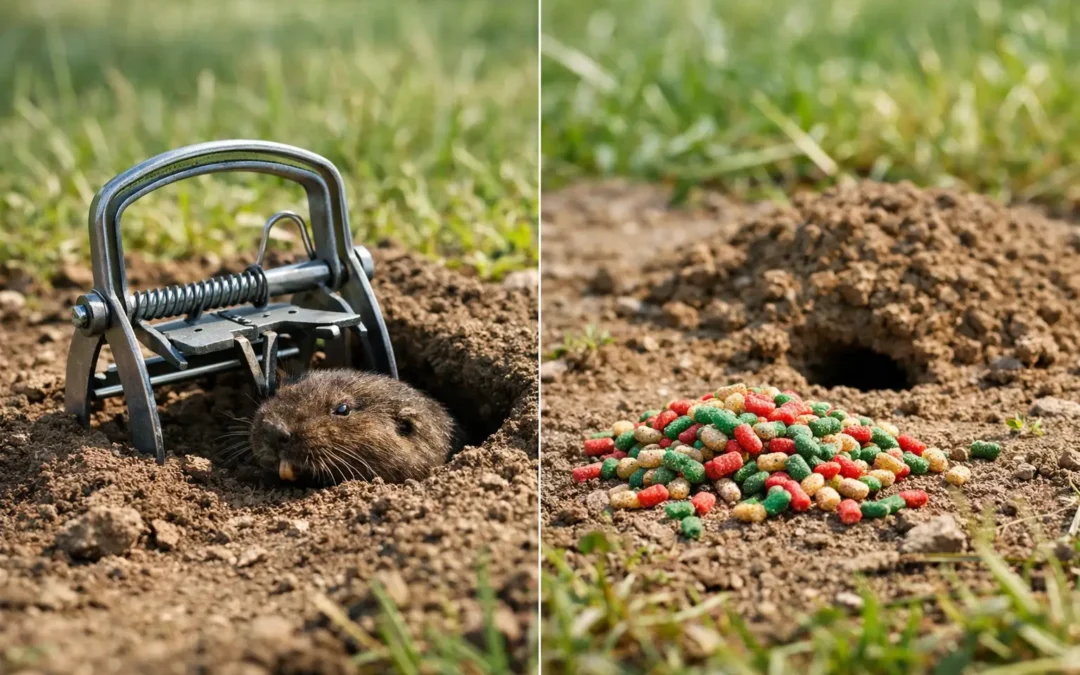
A fresh fan-shaped mound can make a well-kept lawn, vineyard edge, or commercial landscape look neglected overnight. When choosing gopher trapping versus baiting, the right answer depends on the active tunnel system, the size of the problem, nearby pets and wildlife, and how quickly you need to protect the property.
For many Temecula and Murrieta property owners, gopher control is not just about appearance. Pocket gophers can damage irrigation lines, chew roots, undermine walkways, and leave uneven ground that becomes a maintenance and safety concern. Trapping and baiting can both be effective in the right situation, but they work differently and carry different responsibilities.
Gopher Trapping Versus Baiting: The Main Difference
Trapping is a physical removal method. A trap is placed inside an active gopher tunnel, where it is intended to capture the animal moving through that runway. The outcome is direct and measurable: when the trap is checked, you know whether it worked.
Baiting uses a product placed in an active tunnel that the gopher consumes. It can be useful for treating activity across a larger area, particularly where there are numerous tunnel systems. However, success depends on correct placement, the gopher accepting the bait, and preventing access by children, pets, and non-target animals.
Neither option works well when it is rushed. Gophers are underground, and their mounds can be misleading. The mound is the evidence of activity, but the main runway is often offset from the soil pile. Finding an active tunnel is the first job, whether the treatment plan calls for a trap or bait.
When Trapping Is the Better Choice
Trapping is often the preferred approach for a single active gopher or a small number of isolated problem areas. It is especially practical in residential yards, near play areas, along patios, and around landscape features where a property owner wants to avoid using toxic bait.
The biggest advantage is control. A properly set trap is placed in a specific tunnel, allowing treatment to stay focused on the gopher causing the damage. It also avoids leaving a toxic material underground. For homes with curious dogs, outdoor cats, young children, or frequent wildlife activity, that level of control can provide real peace of mind.
Trapping also gives a clearer result. Once a gopher has been captured and the active tunnel is no longer being reopened, the immediate issue may be resolved. That said, a successful capture does not mean the property is permanently gopher-proof. New gophers can move into vacant tunnel territory, particularly where lawns, garden beds, slopes, or irrigated landscapes provide food and soft soil.
The trade-off is labor. Effective trapping requires locating the main runway, setting the equipment correctly, covering the opening appropriately, and checking traps regularly. A trap set in the wrong place may sit untouched while the gopher continues feeding a few feet away. On a large property with many fresh mounds, treating one tunnel at a time can take more effort than the owner expects.
Trapping tends to fit best when:
Trapping makes the most sense when activity is limited, the damaged area is easy to access, and safety around pets or people is a top priority. It is also a strong choice when you want a direct confirmation that the target gopher has been removed.
When Baiting May Make More Sense
Baiting can be a practical tool when gopher activity is spread across a broad area. Larger lawns, agricultural edges, commercial grounds, open lots, and properties with repeated tunnel systems may call for a treatment method that can be applied more efficiently than multiple individual traps.
When bait is placed properly in an active underground runway, it is less exposed than a product left on the surface. But “underground” does not automatically mean “risk-free.” The product, placement method, label directions, soil conditions, and surrounding environment all matter. Incorrect application can reduce effectiveness and create unnecessary hazards.
Baiting also has a less immediate feedback loop. You may see the mounds stop reopening after treatment, but it can take time to determine whether activity has truly ended. A gopher may reject bait, feed elsewhere in the tunnel system, or leave old mounds that make it difficult to judge the result. Follow-up inspections are essential.
For that reason, baiting is usually best handled as part of a planned program rather than a one-time guess. A technician can identify fresh activity, treat the correct tunnels, return to assess results, and adjust the approach if new mounds appear. This is particularly useful for property managers who need grounds to stay presentable without assigning staff to monitor every mound.
Safety is the deciding factor for many properties
Bait products should always be used exactly as their labels allow. Do not place unapproved products in surface holes, gardens, or locations where pets, children, birds, or other wildlife could reach them. Do not assume a tunnel is inactive simply because a mound looks old.
If your property has pets that dig, wildlife corridors, vegetable gardens, shared fence lines, or drainage areas, it is worth having a professional assess the site before baiting. A targeted plan can help avoid turning a gopher problem into a broader safety concern.
Why Timing and Tunnel Identification Matter
A gopher can create several mounds while using a much smaller number of main tunnels. Treating every visible mound without confirming current activity wastes time and can disturb the area without reaching the animal.
A simple activity check is often the starting point. A tunnel opening is carefully exposed or probed, then checked later for a fresh soil plug. A newly closed opening suggests the runway is active. This helps determine where a trap or approved bait placement has the best chance of working.
In Southern California, gopher activity can continue through much of the year. Irrigated lawns, landscaped communities, vineyards, and garden beds offer dependable food and moisture even when surrounding ground is dry. That is why waiting for extensive damage before taking action usually costs more in landscape repairs, irrigation work, and ongoing frustration.
What Neither Method Solves on Its Own
Removing the current gopher is important, but it does not remove the conditions that make a property attractive. Thick groundcover, established lawns, ornamental plantings, and reliable irrigation can all support future activity. There is no single treatment that permanently guarantees gophers will never return.
For recurring issues, the better strategy is monitoring. Walk the property routinely, especially along fence lines, slopes, garden borders, and irrigated areas. Address fresh mounds quickly, before one active gopher expands its feeding area or a new one moves into an open territory.
Physical barriers can also help protect high-value plantings. Wire baskets around young trees and underground barriers around select beds may reduce root damage in targeted areas. These options are not always practical for an entire yard, but they can be worthwhile where replacement plants are expensive or difficult to establish.
Choosing the Right Method for Your Property
If you have one or two fresh mounds in an accessible yard, trapping is often the most controlled and straightforward option. If mounds are appearing throughout a large property, baiting may be more efficient when it is selected and applied responsibly. In some situations, a combination approach works best: trapping around sensitive areas and carefully managed baiting where activity is widespread.
The decision should not come down to which method sounds easiest. It should come down to the property, the number of active tunnels, the presence of pets and wildlife, and the need for reliable follow-up. A quick response matters because gopher damage rarely stays contained to the first mound.
When you are seeing fresh soil piles week after week, professional service can take the guesswork out of locating active runways and choosing a safe, targeted treatment. Vineyard Valley Pest Control helps local homeowners and commercial properties address gopher activity with practical recommendations, clear communication, and follow-up that keeps the next mound from becoming a bigger repair project.