
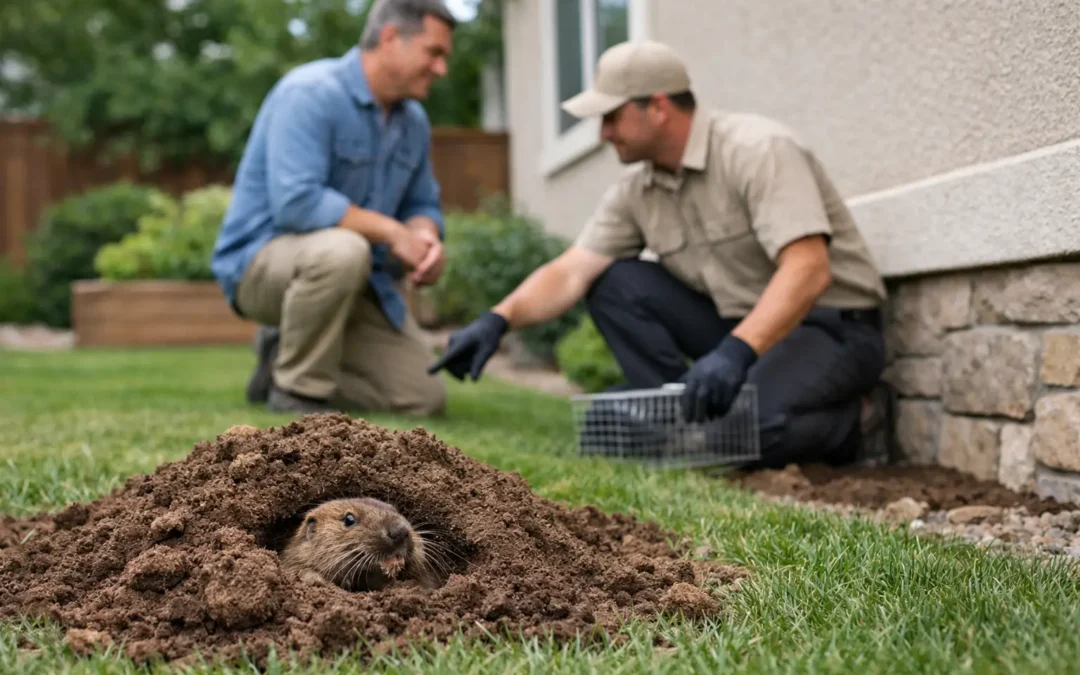
A fresh mound of loose soil in the lawn can be frustrating. A row of them cutting through a garden bed, irrigation line, or newly planted landscape is a bigger problem. If you are wondering how to keep gophers away, the answer is not one quick fix. Lasting control usually takes a combination of reducing what attracts them, protecting vulnerable areas, and treating active burrows correctly.
Pocket gophers are common in Southern California landscapes because our yards often provide exactly what they need: irrigated soil, tender roots, groundcover, and plenty of room to tunnel. They can damage lawns, ornamentals, vegetables, young trees, and irrigation systems before homeowners see more than a few mounds. Acting early makes the problem much easier to manage.
Start by Confirming You Have Gophers
Gophers leave fan-shaped or crescent-shaped mounds of soil with a plugged hole off to one side. Unlike moles, which are uncommon in many local yards and feed primarily on insects, gophers feed on plant material. They pull roots and vegetation into their tunnels and can quickly weaken or kill plants from below.
You may also notice plants that suddenly wilt, disappear, or lean without an obvious reason. Raised soil ridges can appear along the surface where shallow tunnels run beneath the lawn. These signs matter because the right treatment depends on the pest. Ground squirrels, rats, and gophers each require a different approach.
Remove What Makes the Yard Attractive
You cannot make an outdoor space completely unappealing to a hungry gopher, especially when neighboring properties have active burrows. Still, good landscape habits can reduce the food and cover that help an infestation grow.
Keep weeds, dense groundcover, fallen fruit, and heavy plant debris under control. Gophers feed on roots, bulbs, tubers, and many common landscape plants, so a crowded, overgrown area can give them more opportunities to feed unnoticed. Regularly inspect garden edges, fence lines, slopes, and open spaces around sheds or storage areas. These are common places for new activity to start.
Water management also helps. Gophers need moisture and often favor well-watered lawns and planting beds during dry periods. Do not stop watering plants that need it, but avoid overwatering broad areas of turf or landscape. Repair leaking irrigation lines and adjust sprinklers so they are watering plants rather than creating constantly damp soil in unused areas.
This step alone rarely clears an established gopher problem. It does make your property less comfortable for repeat activity and gives you a better chance of spotting new mounds quickly.
Protect Trees, Gardens, and Planting Beds
Physical barriers are one of the most dependable ways to prevent gopher damage in specific high-value areas. They work best before planting or when you are replacing damaged landscaping.
For vegetable gardens and raised beds, install a properly sized wire mesh barrier beneath the bed. The mesh needs to be strong enough to resist chewing and small enough to keep gophers from pushing through. Extend it across the entire bottom of the bed and secure the sides so there are no easy gaps around the edges.
Young trees and shrubs benefit from underground wire baskets placed around the root ball at planting. Leave enough room for root growth, and keep the basket positioned below the soil surface so it does not interfere with normal maintenance. This is especially useful for newly planted citrus, ornamentals, and other expensive landscape investments that gophers may target.
Barriers have a trade-off: they take labor and planning, and they are not practical for an entire lawn. But for a garden, a new tree, or a carefully designed landscape bed, they can prevent costly replacement work.
Treat Active Burrows, Not Just the Mounds
A mound is evidence of a tunnel system, but it is not usually the main entrance. Knocking down mounds may make a yard look better temporarily, but it does not remove the gopher. Gophers often stay underground and can rebuild mounds quickly.
Effective control focuses on finding the active main tunnel. A professional can identify fresh activity, locate the tunnel correctly, and use targeted treatment methods appropriate for the property. The goal is to address the animal in the tunnel system rather than rely on surface-level solutions.
Trapping can be effective when it is placed and maintained correctly. It requires careful tunnel location, the right equipment, and frequent checks. It may be a reasonable option for a small, isolated problem, but many property owners find that active burrow systems are difficult to manage without help.
Baiting is another option, but it should be handled carefully. Products must be used according to their label, placed only where appropriate, and kept away from children, pets, wildlife, and non-target animals. A licensed pest professional can evaluate whether baiting is suitable and apply a targeted plan based on the amount of activity and the layout of the property.
Avoid using unapproved home remedies, flooding tunnels, or inserting combustible materials into burrows. Flooding often fails because tunnel systems are extensive, and it can waste water or damage irrigation areas. Unsafe methods can create much larger problems than the gophers themselves.
Do Repellents and Sonic Stakes Work?
Homeowners often try castor-oil repellents, vibrating stakes, ultrasonic devices, or strong-smelling materials. These products may cause temporary movement in some situations, but they are rarely reliable as a stand-alone solution for an active infestation.
Gophers can tunnel around an unpleasant area, and sound-based devices are limited by soil conditions, property size, and the animal’s ability to relocate within an existing tunnel network. Repellents may have a role in a broader prevention plan, particularly around a small planting area, but they should not replace active burrow treatment when fresh mounds are appearing.
The practical question is whether the product is stopping new damage. If mounds continue to appear after a short trial period, it is time to move to a more direct method.
Keep Gophers Away With Ongoing Monitoring
Gopher control is not always a one-time event. A property can be cleared and later experience new activity as gophers move in from vacant lots, hillsides, greenbelts, or neighboring yards. This is common in the Temecula and Murrieta Valley, where irrigated residential landscapes can stand out against dry surrounding areas.
Walk the property regularly, especially after irrigation, rain, landscaping work, or seasonal growth changes. Fresh mounds have loose, darker-looking soil and no crusted surface. Flattening old mounds can make new activity easier to spot, but remember that this is a monitoring tool, not treatment.
For commercial properties, apartment communities, and larger residential lots, routine inspections are often the most efficient approach. Early detection protects landscaping budgets and helps prevent a small problem from spreading across multiple planting areas.
When Professional Gopher Service Makes Sense
Professional help is worth considering when activity is widespread, mounds keep returning, valuable trees or garden beds are at risk, or you have tried DIY methods without results. It is also a smart choice when you are unsure whether you are dealing with gophers, ground squirrels, or another digging pest.
A qualified local technician should inspect the affected areas, explain the signs of activity, recommend a targeted treatment plan, and let you know what follow-up may be needed. Clear communication matters because every yard is different. Soil type, irrigation, landscaping, pets, children, neighboring properties, and the extent of the burrow system all affect the best solution.
At Vineyard Valley Pest Control, the focus is straightforward: identify the activity, treat it directly, and help you protect the areas that matter most. Fast action can save a garden bed, a young tree, or a lawn from weeks of unnecessary damage.
Fresh gopher mounds are easier to handle when they are still isolated. Check your yard this week, protect the plants you have invested in, and address active tunnels before a few piles of soil turn into a larger landscape repair.