
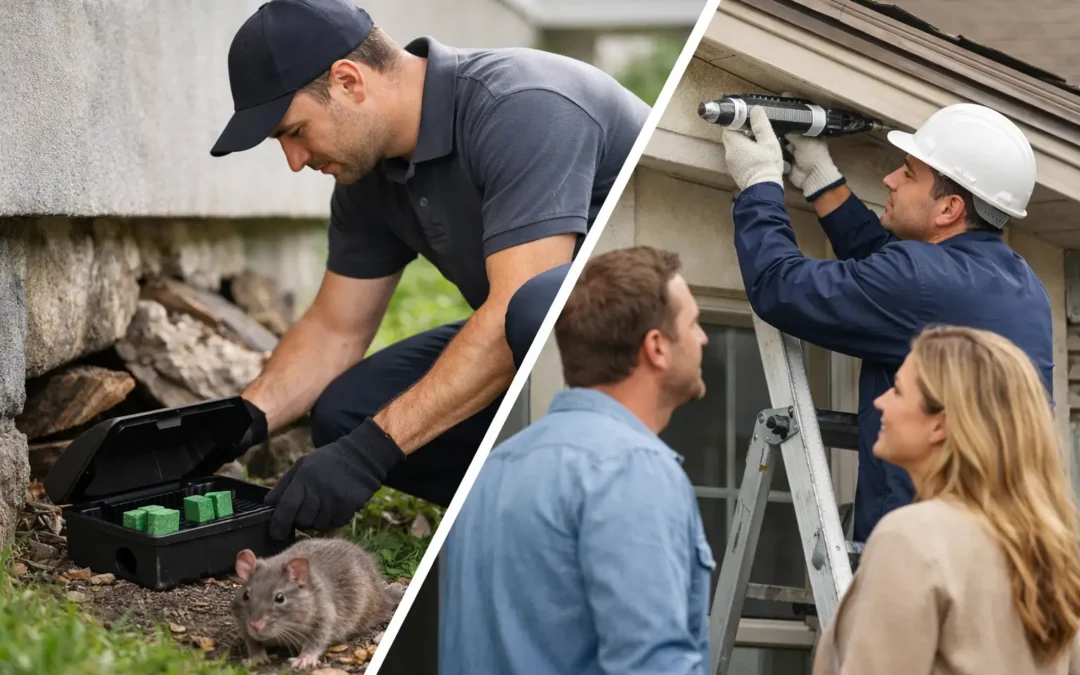
You hear scratching in the attic at night, find droppings in the garage, or notice chewed packaging in a storage room. That is usually when the question becomes urgent: rodent baiting vs rodent exclusion – which one actually solves the problem? The short answer is that both can play a role, but they do very different jobs. One helps reduce active rodent populations. The other helps stop rodents from getting back in.
For homes and businesses in Temecula, Murrieta, and nearby valley communities, that difference matters. Local properties deal with seasonal rodent pressure, changing weather, irrigated landscaping, and structures with plenty of small access points. If the goal is lasting relief, choosing the right approach means looking beyond what works this week and asking what will still work a few months from now.
Rodent baiting vs rodent exclusion: What is the difference?
Rodent baiting is a control method. It uses tamper-resistant bait stations or other targeted placements to reduce an existing rodent population. When there is active movement around a property, baiting can bring numbers down and help gain control faster.
Rodent exclusion is a prevention method. It focuses on sealing entry points, correcting vulnerable areas, and making the structure harder for rodents to access. That might include closing gaps around utility lines, screening vents, repairing damaged trim, sealing openings along the roofline, or addressing construction joints and door gaps.
Put simply, baiting deals with rodents that are already there. Exclusion deals with how they got there in the first place.
That is why this is rarely an either-or question in the real world. If rodents are already active inside a building, exclusion alone may trap the problem in place or leave you waiting too long for activity to stop. If you only bait and never seal the structure, new rodents can keep replacing the ones you removed.
When baiting makes sense
Baiting is often the faster move when rodent activity is current and obvious. If there are fresh droppings, gnaw marks, noises in walls or ceilings, or signs of repeat movement around trash, storage, or exterior perimeters, reducing the population is usually the first priority.
For commercial properties, that can be especially important. Restaurants, offices, retail spaces, and multi-unit properties often need quick action to lower pressure before the issue spreads or disrupts operations. For homeowners, baiting can help when rodents are actively nesting in attics, garages, crawl spaces, or wall voids and immediate reduction is needed.
The main advantage of baiting is speed. It can help bring an active infestation under control more efficiently than waiting on prevention alone. It is also useful in exterior areas where rodent pressure remains high due to neighboring properties, open land, food sources, heavy vegetation, or other environmental conditions.
But baiting has limits. It does not close the gap under the garage door. It does not fix a vent opening or a pipe penetration. If the building stays accessible, rodent pressure can return. In other words, baiting can be effective, but by itself it is often management rather than resolution.
When exclusion is the better long-term answer
Exclusion is usually the stronger investment when the goal is to keep rodents out for good. Mice can fit through openings as small as a dime, and rats do not need much more. Many property owners are surprised by how small the access point really is.
A thorough exclusion plan looks at the full structure, not just the place where activity was noticed. Rodents may enter through roof intersections, attic vents, weep holes, damaged screens, utility penetrations, garage corners, or worn weather stripping. On commercial buildings, roll-up doors, delivery areas, roof-mounted equipment access points, and utility chases often need close attention too.
The biggest advantage of exclusion is durability. Once vulnerable areas are identified and properly sealed, the property becomes much less inviting and much harder to access. That lowers the chance of future infestations and often reduces the need for repeated reactive treatments.
The challenge is that exclusion does not always produce instant relief if rodents are already inside. It works best when paired with active control measures when needed. It also has to be done correctly. Sealing the wrong area with the wrong material can fail quickly or even create new issues with moisture, ventilation, or trapped pests.
Why many properties need both
In most real service situations, rodent baiting vs rodent exclusion is not a contest with one winner. It is a sequencing question.
If rodents are actively using a structure, the practical approach is often to reduce the population first or at the same time exclusion work is performed. Then the focus shifts to keeping them out. This combination handles both sides of the problem – current activity and future access.
That is especially true in Southern California neighborhoods where rodent pressure does not disappear just because one nest is removed. Nearby food sources, pet food, fallen fruit, dense shrubbery, block wall gaps, and irrigation can all support ongoing activity around the property line. If outside pressure remains, exclusion becomes the barrier that keeps that pressure from turning back into an indoor issue.
For some homes, baiting may be a short-term step and exclusion becomes the real fix. For some businesses, ongoing exterior monitoring may still make sense even after exclusion because of the environment, tenant activity, deliveries, waste handling, or landscaping conditions.
How to decide what your property needs
The right recommendation depends on what is happening now, where it is happening, and how the property is built.
If there is active interior rodent activity, recent evidence, and signs that the population is established, baiting is often part of the immediate response. If the structure has obvious access points, exclusion should be part of the plan too. If the issue is mostly exterior and the goal is prevention, exclusion and monitoring may carry more value than relying on bait alone.
Property type matters as well. A single-family home with attic activity has different needs than a restaurant with a dumpster enclosure problem or a warehouse with loading doors opening throughout the day. The age of the building matters. So does surrounding vegetation, storage habits, sanitation, and whether previous rodent work addressed the root cause or only the visible activity.
This is where a detailed inspection matters more than guessing based on one symptom. The same droppings in a garage can point to a minor entry issue in one case and a broader structure-wide problem in another.
What a solid rodent plan should include
Whether the first step is baiting, exclusion, or both, the plan should be clear and practical. You should know where activity was found, what access points were identified, what treatment or repair is being recommended, and what results to expect over time.
A strong service approach usually includes inspection, targeted control, exclusion recommendations or repair work, and follow-up to confirm that activity has dropped. It should also include straightforward communication. Property owners do not need vague language. They need to know what is happening, what is being done, and what comes next.
For ongoing protection, recurring service can make sense in higher-pressure situations. That is often true for businesses, larger properties, and homes with recurring exterior rodent activity. Monitoring catches new pressure early, before it turns into another interior problem.
Vineyard Valley Pest Control sees this firsthand across Temecula and Murrieta. Fast response helps, but lasting relief usually comes from combining immediate action with careful prevention.
The most common mistake property owners make
The biggest mistake is choosing the option that feels fastest without addressing the full picture. If baiting knocks activity down, it can seem like the problem is gone even when the same openings are still there. If exclusion is done without addressing rodents already inside, customers can feel frustrated when noises or signs continue for a while.
The better approach is to ask a simple question: are we trying to reduce an active rodent problem, prevent a future one, or both? Once that is clear, the treatment plan becomes much easier to build.
Rodent problems are stressful, but they are manageable when the response matches the situation. If your property has active signs now, start with a professional inspection that looks at both population pressure and entry points. The right fix is usually the one that handles today’s problem without leaving next month’s problem behind.