
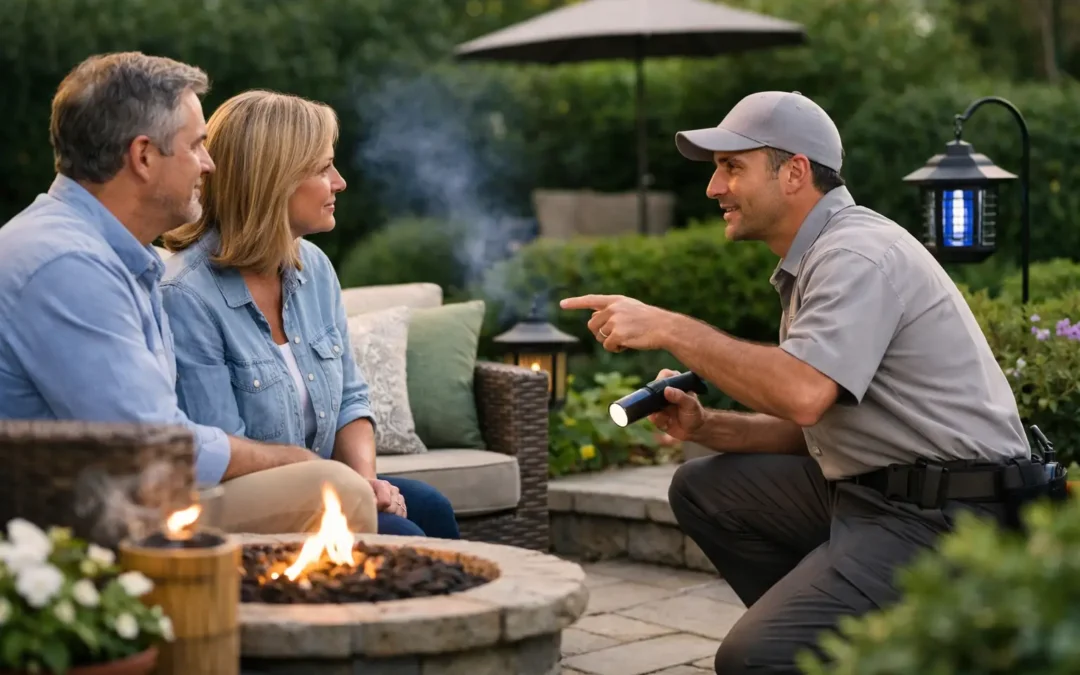
A patio can feel perfect at 6:30 p.m. Then the sun drops, the air cools, and everyone starts swatting. In the Temecula and Murrieta Valley, keeping mosquitoes away from patios usually takes a few coordinated changes, not one strong-smelling product. The good news is that most mosquito pressure comes from manageable conditions close to where you sit.
Mosquitoes need standing water to reproduce, shade to rest during the day, and people or pets to feed on at dusk. Remove those advantages around your patio, and outdoor time becomes much more comfortable.
1. Eliminate water that lingers for more than a few days
A large pond is not required for mosquitoes to become a problem. Many common backyard items hold enough water for them to lay eggs: plant saucers, kids’ toys, tarps, clogged gutters, wheelbarrows, buckets, outdoor pet bowls, and the trays beneath patio furniture.
Walk the property once a week, especially after irrigation or rain. Empty, scrub, and refill birdbaths and pet water bowls regularly. Turn over containers that are not in use. If you have a decorative feature that must hold water, such as a fountain, keep it circulating or use an appropriate mosquito-control treatment according to the label.
Pools deserve a closer look, too. A maintained, properly treated pool is generally not a breeding source. The trouble often starts in neglected spas, pool covers with puddles, skimmer baskets, or areas around the equipment where water collects. Check those spots before assuming the pool itself is the issue.
2. Improve airflow where people gather
Mosquitoes are weak fliers. A properly placed outdoor fan can make a noticeable difference on a dining patio, covered porch, or seating area because it disrupts the flight path they use to find people.
Aim the fan across the seating area rather than straight at one person. For a larger patio, two fans placed at different angles can create more consistent airflow. This approach does not remove mosquitoes from the yard, but it is one of the fastest ways to make a specific area less appealing while you are using it.
Ceiling fans work well under covered patios. Portable floor or table fans are useful for open spaces, provided cords and equipment are safely positioned away from foot traffic and water.
3. Keep plants trimmed back from the patio edge
Dense shrubs, overgrown ground cover, leaf piles, and tall grass give adult mosquitoes cool, protected places to rest through the heat of the day. When evening arrives, they do not have far to travel to reach your patio.
Create some breathing room around outdoor seating. Trim shrubs away from the patio perimeter, clear debris from beneath plants, and avoid letting irrigation create consistently damp pockets in heavy landscaping. You do not need to strip your yard bare. The goal is simply to reduce the shaded, humid hiding places immediately surrounding the space you want to enjoy.
This is particularly useful in yards with mature landscaping, block walls, or shaded side areas. Those spots can stay cooler and wetter than the rest of the property, even during a dry Southern California stretch.
4. Adjust irrigation to prevent hidden puddles
Overwatering is a common reason mosquito activity persists in otherwise tidy yards. Runoff can collect along patios, in low areas of turf, beneath planters, and around drip irrigation lines. A small leak at a valve, hose connection, or sprinkler head can also create a dependable breeding spot.
Run your irrigation briefly while you watch. Look for overspray onto hardscape, pooling near foundations, and water that continues to seep after the system shuts off. Adjusting a sprinkler head or repairing a small leak can solve a problem that sprays and repellents will not.
If you use drip irrigation, inspect it under shrubs and in planter beds. Drip systems are efficient when working correctly, but a broken emitter can quietly keep soil saturated in one area.
5. Use patio products as support, not the whole solution
Citronella candles, coils, diffusers, and other patio products can provide limited help in a small, still area. Their effectiveness varies with wind, patio size, and the number of mosquitoes nearby. A single candle at the far end of a large outdoor table is unlikely to protect everyone sitting there.
Use these products as part of a layered plan after you have addressed standing water and resting sites. Keep products away from children, pets, food, and combustible materials, and follow the manufacturer directions carefully. If anyone in your household has asthma or scent sensitivities, a fan and physical barriers may be a better choice.
Personal EPA-registered repellents can also help when you are outside at peak mosquito times. Apply them exactly as directed, especially for children. Repellent is useful for individual protection, but it will not correct a breeding source on the property.
6. Make the patio harder to enter
For screened patios, inspect doors, frames, and screen panels for gaps or tears. Even a small opening around a door sweep can give mosquitoes an easy route to a protected outdoor room. Repairing screens is a straightforward step that often pays off quickly.
Open patios can benefit from fine outdoor curtains, shade screens, or netting in areas where the design makes sense. These options are not right for every home, and they need to be secured so they do not become a nuisance in valley winds. Still, a barrier can be very effective around a frequently used dining or lounge area.
Light-colored, loose-fitting clothing offers another simple layer of protection during dusk gatherings. Mosquitoes are attracted to body heat and carbon dioxide more than patio lights, so turning off a porch light alone will not solve the issue. It can, however, reduce other flying insects around the table.
7. Know when mosquito activity needs professional attention
If you have removed standing water, improved airflow, and cleaned up vegetation but mosquitoes remain heavy, the source may be harder to see. It could be a drainage area, an untreated water feature, a neighboring property, or a hidden moisture issue around your home.
Professional mosquito service starts with inspection, not guesswork. A trained technician can identify likely breeding and resting areas, recommend source reduction, and apply targeted treatments where appropriate. Ongoing service may make sense for properties with recurring mosquito pressure, large landscaped areas, frequent outdoor entertaining, or commercial patios where guests expect a comfortable experience.
For homes and businesses in Temecula, Murrieta, and nearby valley communities, Vineyard Valley Pest Control can help assess the conditions around the property and build a practical plan. The right approach should be clear about what is being treated, what you can do between visits, and what results to expect.
A note about mosquito-borne illness
Mosquitoes are more than an outdoor nuisance. They can carry diseases, including West Nile virus in Southern California. Avoiding bites and removing breeding water are sensible precautions, particularly for young children, older adults, and anyone spending long evenings outside.
If mosquito activity suddenly increases, do not wait for it to become a nightly problem. Check the easy water sources first, then look beyond the patio to landscaping, irrigation, and drainage. A few small corrections made this week can make the next backyard dinner feel like it should: calm, comfortable, and free from constant swatting.