
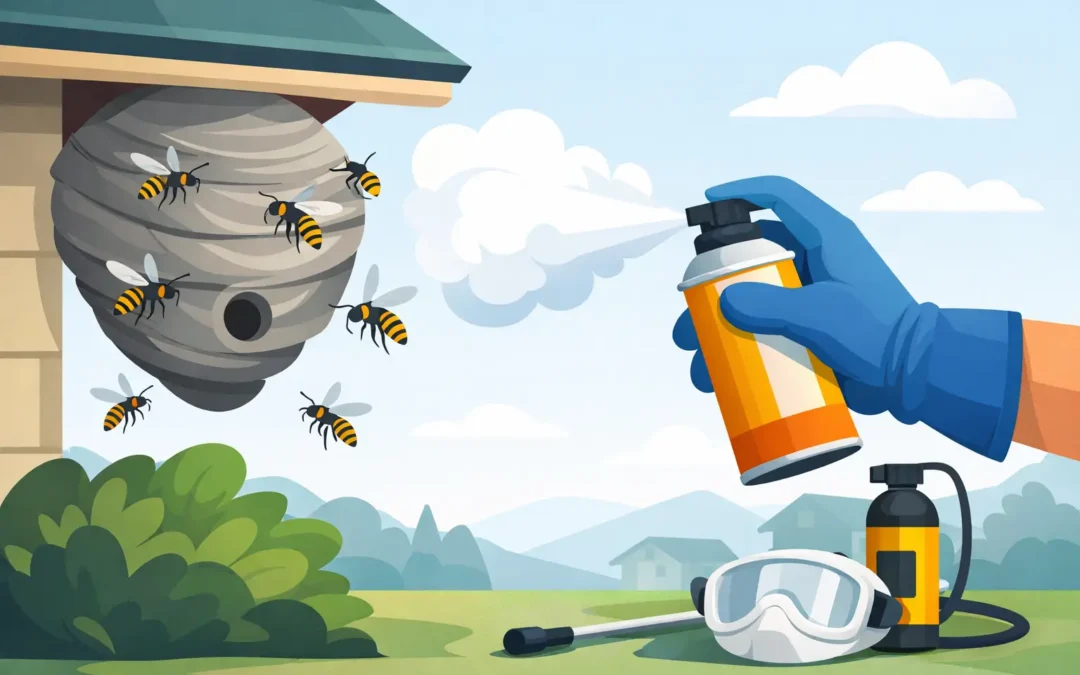
That buzzing near the eaves usually starts the same way – one or two wasps coming and going, then a small paper nest suddenly turns into a problem you cannot ignore. If you are wondering how to get rid of wasp nests, the first thing to know is that the right approach depends on the nest size, location, species, and how active the colony is.
In Temecula, Murrieta, and nearby communities, wasps are more than a passing nuisance. Warm weather, sheltered rooflines, block walls, patio covers, sheds, and commercial overhangs all give them places to build. A small nest caught early is one thing. A mature nest tucked above a doorway or inside a wall void is a different job entirely.
How to get rid of wasp nests without making the problem worse
The biggest mistake people make is treating every nest like a simple spray-and-remove project. Sometimes that works. Sometimes it turns a manageable issue into a painful one.
Wasps become defensive when they feel vibration, movement, or chemical irritation near the nest. That means knocking a nest down with a broom, spraying it at the wrong time of day, or getting too close without proper protection can trigger a fast swarm response. If the nest is large, elevated, or attached near an entry point, the risk goes up quickly.
A safer starting point is to assess the nest from a distance. Look at where it is attached, how many wasps are moving in and out, and whether the nest appears open and visible or hidden in a cavity. Open paper nests under eaves are easier to identify than nests inside stucco gaps, attic vents, or wall voids. Hidden nests are often the ones that catch people off guard because the visible wasp traffic looks minor until the colony is disturbed.
If there is heavy daytime activity, frequent wasp movement around doors or windows, or any sign the nest is inside the structure, that is usually the point where professional treatment makes the most sense.
When DIY wasp nest removal is reasonable
There are limited cases where DIY removal may be appropriate. If the nest is small, clearly visible, easy to reach from the ground, and located far from doors, play areas, and pet spaces, some property owners choose to treat it themselves.
Even then, timing matters. Evening or very early morning is generally less active than midday, when foraging wasps are fully out. Protective clothing matters too. Regular long sleeves are not the same as proper sting protection, and a ladder adds another layer of risk that many people underestimate.
If you decide to handle a small nest yourself, read the product label fully and follow it exactly. Do not stand directly underneath the nest. Do not trap yourself in a corner or on a ladder with no clear exit path. And do not assume one treatment means the area is safe immediately. Some returning wasps may still circle the site after treatment.
What you should not do is burn the nest, blast it with a hose, seal an active entry hole before the colony is treated, or swat at wasps around the opening. Those shortcuts often cause wasps to relocate deeper into a structure or come out aggressively.
When to call a professional for wasp nests
There is a practical line between nuisance and hazard. If the nest is above head height, attached to a roofline, built inside a wall void, near a front door, over a garage, in a tree near a walkway, or around a commercial entrance, it is usually safer to bring in a licensed pest control company.
The same goes for larger nests or repeat activity in the same area. A visible nest is not always the whole story. Wasps may be using multiple sheltered spots on a property, especially during active warm months. If you remove one nest but do not address why the site keeps attracting wasps, you may end up dealing with the same issue again a few weeks later.
Professional service helps in three ways. First, it reduces sting risk during treatment. Second, it improves the chance of fully eliminating active nest activity, especially in hidden spaces. Third, it gives you a clearer prevention plan for the property itself.
For families with children, households with allergy concerns, and businesses that need to protect customers and staff, professional treatment is often the more sensible choice from the start.
Common places wasps build nests around homes and businesses
In Southern California, wasps look for shade, shelter, and consistent access to food and water. That is why nests often appear in the same general categories of places.
Homes commonly see nest activity under eaves, behind shutters, inside patio covers, around attic vents, under deck rails, inside sheds, and along block wall gaps. Commercial properties often deal with nests around loading areas, outdoor dining spaces, dumpster enclosures, signage, roof equipment, and entry overhangs.
The location matters because it affects both treatment and follow-up. A nest under a quiet back patio may be straightforward. A nest above a busy storefront entrance or inside a wall near an HVAC line takes more care. In those cases, the goal is not just removal. It is solving the issue without disrupting the space more than necessary.
Why wasp nests keep coming back
People often ask why wasps return after a nest is removed. The short answer is that removal alone does not change the conditions that attracted them.
Sheltered architecture plays a big role. Deep eaves, exposed beams, unused corners, and covered exterior structures give wasps protection from sun and weather. Water sources also matter, especially in warm valley conditions. Irrigation runoff, pet water bowls, fountains, and even condensation can support activity nearby.
Food sources can be part of the problem too. Outdoor trash, sugary drink residue, fallen fruit, and high insect activity all make an area more attractive. On commercial properties, outdoor dining and waste handling areas are frequent pressure points.
This is why prevention should be part of any long-term fix. If you only remove the visible nest and ignore the site conditions, you are leaving the door open for new construction later in the season.
How to reduce future wasp activity
Prevention does not have to be complicated, but it does need to be consistent. Start by checking rooflines, patio covers, sheds, and exterior corners regularly during active months. Early detection is one of the easiest ways to avoid a larger nest later.
Keep trash sealed and outdoor food areas clean. Reduce standing water where possible. Repair gaps around vents, trim and exterior voids once you are sure there is no active nest inside. If a certain area keeps drawing wasps, that is worth treating as a recurring pressure point rather than a one-time inconvenience.
For many homes and businesses, recurring pest service is the most practical option because it addresses the pattern, not just the moment. A local company that understands seasonal pest pressure in Temecula and Murrieta can spot the conditions that make repeat nesting more likely and deal with them before they become a bigger disruption.
How to get rid of wasp nests in wall voids or hidden spaces
This is the category where do-it-yourself efforts most often go wrong. If wasps are disappearing into a crack, vent, siding gap, or opening near the roofline, there may be active nesting inside a concealed space. Spraying the outside opening alone may not reach the source, and sealing it too early can force wasps into another exit point inside the structure.
Hidden nests need a more careful treatment plan. The technician has to identify the activity pattern, treat the nesting area properly, and make sure the colony is no longer active before exclusion or repairs happen. That order matters.
If you are hearing buzzing in a wall, seeing wasps enter from a small opening repeatedly, or noticing activity around upper-story gaps, it is smart to stop there and have it assessed.
A wasp nest problem feels urgent because it is. Stings, blocked entryways, and nervous family members or customers can turn a normal day into a stressful one fast. The good news is that most nest issues can be handled safely when the response matches the situation. If the nest is small and isolated, caution may be enough. If it is active, hidden, high up, or close to people, getting experienced help is usually the faster and safer path forward.