
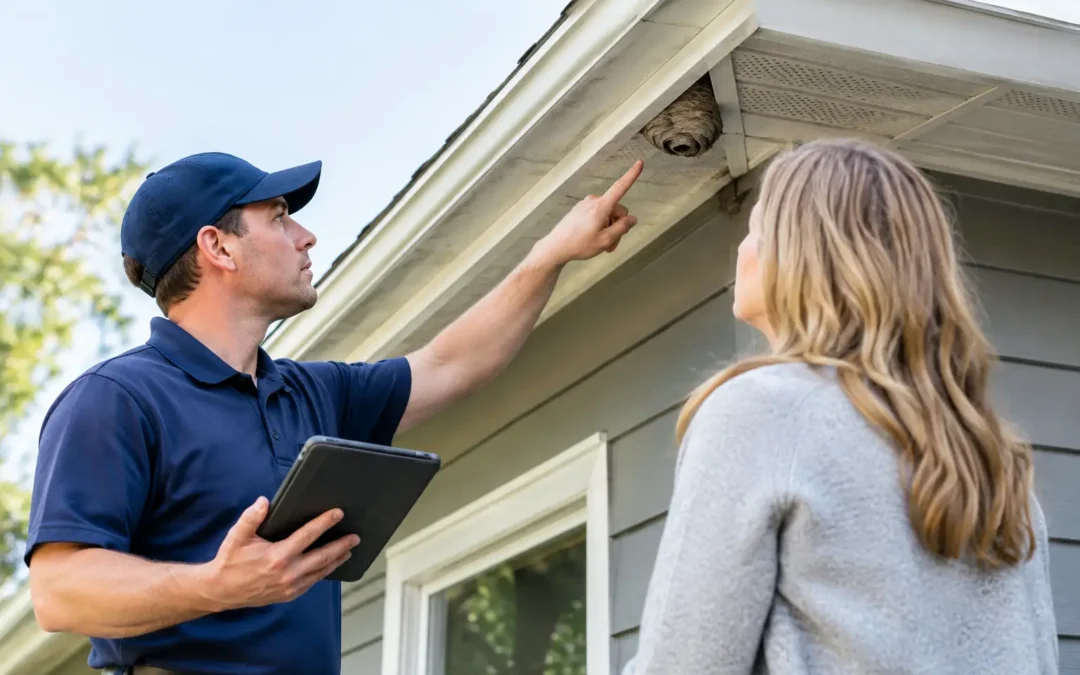
A few wasps circling the eaves can quickly turn into a problem when they begin building near a front door, patio, pool, or business entrance. Knowing how to deter eave wasps early gives you the best chance of stopping nest activity before it becomes a safety concern. In Temecula, Murrieta, and surrounding valley communities, warm weather can extend wasp activity well beyond the spring months, so prevention is worth making part of regular exterior upkeep.
The goal is not to make your property completely insect-free. Wasps play a role in controlling other insects. The practical goal is to keep them from choosing the sheltered, high-traffic areas where people, pets, and wasps are more likely to have an unpleasant encounter.
Why wasps choose eaves
Eaves offer exactly what many wasps look for: overhead shelter, a solid surface for attaching a nest, and protection from rain and direct sun. Paper wasps often build their open, umbrella-shaped nests under roof overhangs, porch ceilings, patio covers, shed roofs, and outdoor light fixtures. Yellowjackets may also investigate gaps around eaves, siding, vents, and rooflines if they can reach a protected void.
A home with frequent outdoor meals, uncovered trash, pet food, or dripping faucets can be even more attractive. Wasps need water and food sources, especially as colonies grow. That means a nest site and a food source can work together to keep activity close to the house.
Early spring is usually the easiest time to interrupt nesting. A single queen searching for a protected location is far simpler to discourage than a mature colony with dozens or hundreds of defensive workers.
How to deter eave wasps before nests form
Start by making eaves less appealing as a nesting surface. During routine yard work, walk around the outside of your home and look under overhangs, patio covers, awnings, roof edges, and second-story windows. Remove small, unfinished nests as soon as you see them, but only when there is no active wasp traffic and you can safely reach the area from the ground. Do not climb ladders or get close to a nest with active wasps.
Regularly knocking down the very first signs of construction can encourage a queen to move elsewhere. Check the same areas every week or two during active season. Wasps are persistent, and a removed nest site may be tested again if the surrounding conditions remain favorable.
Keep exterior surfaces in good repair, too. Close gaps around fascia boards, utility penetrations, siding edges, and roofline openings once you are certain no wasps are entering or leaving. Screening attic vents and covering larger exterior openings can reduce access to voids where nests are difficult to see and safely remove.
Be careful with timing. Sealing an opening while wasps are actively using it can trap insects inside a wall or attic. They may find another route into the structure, and the nest remains a problem. If you see steady in-and-out traffic at one opening, have a pest professional identify the nest location and address it first.
Reduce food and water around the house
Wasp prevention is partly about housekeeping, especially around patios, outdoor kitchens, pool areas, and commercial break areas. Rinse recycling before putting it in bins, keep garbage lids closed, and clean sticky spills from tables, grills, and drink stations. Fallen fruit should be picked up promptly from yards and landscaped common areas.
If you feed pets outside, bring bowls in after meals rather than leaving food available all day. Check for leaking hose bibs, irrigation overspray, and standing water near patios. A small drip may seem minor, but it can become a reliable water stop during hot Southern California afternoons.
For restaurants, offices, apartment communities, and retail properties, trash enclosure management matters even more. Clean container exteriors, use tight-fitting lids, and schedule enough waste service to avoid overflowing bins. These steps help reduce more than wasps – they also make the property less inviting to flies, ants, and rodents.
Use outdoor spaces thoughtfully
Wasps are drawn to sweet drinks, meat, fruit, and exposed food. When you are eating outdoors, cover serving dishes and keep beverage cans or cups covered when possible. Clear plates and food scraps soon after a gathering instead of leaving them out until the end of the evening.
Strongly scented floral products may attract some stinging insects, although they are not usually the main reason a colony picks your eaves. The bigger difference comes from limiting reliable food, water, and protected nesting spots. Store-bought traps can sometimes catch wasps, but they may also draw more activity toward the area. They are not a dependable substitute for finding and addressing the nest source.
What not to do with an active eave nest
A visible nest can make homeowners want to act immediately, but a rushed approach can lead to painful stings and a bigger problem. Avoid hitting, hosing down, burning, or spraying an active nest from close range. Wasps defend their nest aggressively when disturbed, and a spray may not reach the entire colony or nest interior.
Do not block the entrance to a suspected nest in a wall, roofline, or patio cover. As mentioned above, this can push wasps into living spaces or leave a hidden colony behind. It is also wise to skip folk remedies such as hanging fake nests or relying on scented deterrents alone. Results are inconsistent, particularly once wasps have already selected a site.
Children and pets should be kept away from the area, and outdoor activities may need to move temporarily if a nest is near a doorway or gathering space. Anyone with a known sting allergy should not attempt nest removal. Call for medical help immediately if a sting causes trouble breathing, swelling of the face or throat, dizziness, widespread hives, or other signs of a severe allergic reaction.
When professional wasp treatment makes sense
Professional help is the safest choice when a nest is active, hard to reach, located near a door or living area, or appears to be inside a wall, attic, roof void, or ground cavity. It is also the right call when you cannot confidently identify what you are seeing. Honey bees, for example, should be handled differently from wasps whenever possible.
A licensed pest professional can identify likely species, locate the point of entry, treat the colony appropriately, and recommend exclusion work after activity has stopped. The process should be direct: assess the activity, explain the plan, treat the source, and help you reduce the chance of a repeat nest.
For homes and businesses with recurring wasp pressure, ongoing exterior pest service can be useful. Regular inspections catch early nesting attempts before they become a disruption, particularly around patio covers, rooflines, dumpsters, pool equipment, and outdoor dining areas. At Vineyard Valley Pest Control, that local familiarity matters because valley properties face long warm seasons and a mix of residential and commercial pest pressure.
Keep checking after the nest is gone
After a nest has been removed or treated, inspect the surrounding eaves and nearby structures over the next several weeks. Wasps may return to the same protected zones or begin building a short distance away. Clean up residue from the former nest area, repair gaps that contributed to access, and continue keeping outdoor food and water sources under control.
A little attention at the roofline now can protect the comfortable outdoor spaces you use every day. If wasps are already defending an eave, treat the situation with care and get experienced help rather than turning a manageable nest into a stressful encounter.