
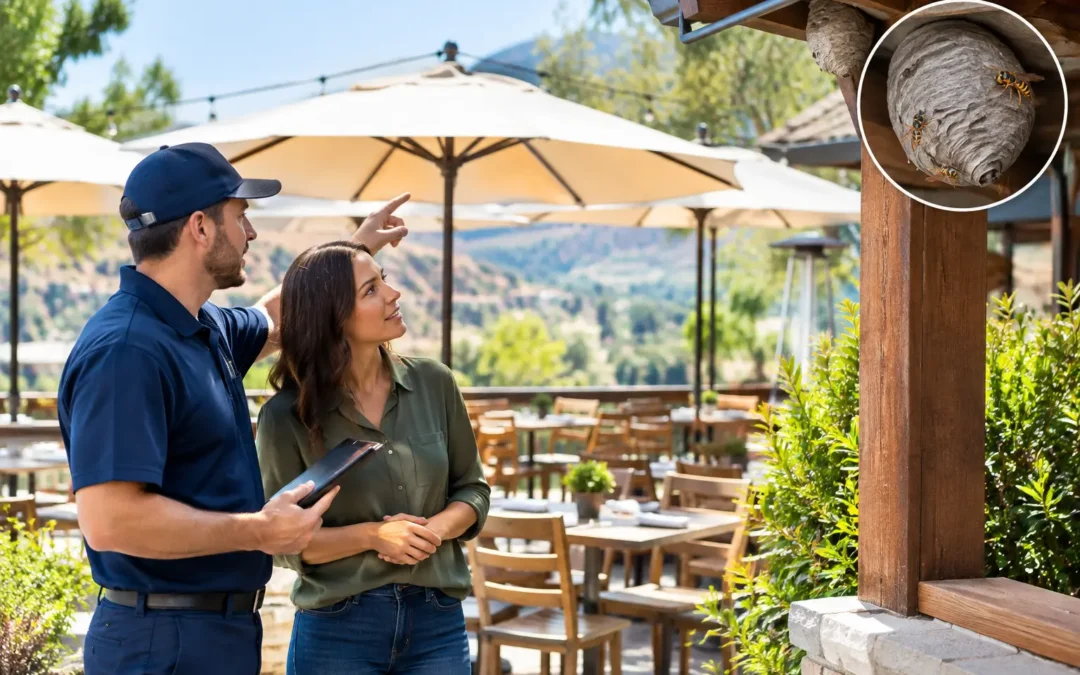
A plate of grilled food, a cold drink, and a few wasps circling the table can turn a backyard meal into a stressful afternoon fast. Protecting outdoor dining from wasps is especially important in Temecula and Murrieta, where warm weather keeps patios, pool areas, restaurant seating, and outdoor kitchens in regular use for much of the year.
The good news is that wasp activity around a dining area is often manageable. The key is to reduce what attracts them, identify where they are coming from, and treat active nest activity carefully. A few wasps investigating food are one problem. Wasps traveling steadily to and from a roofline, patio cover, wall void, or nearby shrub are another.
Why Wasps Keep Coming Back to the Table
Wasps do not visit outdoor tables just to cause trouble. They are looking for food, moisture, and sometimes a protected place to build or expand a nest. Sweet drinks, ripe fruit, soda spills, barbecue sauces, desserts, and open trash cans are reliable attractants. Yellowjackets are particularly persistent around protein-rich foods such as burgers, chicken, and deli meats.
Late summer and early fall can be especially frustrating. Natural food sources change, established colonies are larger, and worker wasps spend more time searching for easy meals. That is why a patio that seemed fine in spring may suddenly feel unusable during a family gathering or busy restaurant service.
It also depends on the type of wasp and how close its nest is to the dining area. A paper wasp may be nesting beneath an eave or patio cover. Yellowjackets may use a wall void, landscape feature, or ground-level opening. Hornet-like activity may involve a larger aerial nest in a tree or structure. Correct identification matters because nest location changes the safest treatment approach.
Start With Food, Drinks, and Cleanup
The fastest way to make a dining space less appealing is to remove easy food sources. Keep beverages covered when they are not being used, especially sweet tea, juice, soda, and cocktails. Clear dishes promptly after a meal rather than leaving them on the patio while everyone moves to the pool or fire pit.
For homes, it helps to place trash and recycling bins away from the primary seating area and keep their lids fully closed. Rinse bottles and cans before placing them in recycling. A sticky residue inside a bin can draw wasps day after day.
For restaurants, wineries, apartment common areas, and other commercial properties, cleanup needs to be part of the operating routine. Staff should wipe tables between guests, empty outdoor trash before it overfills, and inspect the ground around waste stations for spills. A clean patio will not stop a nearby nest from producing wasps, but it gives them fewer reasons to stay near customers.
Avoid swatting whenever possible. Fast movements can make a wasp defensive, especially when it is near food or protecting a nest. Calmly cover food, move children and pets away from the immediate area, and let the wasp move on. If wasps repeatedly return within minutes, look beyond the table for the source.
Make the Patio Less Attractive
Small changes to the space can reduce wasp traffic around outdoor dining. Fans are often helpful because wasps are not strong flyers in steady moving air. A table fan or overhead fan can make a small seating area less comfortable for them without affecting the experience for guests.
Check the landscaping around the patio as well. Fallen fruit, overflowing citrus trees, hummingbird feeders, pet food, and leaking irrigation can all support wasp activity. Trim dense vegetation away from the structure where practical, and remove fallen fruit regularly. If flowering plants bring frequent pollinator activity right next to a dining table, relocating the seating area may be easier than removing beneficial plants.
Look up and around the patio before setting out food. Wasps often build early nests under eaves, deck rails, outdoor furniture, patio umbrellas, light fixtures, and the undersides of covers. A small paper-wasp nest is easier and safer to address early than a larger, established nest later in the season.
Be Careful With Decoys and Traps
Commercial wasp traps may catch some foraging wasps, but they are not a complete solution for an active nest near the house or business. Placing a trap too close to a table can draw more activity toward the very space you are trying to protect. If traps are used, position them well away from entrances, seating, play areas, and food preparation spaces.
Decoy nests have mixed results. They may not affect wasps that have already selected a nesting site, and they do nothing to remove an active colony. Treat them as a minor deterrent at best, not a dependable answer to repeated wasp problems.
Know When a Nest Needs Professional Attention
A single wasp passing through is usually a nuisance. Regular traffic from the same opening, multiple wasps under an eave, or a visible nest near a dining space calls for a closer look. Do not seal an entry point if wasps are actively using it. Sealing them inside a wall or roof void can force them into living spaces or cause them to seek another exit.
DIY sprays can also create problems. They may agitate a colony, leave a partially treated nest behind, or expose the person applying them to stings. This is particularly risky with yellowjackets, which can defend their nests aggressively. Ground nests are easy to miss and are a common concern for children, pets, gardeners, and lawn crews.
Call a licensed pest control professional when you see a nest near doors, windows, outdoor dining areas, pool decks, play spaces, or high-traffic walkways. Professional treatment is also the right choice when the nest is inside a wall, under a roofline, in a difficult-to-reach location, or when someone in the household has a known sting allergy.
A trained technician can identify likely nesting areas, treat the active colony appropriately, and explain what should happen next. In some situations, follow-up monitoring is needed because wasp pressure can come from more than one location on the property.
Protecting Outdoor Dining From Wasps at Businesses
For a business, wasps are more than an annoyance. They can affect customer comfort, employee safety, reviews, and daily operations. Outdoor dining areas need routine inspection, not just a response after a guest reports a sting.
Managers should have staff check eaves, umbrellas, patio heaters, awnings, trash enclosures, and landscape edges during opening or closing duties. Vendors making deliveries, maintenance teams, and landscaping crews should know how to report nest activity rather than attempting to remove it on their own.
Consistent service is often the practical choice for businesses with ongoing outdoor traffic. Recurring pest maintenance can help identify conditions that support wasps and address new activity before it becomes a disruption. There is no one-size-fits-all schedule – a small office patio has different needs than a restaurant, winery, HOA pool area, or event venue – but regular monitoring provides more control than waiting for a problem during peak service.
Keep Guests Safe While You Address the Problem
If wasps are active during a gathering or business day, move food service away from the suspected nesting area. Cover beverages, clean spills, and keep people from standing directly beneath eaves or near wall openings where wasps are entering and exiting. Let guests know calmly that the area is being handled rather than creating unnecessary alarm.
If someone is stung, move them away from the area and monitor for signs of a serious allergic reaction, including trouble breathing, swelling of the face or throat, dizziness, or widespread hives. Seek emergency medical care immediately for those symptoms. For a typical localized sting, follow appropriate first-aid guidance and avoid scratching the area.
A comfortable patio should feel like part of your home or business, not a place everyone avoids during lunch. When wasps begin claiming the space, early action protects the people who use it and prevents a small nest from becoming the reason outdoor dining comes to a stop. Vineyard Valley Pest Control can help local property owners address active wasp concerns with a clear plan and straightforward service.