
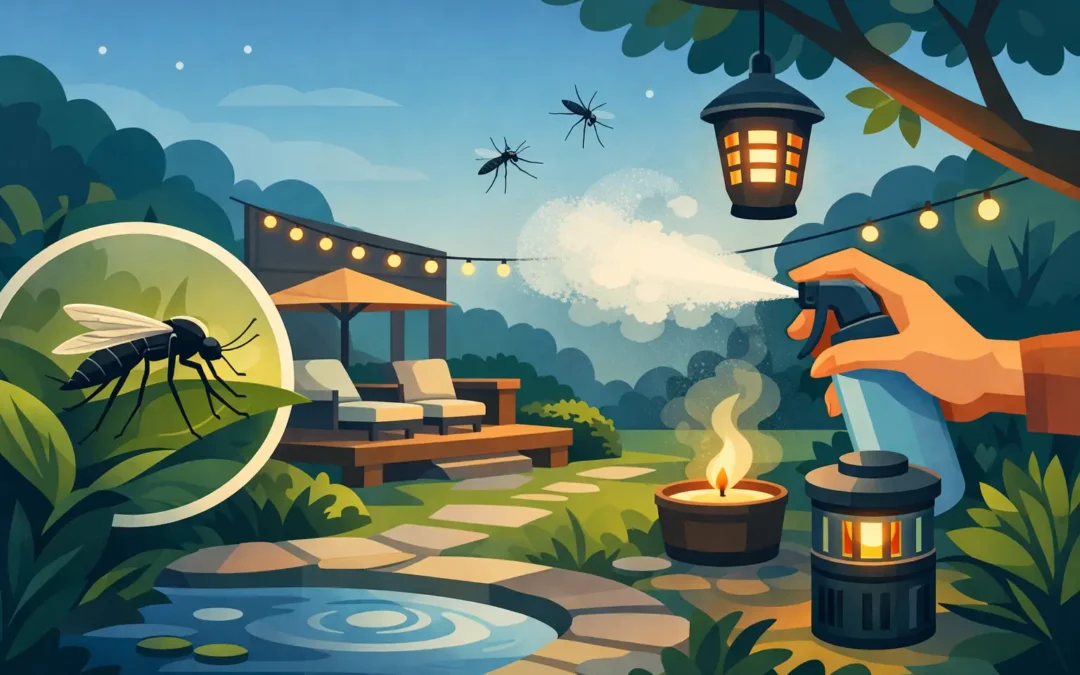
Nothing clears out a backyard faster than mosquitoes at dusk. One minute the kids are outside, the grill is going, and the patio feels usable again. The next minute, everyone is slapping ankles and heading indoors. Good mosquito control for backyard areas is really about taking away the conditions mosquitoes need to breed, rest, and feed – then staying consistent enough to keep them from coming back.
In Temecula, Murrieta, and nearby valley communities, that usually means dealing with more than one source at a time. Irrigation runoff, shaded landscaping, overwatered planters, clogged drains, pet bowls, and even a forgotten toy can hold enough water for mosquito larvae. Add warm weather and regular outdoor activity, and a small issue can turn into a frustrating routine.
Why mosquito activity gets bad in some yards
Most homeowners assume mosquitoes come from the nearest pond or storm drain. Sometimes they do, but just as often the problem is much closer to the patio. Mosquitoes do not need much water to reproduce. A bottle cap, a plant saucer, or a low spot in a tarp can be enough. If your backyard has several small water sources, you can be supporting new mosquito activity without realizing it.
Shade matters too. Adult mosquitoes like cool, protected areas during the heat of the day. Dense shrubs, ground cover, ivy, cluttered side yards, and areas under decks or patio furniture can all become resting zones. If your yard has both moisture and shade, it becomes much more attractive.
Then there is timing. In Southern California, mosquitoes can stay active for long stretches of the year, especially when temperatures stay mild. That means a one-time cleanup may help for a week or two, but it often will not solve the whole problem if the underlying conditions remain.
Mosquito control for backyard areas starts with water
If you want the biggest improvement the fastest, start by looking for standing water. Walk the property slowly and check the obvious spots first, then the less obvious ones. Gutters, drain trays, birdbaths, buckets, wheelbarrows, unused pots, fountain basins, and kids’ outdoor toys all deserve a look.
The trick is not just dumping water once. You need to either remove the item, store it dry, or keep water moving and maintained. Birdbaths should be refreshed often. Decorative water features need circulation. Containers should be turned over or put away. If irrigation is overspraying and creating puddles along edges or in planters, adjusting the watering schedule can make a real difference.
Some properties are more complicated. Yards with slope issues, heavy mulch, or drainage problems may collect moisture in ways that are not obvious from the patio. In those cases, mosquito control becomes partly a landscape and maintenance issue, not just a pest issue.
Trim back the places mosquitoes hide
Once breeding sites are reduced, the next step is cutting down resting areas. This does not mean stripping your yard bare. It means opening up overly dense spots where moisture and shade linger together.
Trim shrubs away from seating areas. Thin back heavy ground cover. Clear leaf litter and yard debris. If side yards are packed with storage, weeds, or overgrowth, clean them out. The goal is better airflow and fewer cool, damp hiding places near the areas people actually use.
There is a balance here. Privacy hedges and lush landscaping can still work well in a backyard, but they usually need more upkeep when mosquitoes are active. A heavily planted yard may need more attention than a simple hardscape patio with a few contained planters.
What repellents, traps, and yard sprays can and cannot do
This is where a lot of people waste time and money. Store-bought sprays and foggers can knock down adult mosquitoes for a short period, but they rarely fix the source. If breeding sites are still active, new adults will keep showing up.
Personal repellents help, especially during peak activity times. They are useful for an evening outside, but they protect people, not the property. Citronella products, fans, and similar backyard add-ons can help a little in small seating areas, especially when mosquito pressure is light. They are not a full solution for a yard with active breeding nearby.
Mosquito traps are more mixed. Some can reduce activity in certain settings, but results depend on placement, yard layout, neighboring properties, and local mosquito pressure. They are not automatic problem-solvers, and they work best as part of a broader plan.
Targeted yard treatments can be much more effective when applied to the right resting and harborage areas. The value of treatment is that it addresses mosquito activity where adults spend time between bites. But even a strong treatment works better when standing water and overgrowth have already been addressed. Treatment without cleanup often leads to short-lived results.
When professional mosquito control makes sense
Some backyard mosquito issues are simple. Others are persistent because the property has several contributing factors at once. That is usually when professional help makes the most sense – not because every yard needs intensive service, but because identifying the real pressure points quickly can save a lot of trial and error.
A professional mosquito service should start with inspection, not guesswork. That means looking for breeding sources, reviewing irrigation patterns, checking drainage trouble spots, and identifying the shaded areas where mosquitoes rest. From there, treatment can be more focused and more efficient.
For many properties, recurring service is the practical option during mosquito season. That is especially true if you entertain outdoors, have kids using the yard regularly, manage a short-term rental, or simply do not want to keep chasing the same issue every few weeks. Ongoing service is less about over-treating and more about keeping pressure down before it builds again.
At Vineyard Valley Pest Control, that local piece matters. Yards in Temecula and Murrieta do not all behave the same way. Some deal with heavy irrigation, some back up to open space, and some have landscaping that holds moisture longer than expected. A local approach tends to be faster and more realistic because it accounts for those patterns.
Mosquito control for backyard comfort during peak hours
Even with good prevention, timing still matters. Mosquitoes are often most active around dawn and dusk, which happens to be when many families want to use the yard. Small adjustments can help protect those windows.
Fans on patios are surprisingly useful because mosquitoes are weak flyers. If you have a dining or seating area, adding airflow can make that space less inviting to them. Keeping outdoor lights from drawing extra insect activity around doors and seating areas can help too, although light alone is rarely the main issue.
Clothing and repellent still have a place, especially if mosquito pressure rises after landscaping is watered or after warmer evenings. Think of those as backup protection, not the whole plan.
Common mistakes homeowners make
The biggest mistake is treating mosquitoes like a one-time event. If the yard keeps producing moisture and shelter, the problem returns. Another common issue is focusing only on the patio while ignoring side yards, drains, and landscape edges where activity actually starts.
People also tend to underestimate small water sources. Large puddles get attention. A clogged drain channel, a saucer under a pot, or a low spot in a tarp often gets missed. Those smaller sources are enough to keep the cycle going.
The last mistake is waiting too long. Once mosquito activity is heavy, outdoor comfort drops fast. Early action usually works better than reacting after the yard becomes hard to use.
A practical plan that holds up
The most reliable mosquito control plan is not complicated, but it does require consistency. Remove standing water. Correct drainage and irrigation issues where possible. Trim back dense, shaded harborage. Use personal protection during peak activity. If the problem keeps returning, get targeted treatment based on an actual inspection rather than trying random products week after week.
That approach gives you the best chance of turning the backyard into usable space again, not just for one evening, but for the stretch of warm weather when you actually want to be outside. If mosquitoes have started controlling when and how you use your yard, that is usually the sign to address the source now instead of putting up with it for another season.